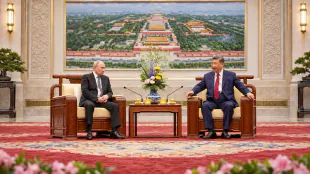
With bulging in-tray, Ishiba becomes Japan PM / Photo: © AFP

 Energy bill plan could use HMRC income data to target support

 Business owner earning £6,000 a month tackles £70,000 debt

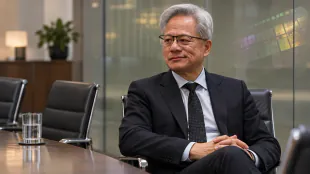 Nvidia chief faces inquiry after disclosing affair with suspected Chinese agent

 Comet returns as online electrical marketplace 14 years after collapse

 Aston Villa Defy History With Rare Victory at Old Trafford

 Qatar Airways Launches Bogotá-Caracas-Doha Route Linking Energy Markets

 Marc Almond to Close Soft Cell Era After Final 'Danceteria' Tour
Shigeru Ishiba became Japanese prime minister on Tuesday, seeking to restore the ruling party's popularity and tackle a demographic crisis, a lacklustre economy and fears over China's military build-up.
Ishiba, 67, says he intends to call a general election for October 27. He won a tight race on Friday to lead the Liberal Democratic Party (LDP), which has governed almost constantly for decades.
Japan's parliament, where the LDP has a majority, approved Ishiba's appointment on Tuesday afternoon, and he was expected to announce his cabinet later in the day.
Former chief cabinet secretary Katsunobu Kato was tipped to become finance minister, while Gen Nakatani will take defence and Takeshi Iwaya foreign affairs, local media said.
Ishiba, who has held at least three previous ministerial posts, is a self-confessed defence "geek" who tried and failed four times before to become LDP leader.
He finally succeeded this time because, while a divisive figure within the party, he is -- unlike predecessor Fumio Kishida -- relatively popular among voters, analysts said.
Ishiba's win "indicates that the LDP sought an experienced leader with broad voter appeal to steer the party in the next national election," said Yuko Nakano of the Center for Strategic and International Studies.
"If the ruling coalition secures a fresh mandate (in the election), Ishiba will have the opportunity to reshape the party's internal dynamics and restore public confidence, while addressing Japan's broader challenges, including economic stagnation felt by many voters and regional security concerns," she said.
- Tumbling stocks -
Markets, however, have reacted negatively, with the Nikkei plunging almost five percent on Monday. On Tuesday, the index recovered some ground and closed up 1.9 percent.
Ishiba's backing of interest rate hikes by the Bank of Japan has sent the yen higher, while the prospect of corporate tax hikes has worried investors.
One major area of government spending is the military.
Kishida undertook to double defence spending and boost ties with the United States and other countries rattled by China's rise and the behaviour of Russia and North Korea.
Last week, a Japanese warship sailed through the Taiwan Strait for the first time. A week earlier, a Chinese aircraft carrier steamed between two Japanese islands near Taiwan.
Japan has also scrambled fighter jets on multiple occasions in recent weeks to respond to activity by Russian and Chinese aircraft, including in its airspace.
Ishiba, who visited Taiwan in August, backs the creation in the region of a military alliance along the lines of NATO with its tenet of collective defence.
"Replacing Russia with China and Ukraine with Taiwan, the absence of a collective self-defence system like NATO in Asia means that wars are likely to break out because there is no obligation for mutual defence," Ishiba said in a recent policy paper.
F.Wagner--VB