'Partial peace' with Armenia not an option, Azerbaijan says at UN / Photo: © AFP

 Energy bill plan could use HMRC income data to target support

 Business owner earning £6,000 a month tackles £70,000 debt
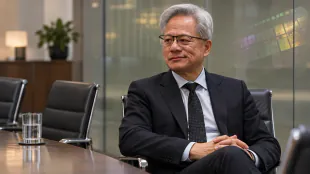 Nvidia chief faces inquiry after disclosing affair with suspected Chinese agent

 Comet returns as online electrical marketplace 14 years after collapse
 Aston Villa Defy History With Rare Victory at Old Trafford

 Qatar Airways Launches Bogotá-Caracas-Doha Route Linking Energy Markets

 Marc Almond to Close Soft Cell Era After Final 'Danceteria' Tour
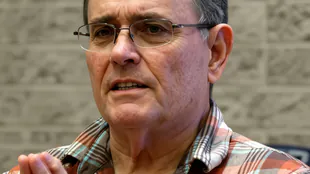
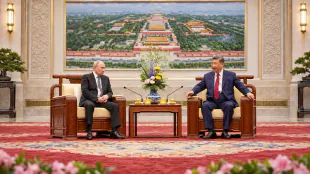
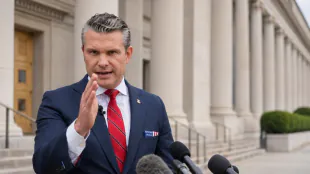
A "partial peace" with Armenia is not a possibility, Azerbaijan's foreign minister said Saturday at the UN General Assembly's annual gathering, after Yerevan offered a more optimistic message.
The two former Soviet republics had seen decades of war and tension over Nagorno-Karabakh, a breakaway ethnic Armenian region in Azerbaijan.
After a series of slow-moving negotiations, Azerbaijan rushed in troops last year and swiftly seized back the area, whose entire population of nearly 120,000 people fled to Armenia.
"Partial peace is not an option after so much pain and suffering inflicted by... territorial claims against neighbors," Jeyhun Bayramov told the gathering, insisting in particular on a change to Armenia's constitution, which refers to "reunification" with Nagorno-Karabakh.
Azerbaijan's lightning offensive last year unfolded during the high-level UN meetings in New York, sparking disbelief and chagrin among Western diplomats, especially US and French officials who had been deeply involved in mediation efforts.
On Thursday, Armenian Prime Minister Nikol Pashinyan said peace with Azerbaijan "not only is possible, but is within reach."
Azerbaijan and Armenia both say that 80 percent of a treaty is ready, including border delineation, but Azerbaijan first wants a resolution of all issues.
In his UN address, Pashinyan said he was ready to meet the Baku government's key demand of allowing transportation access across Armenian soil to the exclave of Nakhchivan, letting Azerbaijan connect its main territory with its traditional ally Turkey.
Pashinyan insisted that Azerbaijan and Armenia should sign the draft treaty immediately, explaining, "There is no precedent of a peace agreement or any agreement that would regulate and solve everything."
But on Saturday, Bayramov said any finalization of a deal would require Armenia to "legally abandon territorial claims against Azerbaijan once and for all through implementing constitutional amendments" so Baku's territorial integrity would not be in "legal limbo."
He also accused Yerevan of making a "dramatic increase" in its military budget and acquiring a "large amount of offensive weaponry from both traditional and new suppliers."
Bayramov nevertheless acknowledged "significant progress" in efforts by the neighbors to normalize relations, calling for "expeditious steps" to complete the process "at this critical moment."
Any changes to Armenia's constitution must be done through a referendum, a long and uncertain process. Western diplomats said they saw the request as a way for Baku to ask for the impossible to avoid signing a deal.
Potentially adding to momentum for a deal is COP29, the annual UN climate change talks that bring together officials from across the world, which will take place in the Azerbaijani capital Baku in November.
The international community is applying added pressure on Baku to reach an agreement before COP29.
D.Bachmann--VB