-
 Russians vote on last day of parliamentary elections
-
US fears rapid escalation in Mideast after Houthis attack Riyadh
-
 Hong Kong pays final respects to former city leader Tung
-
Japan triathlete Hojo wins first gold of Asian Games

-
 Typhoon put people off Asian Games opening ceremony, official says
-
IOC president impressed by 'beautiful' Asian Games wooden huts
-
 China's 13-year-old Yu cruises as Asian Games swimming begins
-
First Asian Games gold goes to Japan as China's 13-year-old Yu lights up pool

-
 AI 'warning shots' focus Beijing on national security risks
-
Data centre command hub keeps AI up and running

-
 Philippine tribe in limbo over US-led tech hub
-
Pope Leo in France: the issues on the table
-
 Leo XIV, first US pope transcends his restrained style
-
Packing for a pope: behind the scenes on foreign trips
-
 Singer Ed Sheeran says Gaza situation 'unjustifiable' following controversy
-
Republicans find transgender issues a powerful political weapon in midterm campaigning

-
 In 'Tenzing', a Sherpa mountaineer gets his due
-
German state elections threaten new shock waves for Merz
-
 Ed Sheeran set to return to stage after Palestinian controversy
-
Chile's Bachelet quits race to be next UN chief
-
 Toulouse edge Vannes, Lyon beat Pau to take Top 14 summit
-
Raphinha treble fires perfect Barca to win at Sevilla

-
 Germans arrested for Louvre stunt in Mona Lisa hall
-
Thiam makes winning heptathlon return at Decastar meet

-
 Saudi-led coalition says Houthis fired ballistic missile at Riyadh
-
Czechs beat USA to qualify for Davis Cup finals

-
 France's debt climbs to highest since 1978: ministry
-
Dortmund sink Stuttgart to climb to Bundesliga summit

-
 McIlroy two shots off the lead at Wentworth after eagle on 18
-
Trump says will not tolerate attempts to slow AI growth

-
 Martinez brace saves Inter in Serie A top-two clash with Roma
-
'It has to stop': runners protest women's murders in S.Africa district
-
 Rosenior abused but guides Paris FC past old club Strasbourg
-
Fire erupts near Riyadh airport as Houthis claim strikes
-
 Seven-try Lyon beat Pau, climb to Top 14 summit
-
Cuba works to restore power after another blackout
-
 Brighton defeat a 'big lesson' against complacency for Arsenal, says Arteta
-
England thrash Sri Lanka again to return to top of T20 rankings
-
 Thousands protest inaction over climate crisis in Switzerland
-
Arsenal thrashed by Brighton, sorry Spurs lose again

-
 Carapaz out of cycling world championships
-
South Korea, Austria qualify for Davis Cup finals

-
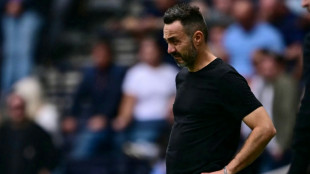 'Fragile' Tottenham beaten by Aston Villa despite late rally
-
Seare shocks Ingebrigtsen to win world 5km gold

-
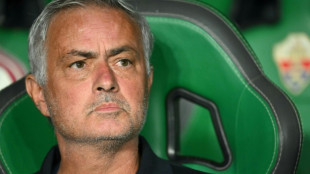 Mourinho hails Real Madrid grit before Atletico derby clash
-
Brigitte Bardot widower slams sale of star's belongings

-
 Martin wins Austrian MotoGP sprint after Acosta crash
-
Aston Villa compound Tottenham's misery despite late rally
-
 Japan edge Fiji to win Pacific Nations Cup
-
Asian Games offer 'deepest apologies' for South Korea anthem blunder

New Israeli strikes on Lebanon after 492 killed
Israel announced dozens of new air strikes on Hezbollah strongholds in Lebanon Tuesday, a day after 492 people, including 35 children, were killed in the deadliest bombardment since a devastating war in 2006.
Israel's overnight strikes on southern Lebanon came after it said it had killed a "large number" of militants when it hit about 1,600 suspected Hezbollah targets around the country.
Hezbollah said Tuesday it had launched volleys of missiles at Israeli military bases, hours after 180 of its projectiles and an unmanned aerial vehicle crossed into Israeli airspace, sending people in the city of Haifa running for shelter.
The Israeli military said more than 50 projectiles were fired into northern Israel in less than 10 minutes on Tuesday morning, most of which were intercepted.
In Lebanon, Monday's raids killed 492 people, including 35 children and 58 women, and wounded 1,645, according to the health ministry, which said "thousands of families" had fled their homes.
"Everyone is heading (to Lebanese capital Beirut) with their children and their belongings -- it's the first time we see such panic since 2006," said Lebanese journalist Nazir Reda, who was driving to his hometown near the Israeli border to get his family away from the violence.
Longtime foes Hezbollah and Israel have been locked in near-daily cross-border exchanges of fire for nearly a year, since Palestinian militant group Hamas staged an unprecedented attack on Israel on October 7.
Hezbollah, which has been fighting Israel for decades, and other Iran-backed militants in the region have been drawn into the violence.
Monday's bombardment of Lebanon was by far the largest, not just in the past year, but since the Israel-Hezbollah war in the summer of 2006.
That war killed 1,200 people in Lebanon, mostly civilians, and 160 Israelis, most of them soldiers, and devastated large swathes of Hezbollah's strongholds.
- 'Operation Northern Arrows' -
Israel has dubbed its large-scale raids on Hezbollah "Operation Northern Arrows" after announcing earlier this month it was shifting the focus of its firepower from Gaza to Lebanon.
World leaders have expressed alarm over the rapid escalation on the Lebanon front, with UN chief Antonio Guterres's spokesman saying he was "gravely alarmed" and the EU's top diplomat Josep Borrell warning "we are almost in a full-fledged war".
France and Egypt called on the United Nations Security Council to intervene, while Iraq requested an urgent meeting of Arab states on the sidelines of the UN General Assembly in New York.
The Pentagon said it was sending a small number of additional US military personnel to the Middle East after thousands were deployed earlier alongside warships, fighter jets and air defence systems.
A US official, speaking on condition of anonymity at the assembly, said that Washington opposed an Israeli ground invasion targeting Hezbollah and had "concrete ideas" on how to de-escalate the crisis.
G7 foreign ministers said in a joint statement that "no country stands to gain" from escalating conflict, warning of "unimaginable consequences" if a regional war broke out.
- 'Most difficult week for Hezbollah' -
Israeli army chief Herzi Halevi said Monday's strikes hit combat infrastructure Hezbollah had been building for two decades, while Defence Minister Yoav Gallant called Monday "a significant peak" in the operation.
"This is the most difficult week for Hezbollah since its establishment –- the results speak for themselves," he said.
"Entire units were taken out of battle as a result of the activities conducted at the beginning of the week in which numerous terrorists were injured."
Prime Minister Benjamin Netanyahu said Israel was acting to change the "security balance" in the north, wile Hezbollah said it was in a "new phase" of confrontation with Israel.
War in Gaza began with Hamas's October 7 attack on Israel, which resulted in the deaths of 1,205 people, mostly civilians, according to an AFP tally based on Israeli official figures that include hostages killed in captivity.
Of the 251 hostages seized by militants, 97 are still held in Gaza, including 33 the Israeli military says are dead.
Israel's retaliatory military offensive has killed at least 41,455 people in Gaza, most of them civilians, according to figures provided by the Hamas-run territory's health ministry. The UN has described the figures as reliable.
Since the start of the Gaza war, clashes along the Lebanon-Israel border have forced tens of thousands of people on both sides to flee their homes.
- Device blasts -
The violence between Israel and Hezbollah escalated dramatically last week, when coordinated communications device blasts that the militants blamed on Israel killed 39 people and wounded almost 3,000.
Then on Friday, an Israeli strike on southern Beirut, a bastion of Hezbollah, killed its elite Radwan Force commander, Ibrahim Aqil.
An Israeli military official, who cannot be identified, said the military is seeking to "degrade threats" from Hezbollah, push them back from the border and destroy infrastructure.
Lebanese Prime Minister Najib Mikati urged the United Nations and world powers to deter what he called Israel's "plan that aims to destroy Lebanese villages and towns".
He said he was cancelling a scheduled cabinet meeting to fly to New York to "make further contacts" with world leaders to try to end the violence.
burs-ser/kir
P.Staeheli--VB