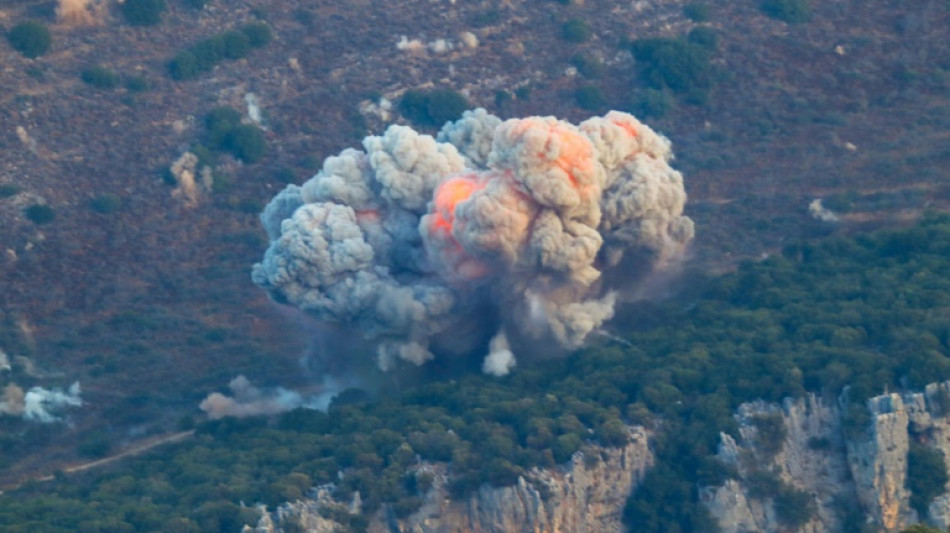
182 dead in Israeli strikes on Hezbollah strongholds in Lebanon / Photo: © AFP

 Global stocks rally on lower oil prices, US-China hopes

 EU proposes energy rating for data centres
 Schoolgirl Yu scorches to second gold as doping case rocks Games

 Putin's party secures record score in Russia election

 Haupt Koleksiyonu: Paranın Biz İnsanlar Hakkında Anlattıkları
 Spanish PM says unregulated AI could be 'devastating'

 Yu, 13, smashes record again with second Asian Games gold

 Switzerland to play without Xhaka over fake Covid certificate

 From Korean Chipmakers to Leveraged Semiconductor ETFs: STARTRADER Launches 49 New 24/7 Stock and ETF CFDs

 Thai badminton player first doping case at Asian Games: testers

 Колекція Гаупта: Що гроші розповідають про нас, людей
 German far-right AfD poll winner says Merz 'twilight' has begun

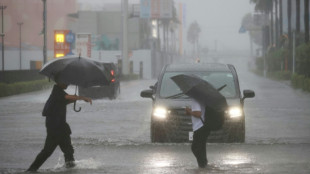 Flights scrapped, evacuations urged as Typhoon Dujuan nears Japan

 China confirms Xi to visit US this week for Trump talks
 مجموعة هاوبت: ما يكشفه المال عنا نحن البشر

 Colecția Haupt: Ce ne dezvăluie banii despre noi, oamenii

 Sisters of jailed Pakistan ex-PM Imran Khan arrested

 African players in Europe: Semenyo brace helps City top table

 'For my family': India boxer beats hardship, injury to go for Games gold
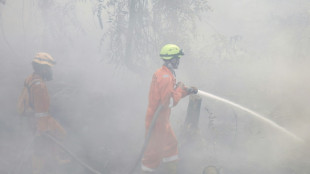
 Indonesia doing 'everything' but still struggling to curb fires
 Once decried as 'human cockfighting', MMA wants Olympic spot
 China's Yu, 13, great for swimming says multiple Olympic medallist
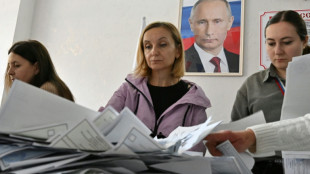 Putin's party set to retain power after Russia vote hit by cyberattacks, drones

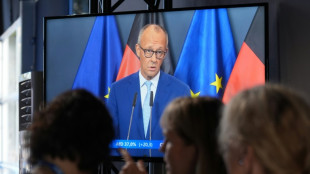 Germany's Merz under pressure after bruising state election losses

 Messi, Miami frustrated in 2-2 draw with San Diego
Israeli air strikes on Hezbollah strongholds in Lebanon on Monday killed 182 people, according to the Lebanese health ministry, in by far the deadliest cross-border escalation since war erupted in Gaza on October 7.
War began when Palestinian militant group Hamas carried out the worst-ever attack on Israel, with Hezbollah and other Iran-backed groups around the region drawn into the violence.
On Monday, Israel said it had hit more than 300 Hezbollah sites with dozens of strikes, while Hezbollah said it had targeted three sites in northern Israel.
"Israeli enemy strikes on southern towns and villages since this morning" have killed "182 people and wounded 727 others", the health ministry said, with children, women and health workers among the casualties.
World powers have implored Israel and Hezbollah to pull back from the brink of all-out war, with the focus of violence shifting sharply in recent days from Israel's southern front with Gaza to its northern border with Lebanon.
"We sleep and wake up to bombardment... that's what our life has become," said Wafaa Ismail, 60, a housewife from the southern Lebanese village of Zawtar.
- More to come -
Israeli military spokesman Rear Admiral Daniel Hagari told people in Lebanon to avoid potential targets linked to Hezbollah as strikes would "go on for the near future".
Hagari said Israel's military "will engage in (more) extensive and precise strikes against terror targets which have been embedded widely throughout Lebanon".
He told civilians to "immediately move out of harm's way for their own safety".
The strikes sent hundreds of people fleeing their homes, according to Bilal Kachmar, an official in Tyre.
"Hundreds of displaced people rushed" to a school-turned-shelter in the southern city, he said, with many others "camping out in the streets".
AFP correspondents saw rows of cars leaving the nearby city of Sidon.
The Israeli military also warned people living in the Bekaa valley, in eastern Lebanon, to flee their homes, as it announced it was "broadening" the scope of its strikes.
Explosions around the ancient city of Baalbek in eastern Lebanon triggered flashes of fire and sent smoke billowing into the sky.
In divided Lebanon, large parts of the south and east of the country, as well as the southern suburbs of capital city Beirut, are seen as strongholds of Hezbollah, where the group has historically wielded influence and built up services for its Shiite Muslim support base.
The education minister said schools in targeted areas would close for two days.
The official National News Agency said Lebanese had received phone messages from Israel telling them to "quickly evacuate".
Hezbollah, a powerful political and military force in Lebanon, says it is acting in its near-daily battle with Israeli troops along Lebanon's border in support of its Palestinian ally Hamas, which is also backed by Iran.
- Israel changing 'security balance' -
Prime Minister Benjamin Netanyahu said on Monday that Israel was not waiting threats to emerge but was preempting them and was acting to change the "security balance" in the north.
Hezbollah's deputy chief, Naim Qassem, said the group was in a "new phase, namely an open reckoning" with Israel, and ready for "all military possibilities".
They spoke after Hezbollah rocket attacks on northern Israel caused damage in the area of Haifa, a major city on Israel's north coast.
On Sunday morning, hundreds of thousands of people in northern Israel fled to their bomb shelters as Hezbollah fired a barrage of rockets across the border.
The attack came after an Israeli air strike in Hezbollah's southern Beirut stronghold on Friday killed its elite Radwan Force commander, Ibrahim Aqil, along with other commanders and civilians.
Last Tuesday and Wednesday, coordinated communications device blasts that Hezbollah blamed on Israel killed 39 people and wounded almost 3,000.
On Sunday, Hezbollah said it targeted Israeli military production facilities and an air base in the Haifa area with rockets as "an initial response".
On Monday the group said it had again fired rockets at military sites near Haifa.
"No country can live like this," said Ofer Levy, 56, a customs officer, who lives on the edge of Haifa.
Since the cross-border exchanges between Israel and Hezbollah began in October, tens of thousands of people on both sides have fled their homes.
An Israeli military official, who cannot be further identified under military rules, on Monday outlined the goals of the military operation.
It seeks to "degrade threats" from Hezbollah, push them back from the border, and then to destroy infrastructure built near the frontier by Hezbollah's Radwan Force, the official said.
Lebanese Prime Minister Najib Mikati urged the United Nation and world powers to deter what he called Israel's "plan that aims to destroy Lebanese villages and towns".
- Another Gaza? -
US President Joe Biden, whose country is Israel's main ally and weapons supplier, said his administration was "going to do everything we can to keep a wider war from breaking out".
Ahead of the annual General Assembly in New York, UN chief Antonio Guterres warned of Lebanon becoming "another Gaza" and said it was "clear that both sides are not interested in a ceasefire" there.
Of the 251 hostages also seized by militants, 97 are still held in Gaza, including 33 the Israeli military says are dead.
Israel's retaliatory military offensive has killed at least 41,431 people in Gaza, most of them civilians, according to figures provided by the Hamas-run territory's health ministry. The UN has described the figures as reliable.
burs-ser/dv
C.Bruderer--VB