'No justice': N.Ireland marks 'Bloody Sunday' amid Brexit backdrop / Photo: ©

 South Korea economy grows three times faster than expected in Q3

 Ballon d'Or: Harry Kane's crowning moment

 Harry Kane wins men's Ballon d'Or

 Lula win rattles Brazil markets over spending spree fears

 De la Fuente wins men's Ballon d'Or coach of year

 Trump slams 'rigged' Brazil election after ally loses to leftist Lula

 Nadal returns for Vegas hardcourt event

 Fainga'anuku named as loose forward for All Blacks northern tour

 Anthropic points to AI dangers, soaring sales in IPO filing

 Sinner to play rescheduled Saudi Six Kings in December
 Brazilian lawmaker Andre Janones, Lula's social media 'general'

 Swiss Ebola patient repatriated from Nigeria
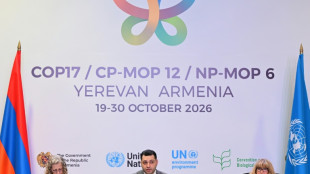 Nations far from a deal as UN nature talks enter final stretch
 Brazil markets battered, tech in focus elsewhere

 French court adjourns trial over 2020 death of delivery driver
 Serbian student movement eyes power after election triumph
 Machado ready to meet Venezuela leader after shock return
 Lula celebrates election win as Brazil markets tumble
 France's Macron accuses social media of sowing discord ahead of election
 Anthropic unveils IPO filing showing soaring sales and AI risks

 US singer Chris Brown avoids jail over London nightclub brawl
 US singer Chris Brown avoids jail over UK nightclub brawl
 Man Utd crisis deepens as Carrick faces axe
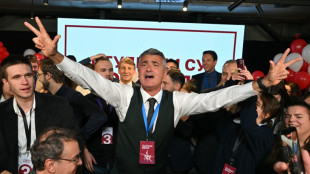 Serbian student movement eyes power after resounding snap poll victory

 Eala breezes past world number 411 in Tokyo opener

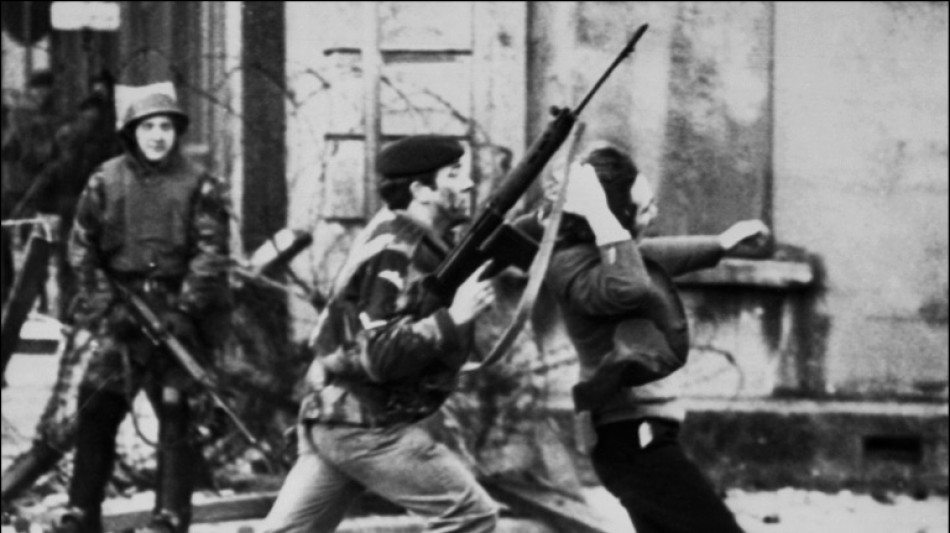
The Northern Irish city of Londonderry commemorates one of the darkest days in modern UK history on Sunday when, 50 years ago, British troops opened fire without provocation on civil rights protesters.
The anniversary of "Bloody Sunday" comes with Northern Ireland's fragile peace destabilised by Brexit, and with families of the victims despondent over whether the soldiers involved will ever face trial.
Charlie Nash saw his 19-year-old cousin William Nash killed by one of more than 100 high-velocity rounds fired by members of the British Parachute Regiment on January 30, 1972.
"We thought there might be rioting, but nothing, nothing like what happened. We thought at first they were rubber bullets," Nash, now 73, told AFP.
"But then we saw Hugh Gilmour (one of six 17-year-old victims) lying dead. We couldn't take it in. Everyone was running," he said.
"It's important for the rest of the world to see what they done to us that day. But will we ever see justice? Never, especially not from Boris Johnson."
- Amnesty? -
The UK prime minister this week called Bloody Sunday a "tragic day in our history". But his government is pushing legislation that critics say amounts to an amnesty for all killings during Northern Ireland's three decades of sectarian unrest, including by security forces.
Thirteen protesters died on Bloody Sunday, when the paratroopers opened fire through narrow streets and across open wasteland.
Some of the victims were shot in the back, or while on the ground, or while waving white handkerchiefs.
At the entrance to the city's Catholic Bogside area stands a wall that normally proclaims in large writing: "You are now entering Free Derry."
But this weekend, as relatives of the victims prepare to retrace the 1972 civil rights march, the mural says: "There is no British justice."
After an initial government report largely exonerated the paratroopers and authorities, a landmark 12-year inquiry running to 5,000 pages found in 2010 that the victims were unarmed and posed no threat, and that the soldiers' commander on the ground violated his orders.
"We in the inquiry came to the conclusion that the shootings were unjustified and unjustifiable," its chairman Mark Saville, a former judge and member of the UK House of Lords, told BBC radio on Saturday.
"And I do understand, people feel that in those circumstances justice has yet to be done," he said, while expressing concern that with the surviving soldiers now elderly, the government should have launched any prosecution "a very long time ago".
Then as now, Londonderry -- known as Derry to pro-Irish nationalists -- was a largely Catholic city. But housing, jobs and education were segregated in favour of the pro-British Protestant minority.
Simmering tensions over the inequality made Londonderry the cradle of the "Troubles" in Northern Ireland starting in the late 1960s, which finally ended with the 1998 Good Friday Agreement.
- 'Reckless' -
The UK's divorce from the European Union has unsettled the fragile post-1998 consensus.
Protestant unionists want Johnson's government to scrap a protocol governing post-Brexit trade for Northern Ireland, which treats the province differently from the UK mainland (comprising England, Scotland and Wales).
The government, which is in protracted talks with the EU on the issue, is sympathetic to their demands.
Heading into regional elections in May, some nationalists hope that Brexit could help achieve what the Irish Republican Army (IRA) never did -- a united Ireland, a century after the UK carved out a Protestant statelet in the north.
Sinn Fein, which was once the political wing of the IRA, is running ahead of the once dominant unionists in opinion polls.
"Northern Ireland finds itself again in the eye of a political storm where we appear to be collateral damage for a prime minister whose future is hanging in the balance," said professor Deirdre Heenan, a Londonderry resident who teaches social policy at Ulster University.
"The government's behaviour around the peace process has been reckless in the extreme," she added.
Protestant hardliners have issued their own reminders of where they stand: leading up to the anniversary, Parachute Regiment flags have been flying in one unionist stronghold of Londonderry, to the revulsion of nationalists.
"How can they do that, this weekend of all weekends? These are innocent boys killed by the Paras," said George Ryan, 61, a tour guide and local historian.
"Will any of the troops ever stand up in a court of law?" he added.
"It's looking more unlikely than ever, but it's important as ever."
K.Brown--BTB