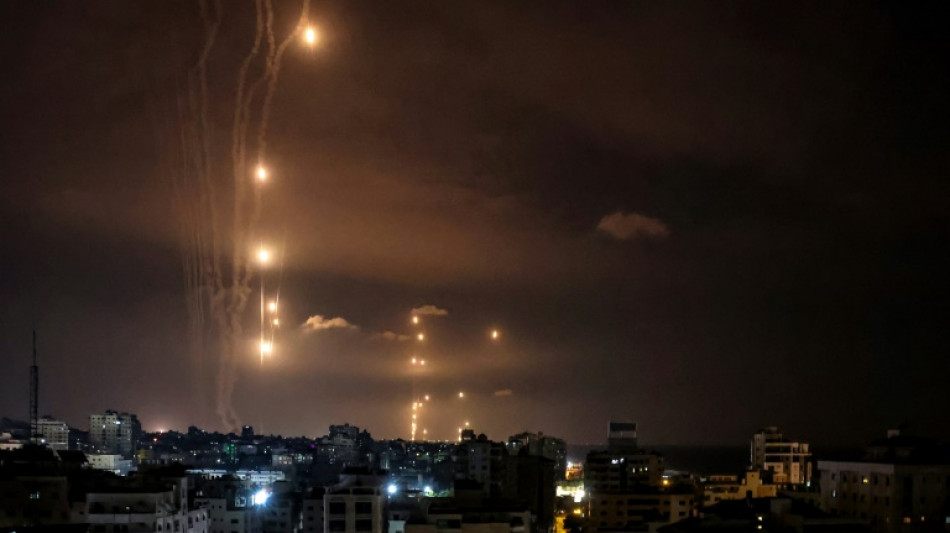
October 7: how Israel's deadliest day unfolded / Photo: © AFP/File

 Mbappe says having Zidane as France coach 'like a film'

 Palmer, Rice out of England Nations League squad
 German auto workers stage mass protests in bid to save jobs

 Embattled Merz vows to keep ruling for 'democratic future' of Germany

 Merz vows to keep ruling coalition together for 'democratic future' of Germany

 Spain coach De la Fuente gets new deal after World Cup success

 Pressure grows on Germany's Merz after election defeats

 China's Zhang beats Japan rivals to Asian Games gymnastics gold
 Samlingen Haupt: Vad pengar avslöjar om oss människor

 Tens of thousands of German auto workers protest to save jobs

 हॉप्त् कलेक्शन: पैसा हमारे बारे में एक इंसान के रूप में क्या प्रकट करता है

 Συλλογή Haupt: Τι αποκαλύπτει το χρήμα για εμάς τους ανθρώπους

 TradersYard Shifts Focus to Futures Trading

 ハウプト・コレクション:お金が人間について明かすこと

 하우프트 컬렉션: 돈이 우리 인간에 대해 드러내는 것

 Indonesia doing 'everything' but struggling to curb fires

 Sbírka Haupt: Co o nás lidech prozrazují peníze
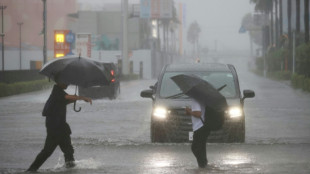
 North and South Korea fight out draw in niggly Asian Games clash

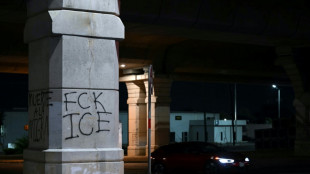 Officials say man shot, wounded by ICE agent in Texas

 豪普特收藏:金錢如何揭露人類的本質

 Kolekcja Haupta: Co pieniądze mówią o nas, ludziach
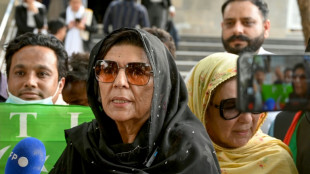
 The Haupt Collection: What Money Reveals About Us as Human Beings

 Barcelona enter new era aiming to retain Women's Champions League crown

 US has deported 25,000 to third countries under secretive deals: report
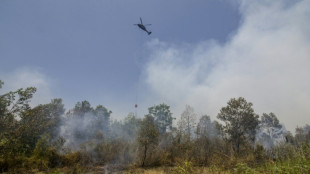
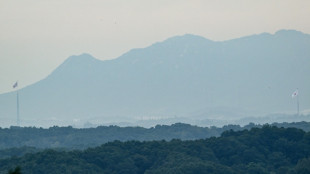 Three South Korean soldiers injured in DMZ blast: military

Hamas's multipronged attack on southern Israel on October 7 was unprecedented in scale. The panic and confusion it caused made many details of what was happening difficult to establish immediately.
Nearly one year later, the confirmed death toll, which includes hostages killed in captivity, now stands at 1,205.
Here is a blow-by-blow timeline of Israel's deadliest day.
- Caught by surprise -
At 6:29 am (0329 GMT), the Israeli army detected thousands of rockets being fired from the Gaza Strip towards Israeli border communities.
Palestinian militant group Hamas, which rules Gaza, said it had launched some 5,000 projectiles in an offensive dubbed "Operation Al-Aqsa Flood", a reference to the mosque in Israeli-annexed east Jerusalem that is Islam's third-holiest site.
Israel's Iron Dome missile defence system kicked in but was quickly overwhelmed by the amount of incoming fire.
At the same time, Hamas fighters -- the group would later say they numbered 1,200 -- stormed across the border on motorbikes, in pickup trucks and even in motorised paragliders.
They used explosives and bulldozers to break through the fence separating Gaza from Israel and attacked nearly 50 different sites, including kibbutzim communities, army bases and a music festival.
Militants killed festival-goers en masse and went door-to-door in farming communities, shooting residents dead in their homes.
In March, a United Nations report acknowledged there were "reasonable grounds to believe" that rapes were committed during the attack. It also found "clear and convincing information" that some hostages taken on that day had been raped.
- Slow army response -
By 8:30 am, the militants had stormed six military bases: Erez at the northern end of the Gaza Strip, Nahal Oz opposite Gaza City, two others near the Beeri kibbutz, one in Reim near central Gaza and two in the south close to the Egyptian border.
Residents of kibbutzim near Gaza were forced to fight the attackers on their own for hours, as the military was slow to come to their aid.
They would later describe cowering in safe rooms as militants tried to break down the doors, or taking whatever arms they had and rushing out to try to repel the assault.
At the Nova music festival, where nearly 3,000 people had gathered in fields and woods a few kilometres (miles) from central Gaza, militants went on an hour-long rampage that killed at least 370 people.
In kibbutz Beeri, one of the worst-hit communities, the first individual Israeli reinforcements came to help "from 13:30 onwards", an army report later said.
A full army division arrived at 4:15 pm to organise a coordinated evacuation of survivors and retake control of the kibbutz.
The military announced at around 6:00 pm that both soldiers and civilians had been seized by Hamas attackers and taken into Gaza.
- Taken as hostages -
A total of 251 people in Israel were taken hostage on October 7, including 44 from the Nova festival and at least 74 from kibbutz Nir Oz.
Some, including soldiers, were already dead and their bodies were taken into Gaza, the army has said.
Some hostages may have fallen to friendly fire, including in kibbutz Beeri, where witnesses told Israeli media a tank fired at a house in which 14 people were being held by Hamas.
The order may have been an instance of the "Hannibal Directive", which Israeli newspaper Haaretz reported was applied at least three times that day.
This measure allows for the use of force to prevent soldiers from being captured.
- 'We are at war' -
At 11:34 am, Prime Minister Benjamin Netanyahu delivered an almost unprecedented televised address on the rest day of Shabbat, declaring: "We are at war."
In the afternoon, the military called up 360,000 reservists to bolster an army that otherwise boasts 170,000 personnel, a mix of those performing mandatory service and career soldiers.
Israel quickly began a relentless bombardment of Gaza, the tiny Palestinian coastal territory home to 2.4 million people that has been ruled by Hamas since 2007.
An AFP journalist reported the first strike in Gaza at 10:39 am that day. Since then, the territory has been devastated by relentless air strikes.
Israel's retaliatory military offensive since October 7 has killed at least 41,431 people in Gaza, a majority of them civilians, according to data provided by the Hamas-run territory's health ministry. The United Nations has called the figures reliable.
As night fell on October 7, the search continued for any gunmen still inside Israel, with terrified civilians locked inside their homes and many streets deserted.
On October 10, the military said it had taken back control of all territory attacked by the militants.
A.Ammann--VB