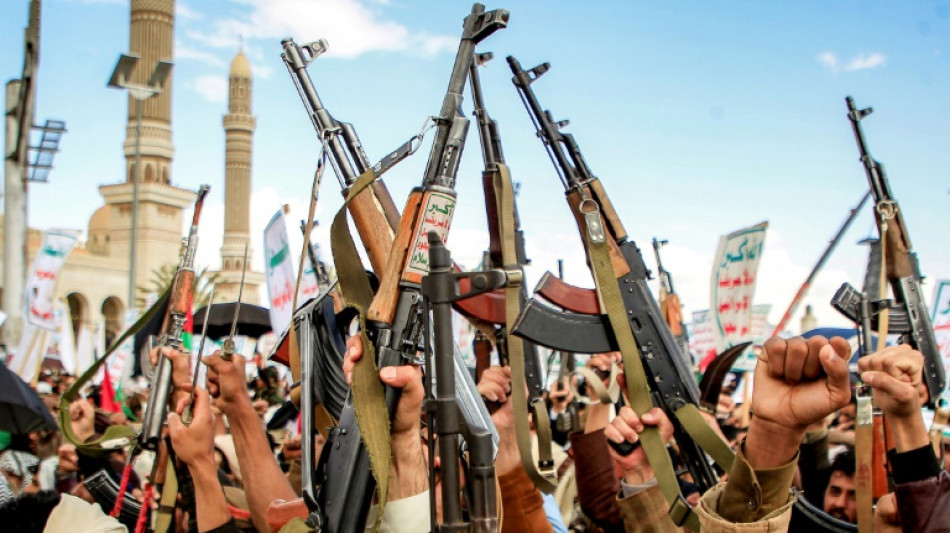
10 years into Huthi rule, some Yemenis count the cost / Photo: © AFP/File

 Bardot auction in Paris fetches nearly one million euros

 No timeline on Daniels injury return, says Commanders coach

 British Columbia sues OpenAI in US court over Canada school shooting

 French star Batum retires after 18-year NBA career

 Zidane leads first France training session
 Man shot by ICE agent in Texas detained with bullet inside him: lawyer

 California declares state of emergency ahead of El Nino
 South Africa arrests three more suspects, after nine women murdered

 Carse needs time away from England, says captain Brook

 NOWPayments Releases Cross-Chain Payout Data Revealing Key Performance Benchmarks Across TRON, BNB Chain, and Solana

 British Museum bans photos of Bayeux Tapestry as crowds linger

 COP31 host says AI climate footprint to be a summit priority

 Berlin's far-left vote winners reject anti-semitism charges

 Mancini eager for 'new adventure' on Italy return

 Mbappe says having Zidane as France coach 'like a film'

 Palmer, Rice out of England Nations League squad
 German auto workers stage mass protests in bid to save jobs
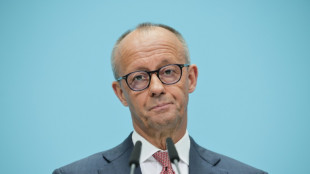 Embattled Merz vows to keep ruling for 'democratic future' of Germany

 Merz vows to keep ruling coalition together for 'democratic future' of Germany
 Spain coach De la Fuente gets new deal after World Cup success

 Pressure grows on Germany's Merz after election defeats

 China's Zhang beats Japan rivals to Asian Games gymnastics gold

 Samlingen Haupt: Vad pengar avslöjar om oss människor

 Tens of thousands of German auto workers protest to save jobs

 हॉप्त् कलेक्शन: पैसा हमारे बारे में एक इंसान के रूप में क्या प्रकट करता है

With a floundering economy and growing restrictions on personal freedoms, 10 years of Huthi rule has left its mark on Yemen's ancient capital, Sanaa, where some quietly long for how things once were.
The Huthis, a radical political-military group from Yemen's northern mountains, have imposed strict rule over the large swathe of Yemen under their control, covering two-thirds of the population.
Since the Iran-backed rebels took power in Sanaa in 2014, after long-running protests against the government, the country has gone "back 50 years", sighed Yahya, 39, who like many prefers not to share his full name for fear of reprisals.
"Before, we thought about how to buy a car or a house. Now we think about how to feed ourselves," added Abu Jawad, 45.
Already the poorest country in the Arabian Peninsula, Yemen has been devastated by war since 2015, when a Saudi-led coalition launched a failed campaign to dislodge the Huthis.
Hundreds of thousands of people have died through fighting or indirect causes like hunger and disease, with much of the infrastructure in ruins.
Yemen, mired in one of the world's worst humanitarian crises, remains divided between the Huthis and the government, now based in the port city of Aden.
The Huthis, who adhere to the Zaidi branch of Shiite Islam and claim divine right to rule, have tightened their control over many aspects of daily life.
- 'Men, women could sit together' -
Sanaa, despite its conservatism, once had "political parties, active civic organisations, NGOs... coffee shops where males and females can sit together", said researcher Maysaa Shuja al-Deen, of the Sanaa Center for Strategic Studies.
"Now the social and political atmosphere has become very closed," she added.
Men and women are segregated in public, and Huthi slogans like "Death to America!" and "Death to Israel!" are plastered everywhere, alongside photos of Huthi leaders, Deen said.
Since 2015, Amnesty International has documented numerous cases of activists, journalists and political opponents who were convicted on "trumped-up" espionage charges.
A wave of arrests in June targeted aid workers, including 13 United Nations staff who are still detained.
Majed, the director of a Yemeni non-governmental organisation, said he fled Sanaa for Aden before taking refuge with friends in Jordan, leaving behind his wife and three children.
"I made the decision without thinking too much. Leaving was a risky choice, but it was the only one," the 45-year-old said from Amman, where he hopes to find a job.
According to Deen, a Yemeni who is also based outside the country, it is now difficult to go against the ruling authorities, or even fail to show support.
"At the very beginning, being silent was an option. Now it's not even an option," she said.
"You have to show that you are loyal to the Huthi ideology."
The Huthis are adept at using social and traditional media, such as their Al-Masirah TV station, to spread propaganda, and have even revised school textbooks and changed the calendar.
The traditional holiday of September 26, which celebrated the 1962 revolution against the former imam, has been moved to September 21, the day the Huthis took power.
Some Yemenis chafe at the change. "Even if they forbid us from celebrating officially, we will celebrate it in our hearts," said Abu Ahmed, 53, a Sanaa resident.
- 'I dream of getting my life back' -
However, support for the Huthis' attacks since November against Israel and ships in the Red Sea, in solidarity with Palestinians during the Israel-Hamas war, seems to be unanimous.
"The Yemenis have always been pro-Palestinian," said author and Yemen specialist Helen Lackner, highlighting the hundreds of thousands of people who join the Huthis' weekly demonstrations in Sanaa.
Despite their popularity among ordinary people, the maritime attacks have halted negotiations conducted between the rebels and Saudi Arabia to end the war.
Rim, 43, who has lived with her family in neighbouring Saudi for nine years, has not been able to return to Sanaa to bury her father, or attend the weddings of her brothers and sisters.
"I dream of getting my life back," said the 43-year-old. In the meantime, she is content to talk to her children about her country.
"I don't want them to forget that they are Yemeni."
D.Schaer--VB