Hezbollah chief admits 'unprecedented' blow in device blasts / Photo: © AFP

 UK agrees support for Saudi in struggle with Houthis: reports

 EU foreign policy chief calls for continued sanctions on Russia

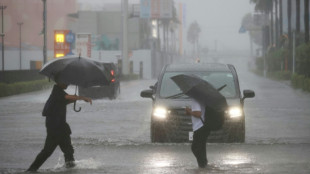 Flights scrapped, evacuations urged as Typhoon Dujuan wallops Japan
 Fonseca to take break from tennis
 A Cuban zoo, and its animals, in epic battle for survival
 Infantino proposes consulting federations to reform FIFA

 El Nino weather pattern enters record territory: scientist
 OpenAI calls for US to lead global effort on AI standards

 South African ostriches plucked alive for luxury fashion: report
 US networks halt Trump coverage in revolt over White House ban

 Paramount settles with US states to clear Warner Bros. mega-merger

 Climate crisis a job for world leaders, not just activists: UK FM
 US networks halt Trump coverage over White House ban
 French singer accuses Miley Cyrus of plagiarism
 EU fines Google 403 mn euros for location data breach

 'Best is yet to come,' says De la Fuente after Spain extension

 Why diesel prices are rising more than crude oil

 COP31 host says AI's climate footprint to be a summit priority

 Renewables hit record in 2025, but world must move faster: report
 US media outlets to sue Trump administration after White House ban
 Global stocks rally on lower oil prices, US-China hopes

 EU proposes energy rating for data centres
 Schoolgirl Yu scorches to second gold as doping case rocks Games

 Putin's party secures record score in Russia election

 Haupt Koleksiyonu: Paranın Biz İnsanlar Hakkında Anlattıkları

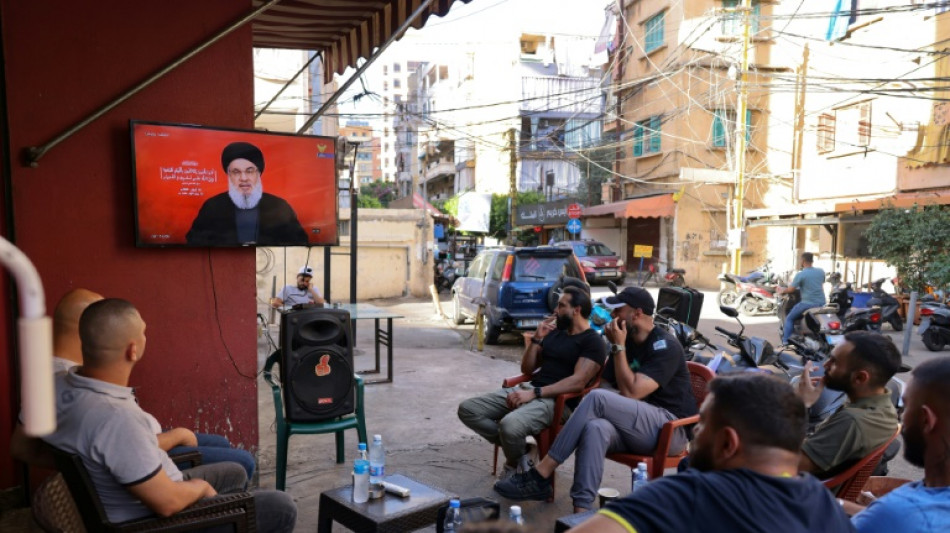
The leader of Hezbollah acknowledged on Thursday that his group had suffered a "major and unprecedented" blow after thousands of operatives' communication devices exploded across Lebanon in deadly attacks it blamed on Israel.
In his first speech since the attacks, which killed 37 people and wounded nearly 3,000 more across two days, Hassan Nasrallah also struck a defiant tone, vowing that Israel would face a "just punishment".
Even as he delivered his televised address, Israeli warplanes broke the sound barrier over Beirut.
Describing the attacks as a "massacre" and as a possible "act of war", Nasrallah said Israel would face "tough retribution and a just punishment, where it expects it and where it does not".
Israel has not commented on the attacks in which Hezbollah operatives' pagers and walkie-talkies exploded in supermarkets, on streets and at funerals, plunging the country into panic.
But its defence minister, Yoav Gallant, said on Wednesday, in reference to Israel's border with Lebanon: "The centre of gravity is moving northward."
"We are at the start of a new phase in the war," he warned.
Hezbollah is an ally of Palestinian militant group Hamas, which has been fighting a war in Gaza since its October 7 attack on Israel.
For nearly a year, the focus of Israel's firepower has been on Gaza, which is ruled by Hamas.
But its troops have also been engaged in near-daily clashes with Hezbollah militants along its northern border, killing hundreds in Lebanon, most of them fighters, and dozens in Israel.
The exchanges of fire have forced tens of thousands of people on both sides of the border to flee their homes.
Nasrallah vowed to keep up Hezbollah's fight against Israel until a ceasefire in Gaza is reached.
"The Lebanese front will not stop until the aggression on Gaza stops" despite "all this blood spilt," he said.
On Thursday, the Israeli military said it struck six Hezbollah "infrastructure sites" and a weapons storage facility overnight in southern Lebanon, a stronghold of the militant group.
Lebanon's official National News Agency also reported Israeli strikes and shelling on several towns in the south.
The Israeli military said two soldiers were killed near the border with Lebanon.
Hezbollah said 25 of its members had been killed following the explosions, with a source close to the group saying at least 20 had died when their walkie-talkies detonated.
- 'Wider war' -
Lebanon's Foreign Minister Abdallah Bou Habib said the "blatant assault on Lebanon's sovereignty and security" was a dangerous development that could "signal a wider war".
Its prime minister, Najib Mikati, urged the United Nations to oppose Israel's "technological war" on the country, ahead of a UN Security Council meeting on the exploding devices attack.
Iran's envoy to the UN said his country "reserves the right to take retaliatory measures" after its ambassador in Beirut was wounded in the blasts.
The White House, which is pressing to salvage efforts for an elusive ceasefire deal to end the Gaza war, warned all sides against "an escalation of any kind".
"We don't believe that the way to solve where we're at in this crisis is by additional military operations at all," said US National Security Council spokesman John Kirby.
The October 7 attacks that sparked the Gaza war resulted in the deaths of 1,205 people, mostly civilians, on the Israeli side, according to an AFP tally based on official Israeli figures that include hostages killed in captivity.
Out of 251 hostages seized by militants, 97 are still held in Gaza, including 33 the Israeli military says are dead.
Israel's retaliatory military offensive has killed at least 41,272 people in Gaza, most of them civilians, according to data provided by the Hamas-run territory's health ministry. The UN has acknowledged these figures as reliable.
In Gaza on Wednesday, the civil defence agency said an Israeli strike on a school-turned-shelter killed five people. The Israeli military said it targeted Hamas militants.
"What happened in the last two days is so frightening. It's terrifying," Lina Ismail told AFP by phone from the eastern city of Baalbek where some of the explosions occurred.
"We were so scared that we dismantled the inverter (a component inside solar energy systems) and turned off the device," she said.
"I took away my daughter's power bank and we even sleep with our mobile phones in a separate room," she added in a trembling voice.
- 'Sabotaged at source' -
Analysts said operatives had likely planted explosives on the pagers before they were delivered to Hezbollah.
The preliminary findings of a Lebanese investigation found the pagers had been booby-trapped, a security official said.
"Data indicates the devices were pre-programmed to detonate and contained explosive materials planted next to the battery," the official said, requesting anonymity to discuss sensitive matters.
A source close to Hezbollah, asking not to be identified, said the pagers were recently imported and appeared to have been "sabotaged at source".
A government spokesman in Budapest said the company was "a trading intermediary, with no manufacturing or operational site in Hungary".
Japanese firm Icom said it had stopped producing the model of radios reportedly used in Wednesday's blasts in Lebanon around 10 years ago.
burs-ser/dv
S.Leonhard--VB