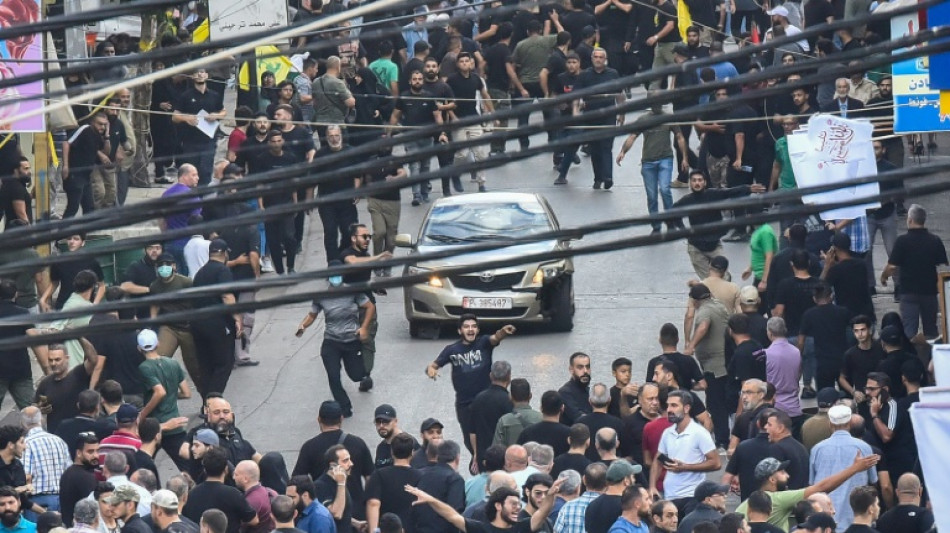
Fear, panic haunt Lebanese after devices explode / Photo: © AFP

 UK agrees support for Saudi in struggle with Houthis: reports

 EU foreign policy chief calls for continued sanctions on Russia

 Flights scrapped, evacuations urged as Typhoon Dujuan wallops Japan

 Fonseca to take break from tennis
 A Cuban zoo, and its animals, in epic battle for survival

 Infantino proposes consulting federations to reform FIFA

 El Nino weather pattern enters record territory: scientist
 OpenAI calls for US to lead global effort on AI standards

 South African ostriches plucked alive for luxury fashion: report
 US networks halt Trump coverage in revolt over White House ban

 Paramount settles with US states to clear Warner Bros. mega-merger

 Climate crisis a job for world leaders, not just activists: UK FM
 US networks halt Trump coverage over White House ban
 French singer accuses Miley Cyrus of plagiarism

 EU fines Google 403 mn euros for location data breach

 'Best is yet to come,' says De la Fuente after Spain extension

 Why diesel prices are rising more than crude oil

 COP31 host says AI's climate footprint to be a summit priority

 Renewables hit record in 2025, but world must move faster: report
 US media outlets to sue Trump administration after White House ban
 Global stocks rally on lower oil prices, US-China hopes

 EU proposes energy rating for data centres
 Schoolgirl Yu scorches to second gold as doping case rocks Games

 Putin's party secures record score in Russia election

 Haupt Koleksiyonu: Paranın Biz İnsanlar Hakkında Anlattıkları

Some panic-stricken Lebanese have tossed power banks, or sleep with mobile phones in another room, after hand-held devices used by Hezbollah operatives detonated two days in a row, killing 37 people.
"What happened in the last two days is so frightening. It's terrifying," Lina Ismail told AFP by phone from the eastern city of Baalbek where some of the explosions occurred.
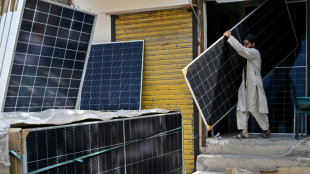
"We were so scared that we dismantled the inverter (a component inside solar energy systems) and turned off the device," she said.
"I took away my daughter's power bank and we even sleep with our mobile phones in a separate room," she added in a trembling voice.
The explosions involved pagers and walkie-talkies used by Hezbollah members and wounded more than 2,900 others, according to official figures.
Iran-backed Hezbollah blamed Israel, which has not commented.
Scenes of carnage circulating on social media, that shocked many in Lebanon, showed injured, bloodied people lying in the street or falling to the ground after explosions in shops.
Doctors in Lebanon told AFP of horrific eye injuries and finger amputations caused by the blasts.
"During war, you expect jets to launch strikes and that's the end of it," Ismail said, "but for someone to get blown up as they walk or while they're in their own house, nothing is more terrifying."
She said she heard three blasts near her home, two inside separate houses and one in a car.
- Panic attacks -
The wave of explosions have frayed the nerves of Lebanese already struggling to cope with the repercussions of more than 11 months of cross-border fire between Hezbollah and Israel over the Gaza war.
Many have told AFP the war revived traumas of past conflicts with some suffering panic attacks after hearing Israeli sonic booms or other loud bangs even unrelated to the war.
All of this adds to the burden for a country whose economy collapsed five years ago, leaving many in poverty.
In the cafes of Beirut's busy Badaro bar district, close to Hezbollah's southern suburb stronghold, booby-trapped devices are on everyone's minds.
George Bahnam, who owns a small bakery, said his sister gave up using her iPhone after rumours it was "among the devices that can be hacked, because she was afraid it would explode".
"We live in constant stress. The slightest thing that happens can affect us negatively," he said, while chatting with passing friends.
He said he felt distressed to see "young people wounded and lying on the ground".
"We were reeling from economic stress... and today we don't know what the future will bring," Bahnam said, fearing a wider war.
Social media users have shared posts with pictures of electronic devices they fear could explode if hacked -- though experts, security sources and sources close to Hezbollah have said the blasts appeared to be the result of explosives planted inside Hezbollah devices.
- 'Who will explode?' -
On Thursday, Lebanese authorities prohibited passengers travelling from Beirut airport from "transporting any pager or walkie-talkie device aboard planes".
Ghadir Eid, 25, said she considered putting her phone away but "I changed my mind after a quick internet search".
"At home, we stopped using solar energy because we did not feel safe about the batteries," she told AFP.
In Lebanon, solar power helps counter routine electricity blackouts.
Traffic appeared normal in Beirut and its southern suburbs on Thursday but many, including Eid, have decided to avoid crowded places or neighbourhoods where Hezbollah holds sway "because we don't know who could explode".
Schools and universities were closed on Wednesday following the initial blasts, but they re-opened Thursday, with people on edge.
An exploding truck tyre caused panic in the street as many feared more exploding devices.
The blasts are "part of a slew of things that have piled up to create a state of anxiety and insecurity... especially because we don't know if war looms," a female passerby told AFP.
T.Germann--VB