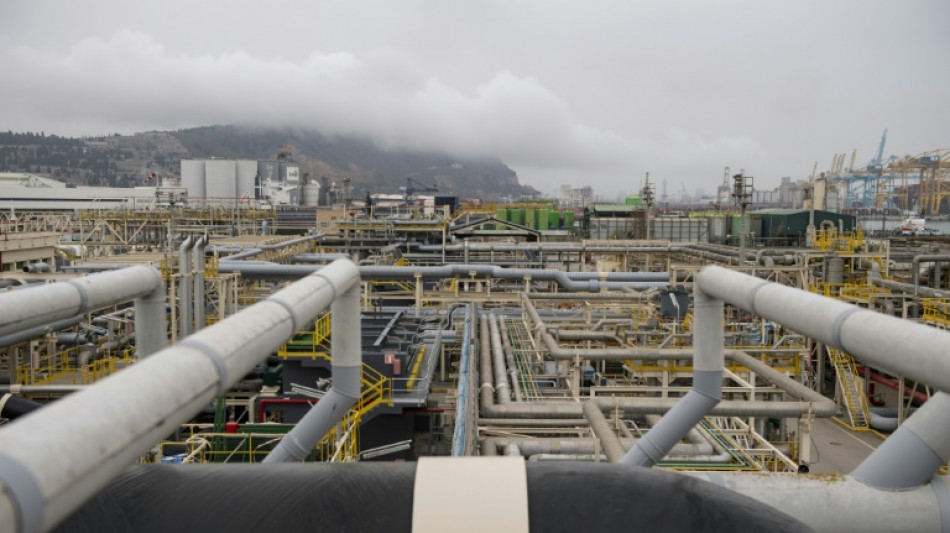
Ukraine war revives France-Spain MidCat gas pipeline project / Photo: © AFP/File

 Eala aiming to finish season with bang after Tokyo exit
 Bournemouth boss Rose vows to be patient with Kroupi
 Eurozone growth holds up despite energy crunch
 Thousands of students, workers protest in Italy under heavy security

 New Zealand's Phillips hits sublime century in 87-run win over India
 'Get them there alive': Ukraine's railways under Russian barrage

 Dakar Rally moved to Portugal and Morocco following Houthi attacks in Gulf

 German economy logs 0.2% growth, faster than expected

 Crypto platform Binance confirms 'complex' $6.3 bn hack

 Spanish inflation stays at three-year high before election

 Drugs giant AstraZeneca reveals higher profits, savings plan

 French economy 'headed for a wall' as GDP shrinks
 South Korea to prosecute students cheating with smart glasses

 Surging costs of living top US voter concerns

 Basic services, fading loyalties loom over South Africa's vote
 Shock, vindication, regret: Scientists react to AI roiling life's work

 Crypto platform Binance confirms $6.3 bn hack
 Boozer shines as Grizzlies top Blazers in battle of NBA unbeatens

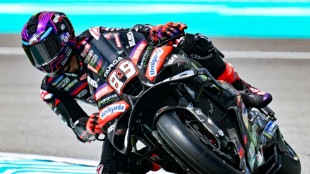 Jorge Martin confirmed to race at Malaysian MotoGP

 Bayern and Kane host Dortmund after week of 'extremes'

 Packers beat Panthers 27-19 as Watson returns from hospital

 Affordable supermarket fashion offers designer-inspired autumn alternatives

 Judge throws out Australian mushroom killer's appeal, imposes harsher sentence

 Pelicans down Kings for first win of NBA season

 Tech firms take fresh hit as earnings misses fan AI fears
Since Russia invaded Ukraine, Madrid has revived calls to build a huge gas pipeline between Spain and France dubbed MidCat that would boost Europe's energy independence from Russia.
What is MidCat?
Initially launched in 2003, the 190-kilometre (120-mile) Midi-Catalonia (MidCat) pipeline would pump gas across the Pyrenees from Hostalric just north of Barcelona to Barbaira in southern France.
Its aim was to transport gas from Algeria through Spain to the rest of the European Union. There are currently only two small gas pipelines linking Spain and France.
But following several years of work, the project was abandoned in 2019 after energy regulators from both countries rejected it amid questions over its environmental impact and profitability.
Why restart it?
Since Russia invaded Ukraine in February, the EU has vowed to end its dependence on gas from Russia, which currently supplies nearly 40 percent of the bloc's gas needs.
A 750-kilometre deepwater pipeline called Medgaz already links gas-rich Algeria with southern Spain.
A second underwater pipeline, called GME links Spain to Algeria via Morocco but Algiers in November shut supply through it due to a diplomatic conflict with Rabat.
Spain also has six terminals for regasifying and storing liquefied natural gas (LNG) transported by sea, the largest network in Europe.
Gas which arrives in Spain by sea and pipeline from Algeria could then be sent on to the rest of Europe though MidCat.
The MidCat pipeline is "crucial" to reduce the EU's reliance on fossil fuels and "end the Kremlin's blackmail", EU commission chief Ursula von der Leyen said Friday in Barcelona in a reference to Russia's threats to halt its gas supplies to the bloc.
What are the obstacles?
The MidCat pipeline faces several hurdles, starting with its huge price tag estimated in 2018 at 440 million euros ($460 million). It would also take three to four years to complete.
"MidCat cannot be approached as a short-term solution," France's ambassador to Spain, Jean-Michel Casa, said during an interview with Barcelona-based daily newspaper La Vanguadia in March.
In addition, there is a lack of connections between France and Germany, the country which is most interested in finding alternatives to Russian gas.
It would be "much simpler to bring gas directly by boat to Germany," said Thierry Bros, an energy expert at the Science Po university in Paris.
"This would of course require building gas terminals in Germany" but their cost would not be higher than building MidCat, he told AFP.
What support?
Despite the debate over its usefulness, MidCat enjoys significant support, especially in Spain where the authorities are pushing for Brussels to declare the project to be of "community interest".
France has so far been more reserved but according to Madrid this position is changing.
There is a new "perception of the risks and opportunities" that MidCat brings, Spanish Energy Minister Teresa Ribera said, adding Paris "has understood" that Midcat "must" be built.
There are also questions over the financing for the project.
Madrid argues Brussels should foot the bill, not Spanish taxpayers, because the project would benefit the entire EU.
But the European commission has not yet committed to funding it.
Spain also wants the pipeline to be compatible with the transport of green hydrogen, in the hopes this will boost its appeal to Brussels which has made financing renewable energy projects a priority.
F.Müller--BTB