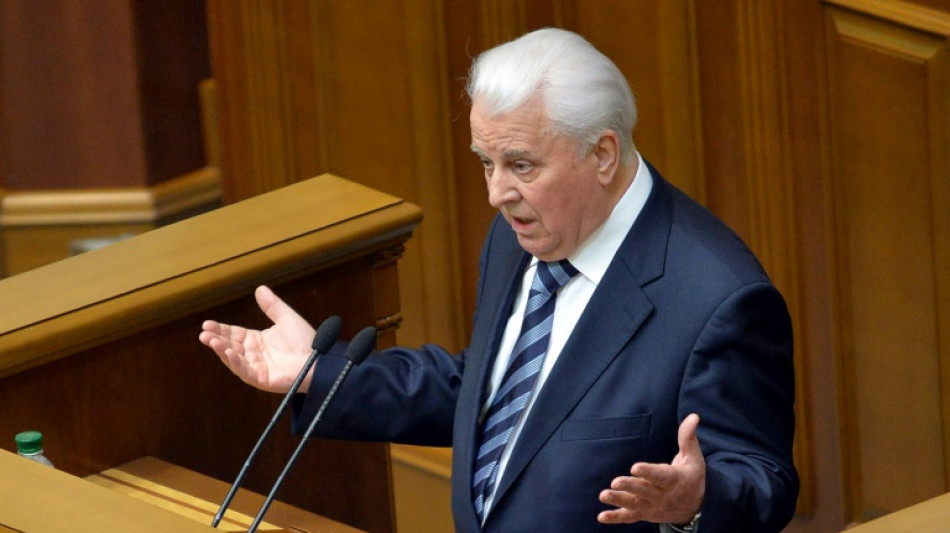
Kravchuk, first president of independent Ukraine, dies / Photo: © AFP/File

 Oil prices jump as US-Iran deal hopes falter

 Newly crowned world's best pastry chef stays true to artisan roots
 Johnson signs for Everton in McNeil swap deal

 Syria sentences Bashar al-Assad to death in absentia over atrocities
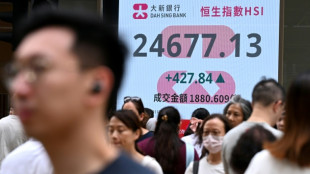 Hong Kong's tech index plans expansion with AI and robotics themes
 The Infantino saga -- What they said
 Economic losses from natural disasters fall to $100 bn in first half of 2026: Swiss Re
 Colombia scrambles to find survivors as quake kills 132
 Singapore says AI-related demand lifting economy
 Demeter Tactical Investments (ME) Limited bolsters governance with two board appointments
 Russian barrage on Ukraine kills 9, wounds dozens
 Schools closed as Indonesia battles wildfires
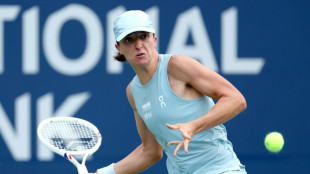
 Swiatek dominates Shnaider to set up Toronto semi with Svitolina
 Oil prices rise further as hopes for Hormuz deal fade
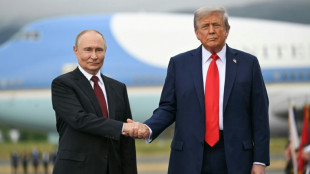 One year after Putin-Trump summit, 'spirit of Anchorage' dissipated
 Farage vs Count Binface: What to know about UK snap poll
 Torment of Afghan fathers as daughters deprived of education
 Return of displaced Syrian Kurds to hometown suspended after violence
 Swiatek races past Shnaider into Toronto semi-finals
 Meta pushes global AI vision amid race with OpenAI, Anthropic and China
 US judge ends graft case against India's Adani
 Anderson retires after 10 MLB seasons after 'too much pain'
 Colombia in state of emergency as quake kills 111
 Britain's Amy Hunt wins European women's 100m gold

 Trump order pushes for overhaul of childhood vaccine schedule
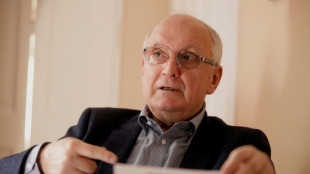
Ukraine's first president Leonid Kravchuk, who agreed to give up his country's Soviet nuclear arsenal, the third-largest in the world, died on Tuesday, the presidency said. He was 88.
"Sad news and great loss," presidential aide Andriy Yermak said on Telegram. "Leonid Makarovych was a wise patriot of Ukraine, a truly historical figure in gaining our independence."
A former powerful Communist party official, Kravchuk was known for his cunning political style, which helped him become the first leader of post-Soviet Ukraine but did not save him from popular discontent.
A grey-haired man with a sly smile, Kravchuk proved to be a master of political intrigue when in the chaos of the Soviet break-up he gave up his top Communist post just to emerge in a matter of weeks as the leader of a new state called Ukraine.
Kravchuk, who earned the nickname of "cunning fox", managed to rise to the country's top post as a compromise figure for communists and nationalists.
His tenure, however, was rocked by galloping inflation and corruption scandals during the privatisation of state-owned enterprises.
Kravchuk was voted out of office three years into his term, amid economic turmoil and following his controversial decision to give up the country's nuclear arsenal and transfer it to Russia.
- Lost chance -
Kravchuk was born in 1934 to a peasant family in then-Polish territory, which now is a part of western Ukraine.
A graduate of a special Communist party high school, he spent 30 years rising through the ranks of the party's propaganda department before resigning immediately after the Soviet coup attempt in August 1991.
As a speaker of the parliament of the Ukrainian Soviet Republic, Kravchuk managed in a matter of days to persuade the communist majority to proclaim Ukraine as an independent state on August 24.
In the next political somersault in December that year, Kravchuk ran as an independent candidate and was elected president in the country's first democratic election.
But the victory of Kravchuk, who had been deeply embedded in the communist system, was seen by many as the country's lost chance to follow Baltic and Eastern European states on the path of painful but successful reforms.
Instead, in 1992-1994 the inflation rate was in the thousands and dozens of banks went bankrupt, delaying salary payments to millions of Ukrainians across the country.
As a sad symbol of that era, a small two-wheeled cart, in which impoverished Ukrainians carried modest goods to sell them at outdoor markets to make ends meet, was called "kravchuchka" (Kravchuk's bag).
In addition, newly independent Ukraine found itself under pressure from the United States and Russia, who feared chaos, to surrender its nuclear weapons inherited from the Soviet Union.
In 1993, Kravchuk agreed to transfer all Ukraine-based nuclear weapons, which included dozens of intercontinental ballistic missiles and strategic bombers, to Russia in exchange for compensation to be paid for each nuclear warhead.
Later, when the war with Russian-backed separatists broke out in 2014, Kravchuk's decision to give up nuclear weapons was recalled by many as a mistake.
The accord, signed by then-Russian president Boris Yeltsin, also paved the way for Kyiv to sell part of the former Soviet Black Sea Fleet to Moscow, a decision that caused discontent among many Ukrainians and caused Kravchuk's popularity to plummet.
In 1994, political crisis triggered an early presidential vote, which Kravchuk lost to his former prime minister Leonid Kuchma, who was considered to be a pro-Russian candidate.
Soon after the defeat, Kravchuk joined an oligarch-led party and was elected lawmaker in 1998. In 2009, he left the Social Democratic party, which was sharply criticised for its pro-Russian stance.
In 2020, 86-year-old Kravchuk made a brief political comeback accepting an offer from President Volodymyr Zelensky to become a top Ukrainian negotiator in talks with Russia over settling the separatist conflict in the east of the country.
O.Krause--BTB