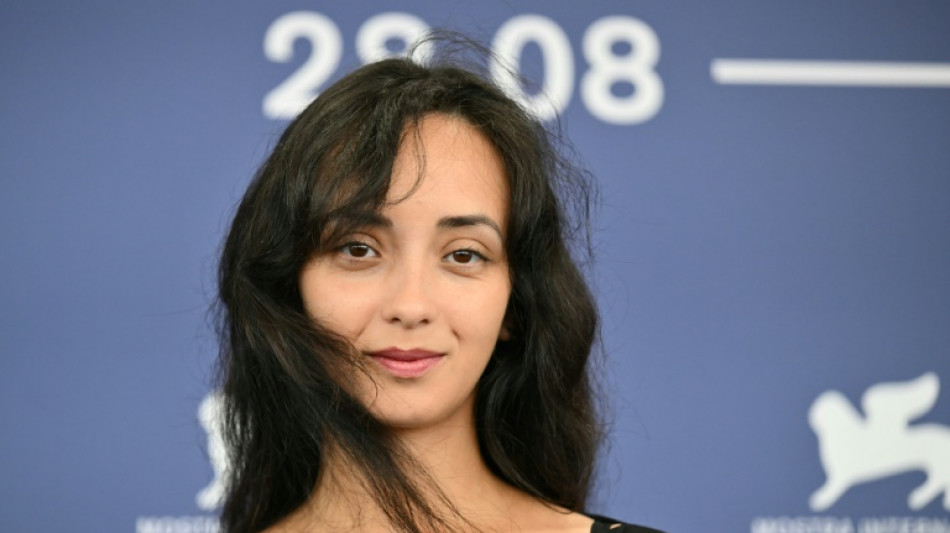
War in all its horrors looms large over Venice festival / Photo: © AFP

 ILO financial crisis takes centre stage in leadership race
 Stocks dip, oil soars despite Trump hailing "productive" Iran talks
 China's Xi to get rare airport welcome from Trump
 Turkey reassures investors over investment fund crisis
 Saka says England still have 'scar' from World Cup semi-final loss
 アレックス・ボディ氏とシュテファン・ハウプト教授、ルーマニアの伝説的な美術コレクションをめぐり提携に合意
 亞歷克斯·博迪與史蒂芬·豪普特教授就羅馬尼亞傳奇藝術收藏達成合作協議
 Алекс Боди и проф. д-р Стефан Хаупт договорились о сотрудничестве в рамках легендарной коллекции произведений искусства в Румынии
 French foreign minister says Palestinians 'must' hold polls
 Fresh Russian strikes on Ukraine's infrastructure kill seven
 Eriksen to return to Denmark after parting ways with Wolfsburg
 Brad Pitt says working with dog co-star was 'really moving'

 Golan will remain Syrian, vows President al-Sharaa at UN
 Blueberry Strengthens MENA Presence with CMA Category 5 License and Dubai Office Launch
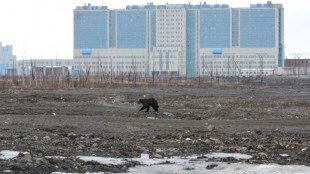 Russia probes bear attacks, as official says town under 'siege'
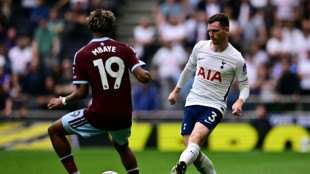 Robertson tells Spurs to 'forget' past woes
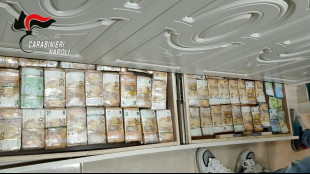 Italy police find 3 million euros stashed in mobster's house
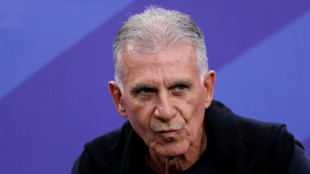 Renard versus Queiroz in AFCON qualifying blockbuster
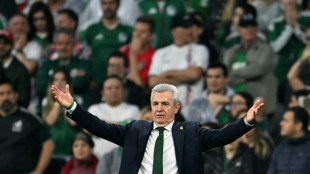 Former Mexico boss Aguirre returns to Spain with Valencia
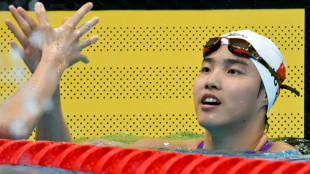
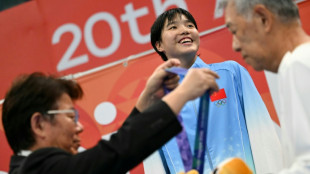
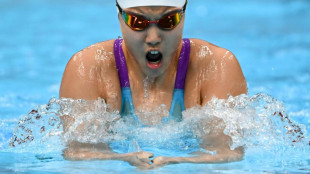
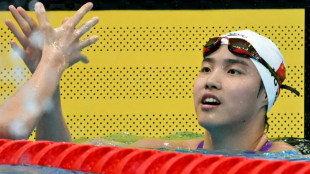 China swimmer, 13, seals Games hat-trick as North Korea win first gold
 China's Xi heads to US for talks with Trump: state media
 Azerbaijan pardons Frenchman after EU lifts sanctions on oligarchs
 Hadjar extends Red Bull contract for 2027 F1 season
 Black Sea drone attacks spell terror for Turkish sailors
 Canada judge to decide prison term for suicide poison seller

The roots of war, its harrowing realities and aftermath are explored in a host of offerings at the Venice Film Festival this year, including a remarkable documentary going behind the lines with Russian soldiers.
Gaza and Ukraine, the two World Wars, and a Benito Mussolini biopic series figure among the subjects of documentaries and features, in what festival director Alberto Barbera has called "an expressive, artistic and also political force".
Barbera told AFP he hoped the war films did not become "hostage to ideological prejudices and polemical claims that are useless".
Among the most topical are two documentaries on the Ukraine war, seen from starkly opposing points of view.
For "Russians at War", Russian-Canadian filmmaker Anastasia Trofimova embedded with a Russian battalion in Ukraine's east, while "Songs of Slow Burning Earth" is a "visual diary" of the war's effect on ordinary Ukrainians, according to Ukrainian filmmaker Olga Zhurba.
The young Russian soldiers in Trofimova's film struggle to understand why they are fighting. Sent into the Lugansk region, their battalion has been decimated, with only 300 soldiers remaining out of 900.
"It's so confusing here, I don't even know what we're fighting for," says one soldier, a sentiment shared by many comrades.
Another puts it more bluntly: "While the politicians work out who has the biggest balls, there will be many victims."
At a press conference, Trofimova said the soldiers she lived with for seven months were "absolutely ordinary guys" who belied the notion in the West that all Russian soldiers are war criminals.
"I think in the Western media that's what Russian soldiers are associated with at this point, because there were no other stories. This is another story and this was the reality they lived," she said.
"Russian soldiers are not someone whose voices are heard."
Zhurba's film portrays the war's effect on civilians, from desperate telephone calls made to emergency services about nightime bombings to mothers identifying their slain sons.
Zhurba told journalists she deliberately chose not to show battles or bodies in her film.
She said that keeping "the horrors of war" out of the frame "is more powerful because it evokes your imagination as a viewer".
- Roots of war -
A more cerebral study of conflict comes from the prolific Israeli auteur Amos Gitai in the film "Why War", inspired by an exchange of letters between Albert Einstein and Sigmund Freud.
Even though the film contains no images of war, it has nevertheless sparked controversy, as has Dani Rosenberg's feature "Of Dogs and Men", in which a teenage girl returns to her kibbutz after the October 7 Hamas terrorist attack in search of her dog.
Around 300 film professionals signed an open letter last week protesting both films' inclusion at the festival, accusing their production companies of being "complicit in whitewashing Israel's oppression against Palestinians".
At a press conference, Gitai noted that none of the signatories had seen his film.
He criticised both sides in the conflict, saying that one-sided, slanted depictions of the war on both Israeli and Palestinian television were fuelling it.
"The iconography has prolonged the war," Gitai said. "So we decided to make an anti-war film without images of war."
Another documentary, "Israel Palestine on Swedish TV 1958-1989", from Sweden's Goran Hugo Olsson, taps three decades of Swedish public broadcasting archives to show over time how "one country's media perceived one of the world's longest conflicts".
- No bombs or battles -
The two World Wars feature in two out of the four Italian films in the main competition, whose top Golden Lion prize will be awarded Saturday.
"In Campo di Battaglia" by Gianni Amelio, injured soldiers are arriving daily at a military hospital in Italy's northeast, where doctors patch them up to return them to the front.
A military doctor, played by Alessandro Borghi ("Suburra: Blood on Rome"), chooses to save lives by deliberately maiming them to prevent their return to war, bringing him into conflict with his by-the-book colleague and friend.
In "Vermiglio", from Maura Delpero, we see the effects of war on an isolated mountain village at the end of World War Two after a fleeing soldier arrives with a secret.
It is "a war story without bombs, or big battles", whose effect is no less powerful, Delpero said.
Yet to premiere is "M: Son of the Century" by "Atonement" director Joe Wright, an eight-part Italian-language series on Mussolini's rise to power that Wright has said will recall modern-day populists.
K.Hofmann--VB