
As threats rise, Israelis turn to home bomb shelters / Photo: © AFP

 AMD Forecasts First-Ever Revenue Lead Over Intel on AI Chip Surge

 First-time boat buyers advised to assess full ownership costs
 Planning and preparation can reduce stress of interstate relocation

 Two more arrested in Carrie Mullane suspected murder investigation
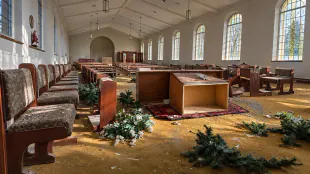 Mayo school appeals for information after convent and chapel vandalism
 Virginia overwhelms Arkansas 91-72 behind balanced scoring

 Second major storm brings destructive winds and outages to British Columbia

 Godzilla Minus Zero leads North American box office with $31.6m

 Advocate calls for coordinated support for children facing trafficking

 Pennsylvania Democrats secure state trifecta in midterm elections

 US Treasury order targets bank transfers linked to crypto exchange MEXC

 Eagles record six sacks as rushing attack struggles against Giants

 Thames Water seeks to delay £12bn in debt repayments
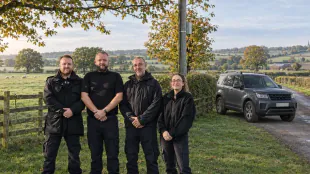 Nottinghamshire launches specialist rural crime policing team

 China confirms talks over possible Xi-Putin-Trump summit

 Rail journey offers a slower route to a Berlin city break

 Arsenal control title race as Manchester United fall into bottom three

 Suspected Krakow gunman dies after attack that killed six

 Carrick backs Dalot after hostile reception from Manchester United fans
 Belgian PM Bart De Wever Given New Deadline to Resolve €10 Billion Budget Deadlock

 Solihull Hospital Performs First Robotic-Assisted Gynaecological Cancer Surgeries
Israeli couple Aviva Pertzov and Jeff Lederer put off building a bomb shelter for years. But now, with rockets falling and threats rising, they are finally fortifying their home.
Attached to their house in Tel Mond, 30 minutes north of Tel Aviv, a solid, reinforced concrete room is emerging from behind a wooden mould -- strong enough to protect them and their grandchildren from a major blast.
When it is finished, this "safe room" will have white-painted walls, a sofa and a tiled floor, and a single window with a heavy metal shutter that closes across it with a clang.
"In previous times (of conflict), every time there was a moment where we said maybe we should build a shelter at home, we did nothing," Pertzov, a psychologist, said at their home in central Israel.
"This time, when (attacks) seemed to be getting closer to our area, then I told myself 'I can't go on like this'."
Northern Israel has been peppered by rocket and drone attacks from Lebanon's Hezbollah militants during the Israel-Hamas war in Gaza, which has raged since October 7.
Iran fired a flurry of missiles in April -- its first direct attack on Israel -- and is again threatening retaliation after Hamas's leader was killed in Tehran last month.
- 15-second warning -
With Iranian proxies active in Iraq and Syria, and Iran-backed Huthi rebels launching attacks from Yemen, Israelis are feeling threats on many fronts.
"We now worry more, because Hezbollah can reach us with their missiles," said 79-year-old Lederer, a family doctor.
"We are also afraid of being shot at by Iran."
The increasing range and sophistication of weapons has slashed reaction time to just a few seconds in the riskiest areas, near the Lebanese and Gaza borders.
Back in the 1950s, when the first public shelters were built, the sirens would sound 30 minutes before impact -- "enough time even to take a cup of coffee", said Lieutenant Colonel Moshe Shlomo, head of engineering at Israel's civil defence force, the Home Front Command.
Now, Israelis have 15 to 90 seconds, depending on where they live, to reach safety once the siren wails or a government-relayed alert blares from their phones.
For that reason, authorities are urging residents to build safe rooms in their homes, knowing that scrambling to a public or shared shelter simply takes too long.
"The threat level in Israel is very high," Shlomo told AFP at a military base near Tel Aviv, where an unexploded Iranian ballistic missile that fell in the Dead Sea in April is displayed at a road junction.
"We have other countries that are threatening us with missiles and ballistic missiles."
He added: "Those (safe) rooms save lives. We've seen it in this war."
- 'It causes concern' -
The safe rooms are designed to withstand a ton of explosives going off at a range of 15 metres (yards), and are air-tight with filtered ventilation in case of chemical or biological attack, Shlomo said.
The cost of building such a safe room varies approximately between $30,500 and $56,000.
Since Hamas's October 7 attack that triggered the war, when Israelis were attacked, kidnapped and killed in their homes, the heavy blast doors on new safe rooms are lockable from the inside.
However, about 55 percent of Israeli households do not have safe rooms, according to official estimates, because of either cost, lack of space, fatalism or obstinacy.
"There's a lot of older people who say, 'I don't want anything, I've been here 80, 90 years and I'm going to survive no matter what'," Shlomo said.
"We try to convince them. Some religious people don't want to protect themselves because they trust in God."
To persuade more people to install safe rooms, the Home Front Command has slashed the turnaround time for building permits to 14 days, processing about 4,500 applications in the past seven months.
For Pertzov and Lederer, their grandchildren were what finally persuaded them to build a shelter.
"We have many grandchildren and they come to sleep here, because they are not living nearby," said Pertzov.
"So it's kind of like a sense of duty and it causes a lot of concern."
P.Vogel--VB