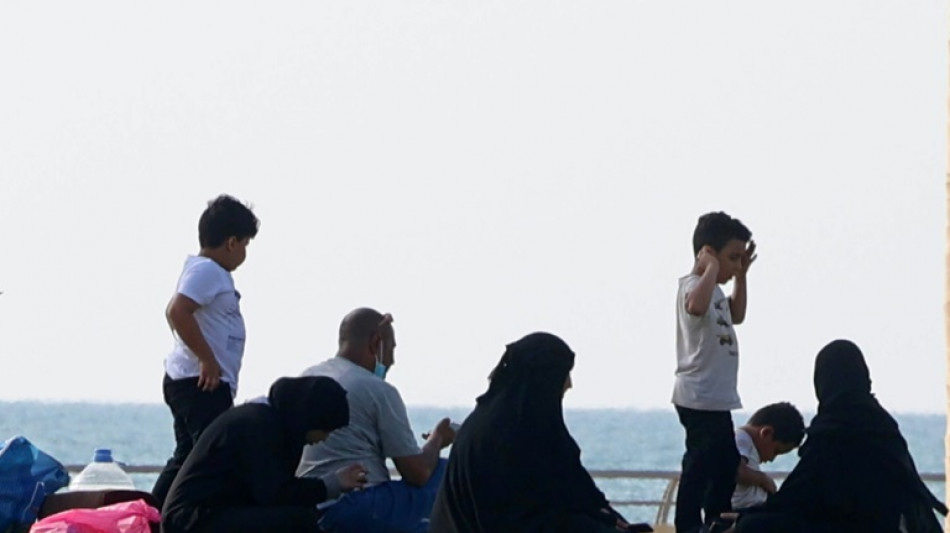
Saudis near Yemen border learn to live with Huthi fire / Photo: ©

 South Korea economy grows three times faster than expected in Q3

 Ballon d'Or: Harry Kane's crowning moment

 Harry Kane wins men's Ballon d'Or

 Lula win rattles Brazil markets over spending spree fears

 De la Fuente wins men's Ballon d'Or coach of year

 Trump slams 'rigged' Brazil election after ally loses to leftist Lula

 Nadal returns for Vegas hardcourt event

 Fainga'anuku named as loose forward for All Blacks northern tour

 Anthropic points to AI dangers, soaring sales in IPO filing

 Sinner to play rescheduled Saudi Six Kings in December
 Brazilian lawmaker Andre Janones, Lula's social media 'general'

 Swiss Ebola patient repatriated from Nigeria
 Nations far from a deal as UN nature talks enter final stretch

 Brazil markets battered, tech in focus elsewhere

 French court adjourns trial over 2020 death of delivery driver

 Serbian student movement eyes power after election triumph

 Machado ready to meet Venezuela leader after shock return

 Lula celebrates election win as Brazil markets tumble

 France's Macron accuses social media of sowing discord ahead of election

 Anthropic unveils IPO filing showing soaring sales and AI risks

 US singer Chris Brown avoids jail over London nightclub brawl

 US singer Chris Brown avoids jail over UK nightclub brawl
 Man Utd crisis deepens as Carrick faces axe

 Serbian student movement eyes power after resounding snap poll victory

 Eala breezes past world number 411 in Tokyo opener

Huthi fire from Yemen this month on the UAE, traditionally a haven of security in a turbulent Middle East, stirred alarm at home and abroad, but for many Saudis it's nothing new.
In the Jizan region of southwestern Saudi Arabia, the local population has had to live for years with the threat of sometimes deadly cross-border fire by the Iran-backed Huthi rebels.
Saudi defences have intercepted most of the Huthi missiles and drones targeting airports and oil infrastructure in retaliation for air strikes since 2015 in support of Yemen's embattled government by a Saudi-led Arab military coalition.
But the ones that made it through have caused casualties and damage.
"The first two or three times it was strange because that kind of thing doesn't happen in Saudi Arabia. But it's become a normal thing," said a Jizan resident, a woman in her 30s clad in a black abaya robe, asking not to be named due to the sensitivity of the subject inside the conservative Gulf kingdom.
Thunderous blasts have "rocked the house", she told AFP. "After our scare from the noise, we return to our normal lives as if nothing happened."
- 'We learnt to sleep peacefully' -
Two people were killed and seven wounded in late December in the first deadly Huthi-claimed strike in more than three years on Jizan, the most frequent target of attacks inside the oil-rich country.
Jizan remains a tranquil Red Sea coastal region where families picnic on the beach as children play in the sand.
"With time we've learnt to sleep peacefully," said a young man from behind the wheel of his car waiting in line outside a drive-through fast-food joint.
On the wall of a nearby building, giant portraits of King Salman and Crown Prince Mohammed bin Salman, architect of the Saudi intervention in Yemen's war, proclaim: "God, keep this country in security".
Last month, coalition spokesman Turki al-Maliki announced that the Huthis have fired more than 400 ballistic missiles and launched over 850 attack drones at Saudi Arabia over the past seven years, killing a total of 59 civilians.
"There's no reason to be afraid, the army is on guard 24 hours a day and our military equipment is ready," said another Jizan resident.
- Grim turn in tit-for-tat attacks -
In Al-Dayer, a town in Jizan province separated from the border with Yemen by a mountain chain, Huthi attacks have not deterred young men in pickups from wadi-bashing amid the sand dunes.
As tit-for-tat attacks took another grim turn last week, the UN and NGOs accused the anti-Huthi coalition of having killed at least 70 people in an air raid that pulverised a detention centre in the Huthi heartland of Saada in northern Yemen.
In a surprise escalation in the United Arab Emirates, three oil workers were killed in a drone-and-missile assault on Abu Dhabi on January 17.
In Yemen's seven years of conflict, more than 150,000 people have been directly killed by fighting and millions displaced, according to the United Nations, which calls it the world's worst humanitarian crisis.
G.Schulte--BTB