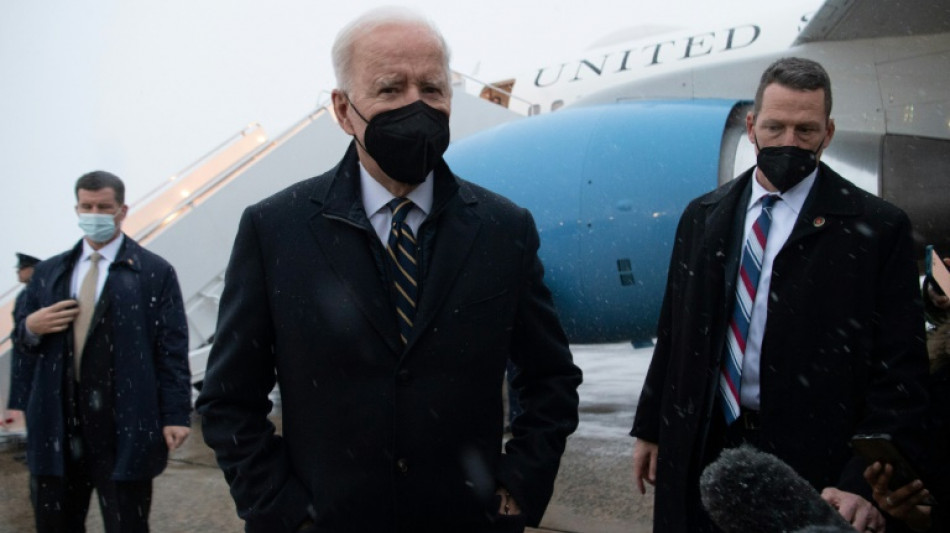
Biden to send troops to eastern Europe amid Ukraine diplomacy push / Photo: ©

 South Korea economy grows three times faster than expected in Q3

 Ballon d'Or: Harry Kane's crowning moment
 Harry Kane wins men's Ballon d'Or

 Lula win rattles Brazil markets over spending spree fears

 De la Fuente wins men's Ballon d'Or coach of year

 Trump slams 'rigged' Brazil election after ally loses to leftist Lula

 Nadal returns for Vegas hardcourt event

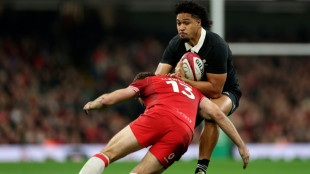 Fainga'anuku named as loose forward for All Blacks northern tour

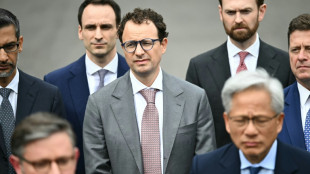 Anthropic points to AI dangers, soaring sales in IPO filing
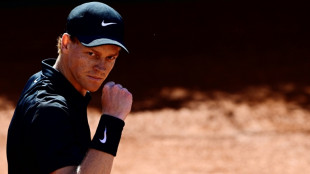 Sinner to play rescheduled Saudi Six Kings in December
 Brazilian lawmaker Andre Janones, Lula's social media 'general'

 Swiss Ebola patient repatriated from Nigeria
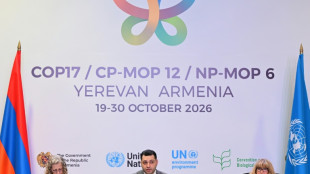 Nations far from a deal as UN nature talks enter final stretch

 Brazil markets battered, tech in focus elsewhere

 French court adjourns trial over 2020 death of delivery driver
 Serbian student movement eyes power after election triumph
 Machado ready to meet Venezuela leader after shock return

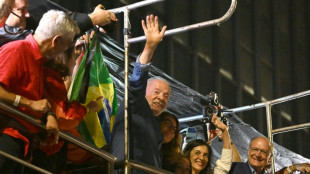 Lula celebrates election win as Brazil markets tumble

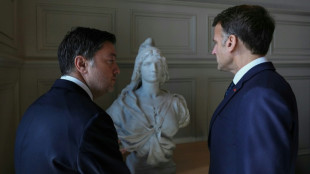 France's Macron accuses social media of sowing discord ahead of election
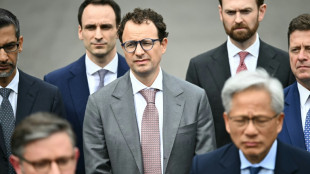 Anthropic unveils IPO filing showing soaring sales and AI risks

 US singer Chris Brown avoids jail over London nightclub brawl

 US singer Chris Brown avoids jail over UK nightclub brawl
 Man Utd crisis deepens as Carrick faces axe
 Serbian student movement eyes power after resounding snap poll victory
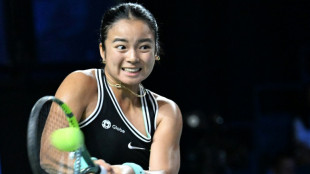 Eala breezes past world number 411 in Tokyo opener

US President Joe Biden on Friday sought to maintain pressure on Russian leader Vladimir Putin over Ukraine, announcing a small troop deployment to eastern Europe even as top Pentagon officials backed a renewed push for diplomacy.
As President Volodymyr Zelensky urged Western leaders to avoid stirring "panic" over the massive Russian troop buildup on his country's borders, Putin and French President Emmanuel Macron agreed on the need for de-escalation.
Neither Putin nor his Western counterparts had until now appeared ready to give ground in the weeks-long crisis, the worst in decades in the region between Russia and Western Europe.
But according to a Macron aide, Putin told the French leader in a call lasting more than an hour that he had "no offensive plans."
In Washington, Biden nevertheless said he would soon send a small number of US troops -- "not too many" -- to bolster the NATO presence in eastern Europe as tensions remain heightened.
The United States already has tens of thousands of troops stationed across mostly Western Europe.
At the Pentagon, top officials urged a focus on diplomacy while saying that Russia now had enough troops and equipment in place to threaten the whole of Ukraine.
Any such conflict, warned the top US general, Joint Chiefs Chairman Mark Milley, would be "horrific" for both sides.
"If that was unleashed on Ukraine, it would be significant, very significant, and it would result in a significant amount of casualties," Milley said.
"It would be horrific, it will be terrible," he said.
But speaking alongside Milley, Defense Secretary Lloyd Austin said war in Ukraine could still be avoided.
"Conflict is not inevitable. There is still time and space for diplomacy," said Austin.
"Mr Putin can do the right thing as well," said Austin. "There is no reason that this situation has to devolve into conflict. He can choose to de-escalate. He can order his troops away."
During his talks with Macron, Putin "expressed no offensive plans and said he wanted to continue the talks with France and our allies," the aide to the French president said.
Their conversation "enabled us to agree on the need for a de-escalation," the aide told journalists. Putin "said very clearly that he did not want confrontation."
- Complex threat -
Since October, Russia has amassed more than 100,000 combat troops and equipment, as well as support forces, along its frontier with Ukraine and more recently in Belarus, which borders Ukraine on the north.
Western officials say Russia has also mustered more air and sea assets in the region, creating a complex threat like none seen since the Cold War.
Moscow has demanded wide-ranging security guarantees from the West, including that Ukraine never be allowed to join NATO.
Those demands have been the subject of intensive negotiations, with the West warning of far-reaching consequences if diplomacy fails and Russia attacks.
"We don't need this panic," Zelensky told a news conference with foreign media, insisting he wanted to avoid hurting his country's already battered economy.
"There are signals even from respected leaders of states, they just say that tomorrow there will be war. This is panic -- how much does it cost for our state?" he asked.
In talks with Macron, the Ukrainian leader called for more meetings and talks "while a propitious climate for dialogue exists."
- Russia's concerns not addressed -
Putin also made clear to Macron that the written responses from the West to his demands this week had fallen short of Russia's expectations, the Kremlin said.
"The US and NATO responses did not take into account Russia's fundamental concerns including preventing NATO's expansion," Putin said, according to the Kremlin's readout of the call.
He added that the West had ignored the "key question," that no country should strengthen its security at the expense of others, adding Russia would "carefully study" the responses, "after which it will decide on further actions."
Russia has also demanded a pullback of NATO forces deployed to eastern European and ex-Soviet countries that joined the alliance after the Cold War.
In a sign of continued tensions, Russia announced Friday evening it had added several EU officials to a list of people banned from entering the country, saying they were responsible for "anti-Russian policies."
- Threat to key pipeline -
The Putin-Macron phone call followed talks in Paris this week between Russia and Ukraine, with France and Germany alongside, which produced a joint statement to preserve a ceasefire in eastern Ukraine between government forces and pro-Moscow separatists.
They also agreed to hold new talks in Berlin in February.
In tandem with the diplomacy, the West has upped its threats of a tough response to an invasion.
Washington and Berlin warned that the Nord Stream 2 pipeline, designed to double supplies of Russian natural gas to Germany, was at stake.
Milley said Russia itself would be hurt by war.
"If Russia chooses to invade Ukraine, it will not be cost-free, in terms of casualties or other significant effects," he said.
burs-pmh/sst/bfm
N.Fournier--BTB