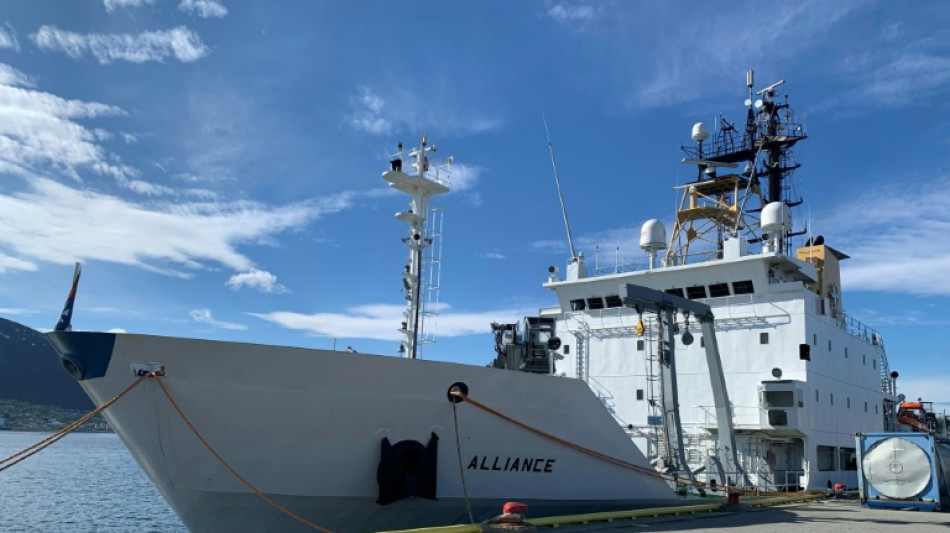
Is there anybody out there? NATO hones Arctic subs' sonar skills / Photo: © AFP

 Braves rock Dodgers to level series, Brewers win thriller

 Most Asia stocks rally as 'Goldilocks' jobs data ease rate fears

 Sunken Silk Road city reveals Central Asia's lost history

 Three years on, Israeli rescuer cannot escape October 7

 Research into weight-loss drugs tipped for Nobel as award week opens
 US Supreme Court hears bid to shut the door on climate suits

 Chourio walk-off single lifts Brewers over Padres

 Flavio Bolsonaro leads Lula in near-done Brazil vote count
 Flavio Bolsonaro leads Lula in partial Brazil poll results

 Titan FX Launches Second “Dream Beyond Borders 2.0” Brand Commercial Featuring Keisuke Honda

 Patriots inflict first Bills defeat as Rams surge late

 Brazil's Indigenous back Lula as El Nino fuels forest fires
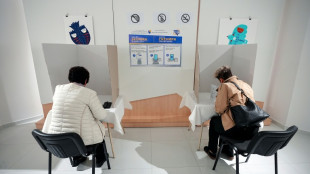
 Brazil braces for results of election battle between Lula and Bolsonaro

 Indians protest election chief ahead of top court hearing

 'Verity' kills, Cruise bombs in N. American movie theaters

 Colts top Commanders in NFL London game

 Hundreds of schools to shut Monday as student protests rock France

 Three previous two-time Arc de Triomphe winners

 'Champion' Daryz wins second successive Arc in fine style

 Daryz wins second successive Prix de l'Arc de Triomphe

 England's seven-goal spree sends message to Euro rivals: Kane

 Trump confirms national intelligence chief as new AI czar

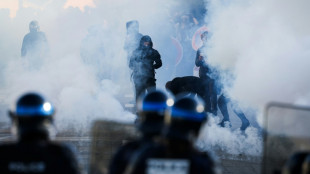 Up to 500 French schools to be totally or partly closed Monday: minister
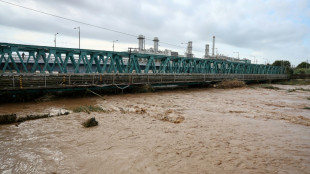
 Sydney Roosters edge Knights in tense NRL grand final

 Sabalenka out of China Open in third round, Medvedev into semis

In the icy waters of the Arctic, NATO scientists are dissecting sound waves to improve the West's ability to track Russian submarines, as global warming alters acoustics underwater.
"The only reliable source of information is acoustic waves," Gaultier Real, the head scientist on board the NATO research vessel Alliance, told AFP during a stop in the northern Norwegian town of Tromso, on the eve of an expedition to the Barents Sea.
The oceanographic ship, operated by the Italian navy and which AFP visited, is transporting Real's team of scientists to the polar front, where the waters of the Atlantic and Arctic meet.
The aim of the scientific mission is to understand how climate change, which is warming the Arctic faster than the rest of the planet, is affecting the movement of underwater soundwaves.
Over the course of three weeks, the vessel will spread sounds underwater, which its hydrophones, or microphones in the sea, will pick up. The data will then be analysed.
- Noise pollution -
There are strict rules to protect the Arctic's fragile ecosystem.
If the team hears animals, they'll halt work immediately.
"Marine mammals use sound to communicate, so if some animals are here, you're able to hear them. If you hear them, you stop transmitting," said Real, a senior acoustic scientist at NATO's Centre for Maritime Research and Experimentation (CMRE) in Italy.
Oceanographic instruments will be submerged to measure the water's temperature, salinity and pressure, parameters that affect the speed at which sound travels through water.
These parameters are changing due to the warmer climate, Real said, making it more complex to predict and track the trajectory of soundwaves.
In addition, with the melting of the sea ice, the Arctic's sound landscape, or soundscape, is also changing.
The Arctic's once silent world no longer exists, due to the increasing presence of people and cracking of the sea ice. And in the future, the noise made by the rising number of ships sailing on the newly-opened maritime routes.
"Everything needs to be re-evaluated, especially in terms of salinity and temperature in the ocean," Real said.
The knowledge and data hold strategic value when it comes to developing sonars capable of detecting enemy subs.
They also make it possible to manufacture autonomous underwater vehicles (AUVs), identify surface vessels by the sound of their propellers, and facilitate minesweeping.
A recent article in the Texas National Security Review noted that climate change would have an effect on submarine detection capabilities.
"Climate change could lead either to an increase or decrease in intensity of the acoustic signals radiated or reflected by submarines," said the researchers, who conducted studies in the North Atlantic and Pacific oceans.
"As a result, distinguishing the signal of a submarine from the ambient noise might become harder or easier."
- Submarine hunting -
Real said it was too early and "impossible" to draw any general conclusions about the impact of climate change on submarine hunting.
Especially since the parameters change drastically from one region to the next.
"The only thing we can tackle is being able to adapt the systems ... to be accurate in the way we predict how sound propagates in this changing environment to create reliable models," he said.
The threat to the West lurks nearby.
In the Arctic, "the Russian navy ... has developed significant capabilities over the last decades," explained CMRE director Eric Pouliquen by videolink from La Spezia in Italy.
Its "capabilities are very modern and they haven't been damaged by the conflict in Ukraine. They are very credible, technologically and militarily," he said.
The region is home to the powerful Northern Fleet, the Russian navy's biggest, which includes numerous submarines equipped with nuclear warheads.
Which explains why NATO has made this project a priority.
"We are also looking at how NATO, naval forces in particular, will have to operate up in the North with this melting ice cap," Pouliquen said.
"Different sea conditions and often extreme weather that we can anticipate at extreme levels strongly impact people's equipment and the way we operate," he added.
Russia has also invested in military materiel enabling it to operate in conditions of extreme cold.
K.Hofmann--VB