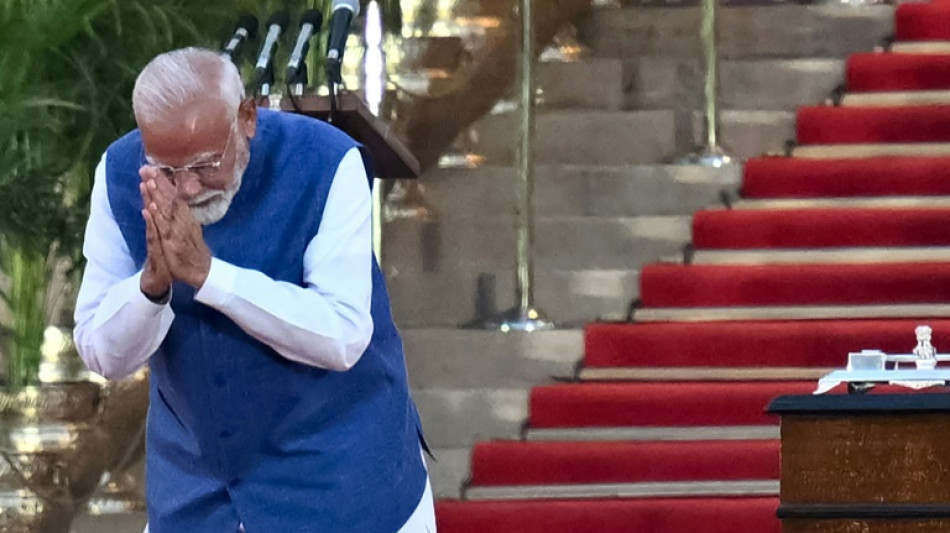
Coalition government to moderate Modi's Hindu nationalism / Photo: © AFP

 Spain's PM calls snap election after housing bill defeat

 STARCARES Equips Seven Foster Homes for Children and Young People in Tanzania

 Alleged Indian leader of neo-Nazi child abuse ring goes on trial in Paris
 Euro, French stocks slide on France debt concerns

 Alcaraz advances to Japan Open final

 US-German trio win medicine Nobel for work on optogenetics
 Hundreds of French high schools shut as protests persist

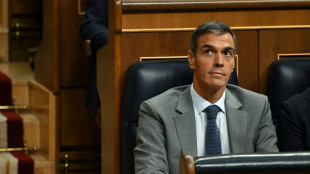 Spain PM calls early election after housing crisis defeat

 Stocks rally as 'Goldilocks' jobs data ease rate fears
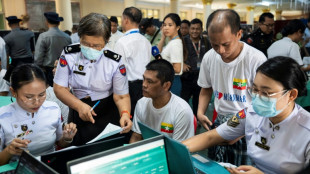 Myanmar says 10,000 migrants returned from Malaysia this year
 Big guns back for Australia's Rugby League World Cup defence

 Braves rock Dodgers to level series, Brewers win thriller

 Most Asia stocks rally as 'Goldilocks' jobs data ease rate fears
 Sunken Silk Road city reveals Central Asia's lost history

 Three years on, Israeli rescuer cannot escape October 7
 Research into weight-loss drugs tipped for Nobel as award week opens

 US Supreme Court hears bid to shut the door on climate suits
 Chourio walk-off single lifts Brewers over Padres

 Chervon Names Claudio Chiappetta Vice President of Retail Sales for Chervon Canada

 Chervon Names Daniel L. Abbott Director of Sales - Western U.S.A.

 Flavio Bolsonaro leads Lula in near-done Brazil vote count

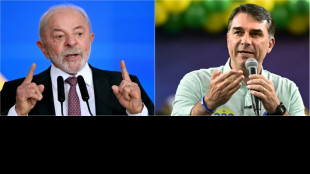 Flavio Bolsonaro leads Lula in partial Brazil poll results
 Titan FX Launches Second “Dream Beyond Borders 2.0” Brand Commercial Featuring Keisuke Honda

 Patriots inflict first Bills defeat as Rams surge late

 Brazil's Indigenous back Lula as El Nino fuels forest fires

India's Prime Minister Narendra Modi will have to moderate his Hindu-nationalist agenda to assuage his coalition partners, but they will likely let him press on with his foreign and economic policies, analysts say.
Modi, forced into a coalition government after a shock election setback left him without an outright majority for the first time in a decade, unveiled his third-term cabinet on Monday.
Key posts are unchanged -- including the defence, finance, foreign and interior ministers -- and the cabinet remains dominated by his Bharatiya Janata Party (BJP).
"Modi opts for continuity," The Hindustan Times headline read Monday.
"BJP and Modi are still solidly occupying the... driving seat," the Times of India wrote in its editorial.
Nevertheless, this term will require "more dexterous deal-making within the parliament for policies that require tweaking of laws," said Ashok Malik, from The Asia Group business consultancy.
- 'Pushed to the background' -
Before the polls, when the right-wing BJP boasted of winning a super majority, minorities including many in the 200-million-plus Muslim population were worried.
Modi's decade as premier has seen him cultivate an image as an aggressive champion of the country's majority Hindu faith.
His government revoked the constitutional autonomy of India's Muslim-majority region Kashmir, and backed the construction of a temple on grounds where a mosque stood for centuries before it was torn down by Hindu zealots in 1992.
Critics feared another BJP landslide would see policies steamrolled through parliament that would further blur the line between state and religion -- despite India's secular constitution.
But analysts said a coalition forces Modi to tread more carefully.
"In a government with allies, the BJP's key cultural agendas will all be pushed to the background," Nistula Hebbar, political editor of The Hindu newspaper, told AFP.
Instead, Modi is expected to focus on infrastructure, foreign affairs and economic reforms which "won't be much of an issue" for the alliance, she added.
"Very broadly, the economic policy and external strategy doesn't face any challenges in continuity, or any serious philosophical or strategic challenges with allied or opposition parties," said Malik.
- 'Conciliatory Modi' -
Not so for his Hindu-nationalist agenda, however.
Modi had promised to introduce a national common civil code to standardise laws across all religious communities, opposed by Muslim activists as an attack on their faith.
India's 1.4 billion people are subject to a common criminal law, but rules on personal matters such as marriage, divorce and inheritance vary.
But the common code would require parties to "forge national consensus", Malik said, which is now more doubtful given Modi's reliance on coalition partners.
Modi was also accused of ramping up rhetoric targeting India's key religious divide to rally the Hindu majority to vote.
With elections over, "Hindu-Muslim rhetoric may also take a back seat, at least for the time being," said Neerja Chowdhury, from The Indian Express.
BJP leaders also campaigned on a plank to remove affirmative quotas in government jobs and educational institutions for Muslims.
A controversial revision of electoral boundaries based on population -- that would have reduced the overall parliamentary punch of opposition areas -- also likely faces the backburner.
Hebbar said she expected to see "a different Modi, a more conciliatory Modi".
- 'People want jobs' -
For the policies he will push through, analysts say he will seek to expand welfare support for farming and poorer communities, seeking to shore up popularity in rural constituencies after electoral losses.
In a symbolic first move, Modi on Monday approved the latest tranche of a massive cash handout for 93 million farmers, as well as building plans for 30 million homes for poor families.
Modi has overseen India's ascent to become the world's fastest-growing major economy, and its fifth largest, but the world's most populous country has a jobs crisis to match.
Many saw unemployment as a key factor in BJP losses.
"People want jobs," said Malik. "And to satisfy this very legitimate need, you need to build the economy, and reform even faster."
Modi's agenda will focus on infrastructure, reforming industrial policies and domestic manufacturing incentives in a bid to create an "economic spurt in the next five years", he added.
But analysts also say it is still to be seen how political dynamics will play out in a parliament where Modi faces a far more powerful opposition.
"Modi has never handled a coalition because he has never had to rely on one," Hebbar said.
"It's a new situation for everyone... but he is a quintessential politician and would be ready to do whatever is required".
C.Bruderer--VB