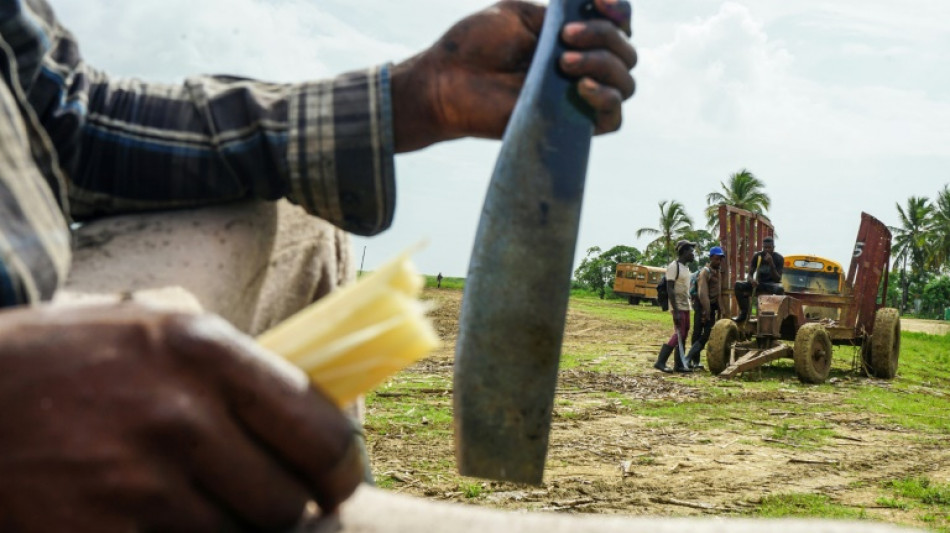
Dying for a pension: Haitian workers forsaken in Dominican Republic / Photo: © AFP

 Euro slides as worries about French debt grow
 US withdraws all bomber aircraft from UK airbase
 Drone hits Ethiopia IDP camp as fears grow of regional war

 US-German trio wins medicine Nobel for illuminating the brain
 England captain Kane driven by desire for records says Tuchel
 N.Irish court hears challenge to disputed Orangemen parade
 Talking points from the Bahrain Grand Prix in Malaysia

 Yemen, Saudi Arabia target Houthis in new campaign as war escalates
 US-German trio wins medicine Nobel for work on optogenetics

 Swiatek, Zheng survive three-set tests in China Open third round

 Hasan says Test cricket momentum turning for Bangladesh
 Intense heat puts births in jeopardy, UN tells Fiji talks
 US arrests woman accused of spying for China on Taiwan leader's family
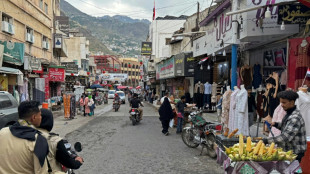 Yemen military announces broad strikes against Houthis
 Zuckerberg skewered again on screen in 'The Social Reckoning'

 Fiji urges 'just' climate transition, financing at pre-COP gathering

 Thailand's Jeeno overcomes late wobble to win Lotte Championship
 Brazil heads to run-off as Bolsonaro pulls off shock first place finish over Lula
 EU, China to hold Beijing talks to avert trade war
 Bolsonaro edges past Lula as nail-biter Brazil vote goes to a run-off
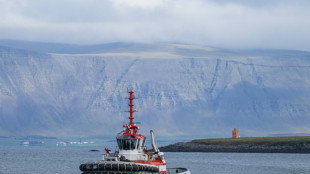 Rubio visits Iceland as US boosts Arctic presence
 Bolsonaro leads Lula as nail-biter Brazil vote goes to a run-off

 Patriots inflict first Bills defeat as Chiefs keep winning
 Chervon Names Peter J. Carlson Director of Sales for Strategic Accounts

 Chervon Appoints Neil Harrison to the Position of VP Sales, Marketing and MD for Chervon Canada

Ilek Santiago, born in Haiti, worked for decades in the cane fields of neighboring Dominican Republic, but he never qualified for nationality, a pension or medical care.
He died in March of untreated prostate cancer, aged 73, and his plight has become a rallying cry for cane field laborers who have long demanded access to basic benefits.
Most of the cane cultivation in the Dominican Republic is done by Haitians or their descendants who say they work 70-hour weeks for the equivalent of about $10 a day.
They all work illegally, a better option than none in poverty-riddled and gang violence-torn Haiti, which shares the island of Hispaniola with the Dominican Republic.
Under a special dispensation, separate from Dominican citizens, Haitian workers contribute to a social welfare system in the hopes of benefiting from access to healthcare and a pension.
However, when they need it, many, like Santiago, have their applications denied.
"It is sad because comrade Santiago died without health insurance," said Jesus Nunez, leader of the UTC cane workers union, to which Santiago had also belonged.
With medical care, "comrade Santiago would have lasted a bit longer," Nunez told AFP at a memorial held by colleagues and loved ones in the zinc and cardboard house where he died.
The government did not respond to AFP's requests for comment.
- 'Living in misery' -
Haitian cane workers live in bateyes, precarious settlements of makeshift homes without electricity or potable water erected among the Dominican cane fields.
Santiago, who arrived in the country at age 17, lived in the eastern province of Monte Plata.
Two smiling photographs of him stand on a plastic table that serves as an improvised altar, with messages reading: Your family and friends will never forget you" and "Rest in peace."
Some who attended his memorial wore caps reading: "Without cane there is no sugar."
Fired up by Santiago's death, the UTC has called a demonstration for next month in the capital.
While about 3,700 cane workers have already qualified for pensions, some had theirs canceled without explanation.
"I am living in misery," one of them, Telmi Confidente, told AFP.
He arrived in the Dominican Republic in 1969, worked in the cane fields for decades, and had his pension abruptly canceled in 2014.
Confidente is too old to go back to work and lives on handouts from his children, saying without them "I would have dropped dead a long time ago."
- 'Forced labor' -
Despite a long history of Haitian labor, the issue of migrant rights is a controversial one in the Dominican Republic -- a much more prosperous country keen to shield itself from its troubled neighbor's many problems.
A 2013 Constitutional Court ruling stripped tens of thousands of Dominicans born to foreign parents -- mainly Haitians -- of their birthright citizenship.
The ruling was applied retroactively to all people born between 1929 and 2010, creating a "situation of statelessness of a magnitude never before seen in the Americas," according to the Inter-American Commission on Human Rights.
Tens of thousands have since been expelled.
Dominican President Luis Abinader was re-elected this month to a second term in office, riding a wave of popularity based largely on his tough approach to Haitian migration.
Since taking office in 2020, Abinader's government has been building a 164-kilometer (102-mile) concrete wall along the border with Haiti.
The sugar cane industry, which notoriously relied on slave labor in the colonial-era, currently accounts for about two percent of GDP in the Dominican Republic, home to 11 million people.
Yet, the United States -- a key client -- last year restricted imports of Dominican sugar cane and its derivatives from a top Dominican producer for its use of "forced labor."
F.Mueller--VB