Russian strikes and filthy water: A year after Ukraine dam blast / Photo: © AFP

 Yemen's Houthis claim striking Riyadh airport, other Saudi sites

 Best-selling British author Jeffrey Archer dies aged 86

 Military plane crash kills 32 in Nigeria

 Olise powers France to win over Belgium in Nations League

 High-flying Blazy turns to birdlife at Chanel

 Riyadh's allies pledge troops as Yemen, Saudi Arabia attack Houthis

 Clashes erupt outside Kosovo parliament over war crimes court

 Milan's Saelemaekers suffers ankle setback, faces lengthy spell out

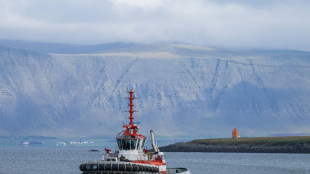 Rubio arrives in Iceland to push for greater US presence in Arctic

 Putin allows Italy's UniCredit to sell part of Russian business
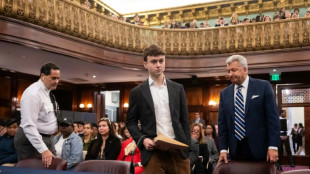
 Djokovic into China Open final as Medvedev out for hitting fan with ball

 ICC unseals arrest warrants for Taliban education ministers

 Modric hopes fans back Croatia against Spain after England shame

 Bolsonaro rides right-wing surge into Brazil's election runoff

 Turkey blocks X account of British reporter

 Ukraine says using AI robot guns to shoot down new Russian drones

 At Oct 7 memorial, Netanyahu says will be no Hamas rule in Gaza

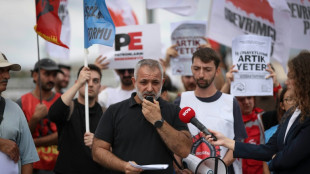 Ukraine blames Russia for deadly sinking of Turkish ship in Black Sea

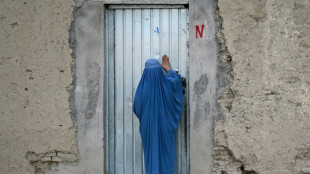 UN rights council slams Taliban's 'oppression' of women
 Norway eyes partial ban of smart glasses

 Two dead after ship catches fire, sinks in Black Sea

 Spain's PM calls snap election after housing bill defeat

 STARCARES Equips Seven Foster Homes for Children and Young People in Tanzania

 Alleged Indian leader of neo-Nazi child abuse ring goes on trial in Paris
 Euro, French stocks slide on France debt concerns

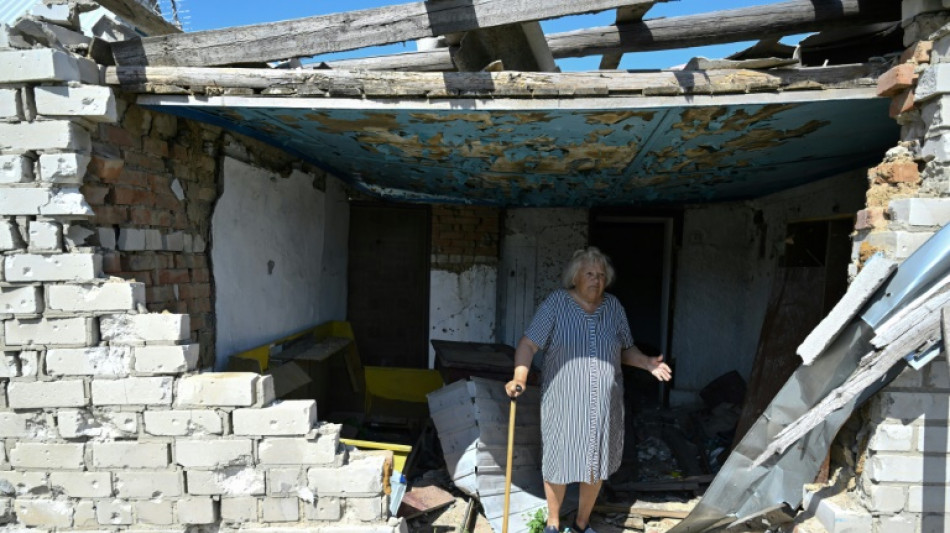
Standing in what remains of her house, partially destroyed by a Russian artillery strike, Raisa Abramtseva painted a bleak picture of her daily life in southern Ukraine's Kherson region.
"Nowhere to live, no water," she said, summarising the day-to-day in her village of Novovorontsovka, which faces regular Russian bombardments and is still suffering from the fallout of the destruction of the Kakhovka dam one year ago.
In the early hours of 6 June 2023, the massive Soviet-era dam was blown up, pouring billions of litres of water downstream and flooding dozens of villages on the banks of the vast Dnipro river.
Kyiv said Russia, whose troops controlled the dam at the time, blew it up to thwart a Ukrainian counter-offensive. Moscow blamed Ukraine.
Dozens were killed in the floods that followed the blast, which has also caused vast and likely permanent environmental damage to southern Ukraine.
Novovorontsovka, which lies upstream from the dam on the banks of the Kakhovka reservoir, faces the opposite problem to settlements downstream: a lack of previously plentiful water.
Reservoir levels dropped by almost 20 metres, said Sergiy Pylypenko, head of the municipal company responsible for water supplies.
The systems they once used to collect water no longer work.
"And then there are the hostilities, which completely destroyed one of our pumping stations," he added.
Carrying out repair work on the shores of the reservoir -- a natural front line between Ukrainian forces on the western bank and Russians entrenched on the east -- is too dangerous.
"The crew and the equipment involved will not live long," Pylypenko said.
- 'Wanted to go home' -
Abramtseva, 68, is just one of the hundreds of thousands of people that the environment ministry estimated last year had fully or partially lost access to clean drinking water, in what the ministry has called "a direct danger to their lives and health."
Leaning on a walking stick and followed by a grey kitten, Abramtseva said she had been determined to come back to the village despite the challenges.
She had left after the Russian strike on her house in 2022 but soon returned, and now lives in a nearby building that was renovated on her shoestring budget and lacks a proper ceiling.
Even though her new home resembles a "shed," she said she had felt compelled to return.
"I wanted to go home," she told AFP.
Getting clean drinking water to Abramtseva and others is no small feat.
A lorry despatched by the authorities snakes around the village, offering people to fill up their water tanks for a fee.
The driver must avoid being targeted by Russian drones that often lurk overhead, ready to drop grenades and explosives at any moment.
- 'Nothing good' -
Downstream of the dam, problems remain in the Korabel district of Kherson, an island to the south of the city that was completely flooded.
The waters have receded but the impact can be seen whenever taps are turned on.
"The water is brown," said Natalia Biryuk, 67.
Power cuts are also frequent -- the result of two years of Russian attacks on Ukrainian energy facilities.
"Sometimes there is light, sometimes not," she added.
"There is nothing good here. And they shoot (at us) everyday."
Some on the island -- just six kilometres (4 miles) from Russian troops -- tried to put on a brave face.
"Our neighbourhood is still alive," local resident Valery Biryukov, 67, told AFP.
"But the people aren't here anymore. They've all left," he conceded.
- 'Restore our Ukraine' -
Silence hung in the air on the streets of Korabel. The few who ventured outside were mostly elderly pensioners. Most of the area's pre-war residents have left.
Lyudmila Batovrina, a 63-year-old wearing a t-shirt with a shiny Louis Vuitton logo, says only seven of the 40 apartments in her building are occupied.
Next to a bomb shelter, a handful of street vendors were selling strawberries and home-made yoghurts and cheese.
It is one of the last remaining options for shopping.
There are no banks, schools and hardly any doctors, residents said.
"They come out here to buy something and then run home," said Lyudmila Kyrzhnyr, a 55-year old vegetable seller.
After the floods she had to throw everything out of her ground-floor apartment.
Some 12 months later, it still smells of mould, she said.
The water from the taps also "stinks."
"I heat the water in a pot, and it gets covered with a brown film on the top," she said.
When asked why they have not joined the majority in leaving, the neighbourhood's remaining residents have a simple answer.
"We have nowhere to go. No one needs us anywhere," said Kyrzhnyr.
But, she added, it is not just a lack of alternatives that keeps her here.
"We still have to live, and we have to restore our Ukraine."
L.Wyss--VB