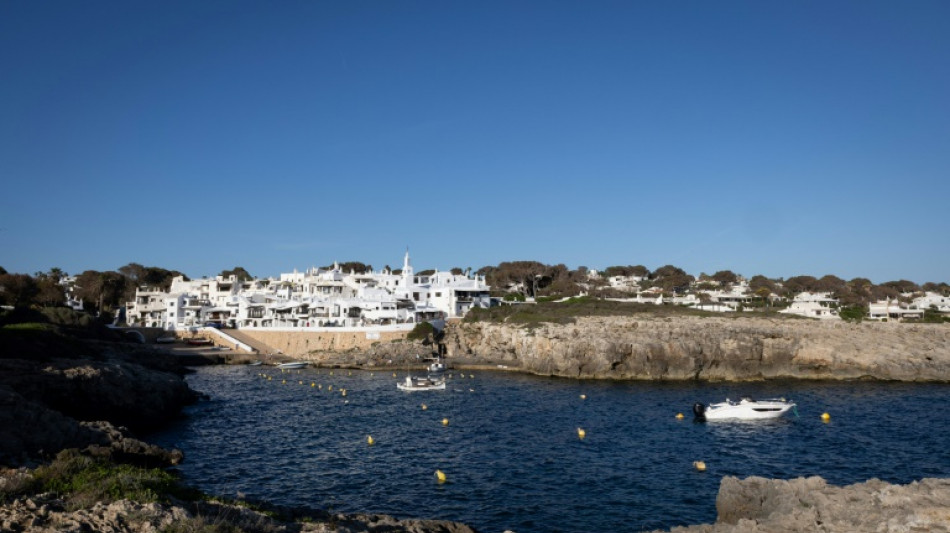
'It's too much': Spain's Balearic Isles battle overtourism / Photo: © AFP

 American Nobel laureate in medicine hopes to illuminate the brain

 Trump approves firing squad for convicted US military base shooter

 Grappling with 'homework scams,' US universities shun AI detectors
 Separatists win Quebec election in test for Canada PM

 Leaders visit Pacific atoll at frontline of climate change

 Yemen's Houthis claim striking Riyadh airport, other Saudi sites

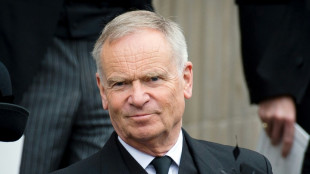 Best-selling British author Jeffrey Archer dies aged 86

 Military plane crash kills 32 in Nigeria

 Olise powers France to win over Belgium in Nations League

 High-flying Blazy turns to birdlife at Chanel

 Riyadh's allies pledge troops as Yemen, Saudi Arabia attack Houthis

 Clashes erupt outside Kosovo parliament over war crimes court

 Milan's Saelemaekers suffers ankle setback, faces lengthy spell out

 Rubio arrives in Iceland to push for greater US presence in Arctic

 Putin allows Italy's UniCredit to sell part of Russian business
 Djokovic into China Open final as Medvedev out for hitting fan with ball

 ICC unseals arrest warrants for Taliban education ministers
 Modric hopes fans back Croatia against Spain after England shame

 Bolsonaro rides right-wing surge into Brazil's election runoff

 Turkey blocks X account of British reporter

 Ukraine says using AI robot guns to shoot down new Russian drones

 At Oct 7 memorial, Netanyahu says will be no Hamas rule in Gaza
 Ukraine blames Russia for deadly sinking of Turkish ship in Black Sea

 UN rights council slams Taliban's 'oppression' of women

 Norway eyes partial ban of smart glasses

Every year, nearly 800,000 tourists wander through the alleys of Binibeca Vell, a tiny whitewashed village nicknamed "the Spanish Mykonos" for its resemblance to the famous Greek island which attracts huge crowds of visitors.
For its 200 residents, "that is a lot" said Oscar Monge, who runs a local residents' association and would like the village "to be calmer".
Binibeca Vell, on Menorca island, sits on a small bay with sparkling turquoise waters, and the picturesque village has become a major draw for visitors to Spain's Mediterranean Balearic Isles.
A windfall for tour operators quick to promote the "fairytale" allure of this village, designed by Catalan architect Francisco Barba Corsini, the crowds are a source of irritation for locals forced to put up with the rude behaviour of some visitors.
"Everyone wants to come here to have their picture taken," said Monge, whose association represents homeowners in this private residential community that was established in 1972.
"We don't have anything against tourism, but sometimes it feels like we're living in Disneyland Paris," he sighed.
Behind him is a sign asking visitors to be "respectful" and "quiet".
"We have put these up everywhere... because some tourists walk on the walls and climb up to the rooftops" or even open doors and go inside the homes "to see who is living there", he said.
- 'Negative social aspect' -
Residents recently decided to limit access to their picturesque streets, with visitors only allowed between 11:00 am and 8:00 pm.
And on August 15, they will vote on whether to go even further and ban visitors altogether.
But the initiative has raised debate.
"It's good to limit visitors at night. But if the village is totally closed, it will have a negative effect on businesses," said Maria Neyla Ramirez, who runs El Patio restaurant and is hoping to see "a bit of flexibility".
And while many visitors understand, they also want to keep coming.
"For the people who live here, it's special. But that's tourism... we like to see beautiful things," admits Jean-Marie Bassut, 66, from southeastern France.
Monge insists that it is possible to have a balance.
The village can't have "busload after busload" of tourists coming in "without any kind of regulation," he said, hoping the restrictions will raise awareness.
It's not only Binibeca Vell that is affected by overtourism. Last year, a record 17.8 million people visited the Balearic Islands, both from Spain and abroad.
And the figures are expected to be even higher this year.
"The Balearic Isles have reached their limit," regional leader Marga Prohens of the right-wing Popular Party (PP) said last week.
She said the "negative social impact" should be taken into account to make tourism "compatible with the residents' lives".
- 'Not for sale' -
At the end of May, several million people hit the streets of Mallorca, Menorca and Ibiza -- the three main Balearic islands -- to demand steps to limit overtourism under the slogan: "Our islands are not for sale".
Residents point to the noise levels, the clogged roads and the pollution -- but above all the impact on house prices, which have surged in recent years as many apartments have been transformed into tourist accommodation.
Faced with growing local exasperation, the authorities have taken a number of steps.
Some towns in Mallorca and Ibiza have restricted the sale of alcohol in shops after 9:30 pm, as well as imposing a ban on drinking in the streets.
In Mallorca, the mayor of the island's capital is also planning to ban new tourist accommodation and limit the arrival of cruise ships.
Ibiza also wants to tighten the rules for party boats.
The regional government has set up a committee of experts to draw up a "roadmap" for the archipelago in the hope of finding some long-term solutions.
Although both lawmakers and locals feel some restrictions are necessary, it will be a tricky balance to find in a region that gets 45 percent of its income from tourism.
"We do want tourists to come... and enjoy the natural paradise we have here," says Joaquin Quintana, 51, gazing down at Binibeca's calm waters.
"But it's important to find a balance."
A.Ammann--VB