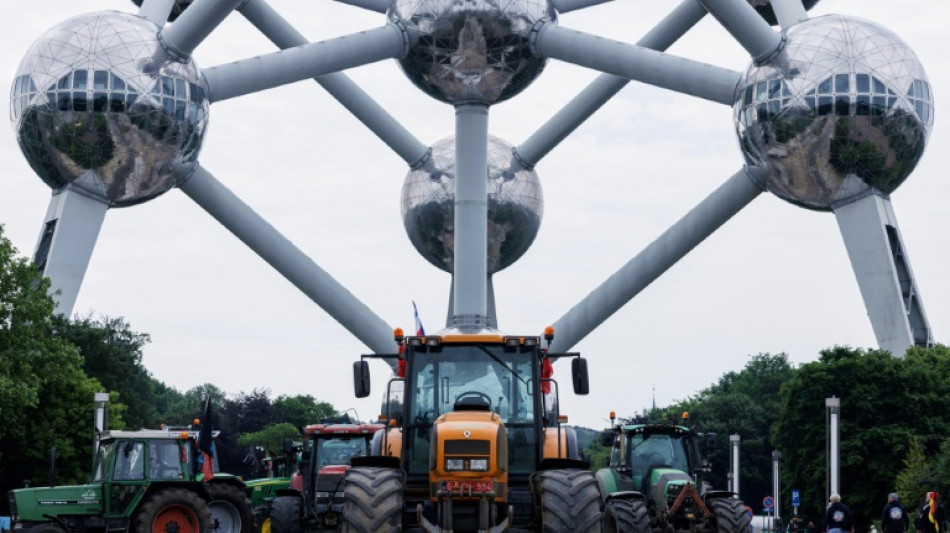
Hardline farmers back in Brussels to protest EU policies / Photo: © AFP

 EU vows AI rules will protect Europeans. Will they?

 Myanmar leader to visit Malaysia after migrant returns begin
 Germany's AfD poised to preside over state assembly for first time
 Australia's opposition vows 'largest cut to immigration' in country's history
 Ready, set, snooze: Sleep-deprived Japanese compete for best-rested

 Falcons thump Saints 45-24 as New Orleans marks Katrina anniversary

 Tuvalu govt adviser says Australia overstepped in pre-COP visit
 Asian stocks mixed despite tech-led Wall St record
 Tens of thousands expected in Paris for high school protests
 AI borrowing binge rattles US markets

 Young Canadians sue government over alleged climate failures

 White Sox down Guardians to take 2-0 series lead

 NHL record-breaker Ovechkin says current season will be his last
 France roar back in Nations League as Italy beat Turkey
 Messi readies for final farewell in Argentina send-off
 Esposito seals Italy win over Turkey in Nations League

 Russia downplays plague reports as Trump offers US help

 Trump says US moved bombers from UK base after 'threats'
 Brazilian stocks surge to record after Bolsonaro election lead
 Leaders to visit Pacific atoll at frontline of climate change
 ICC gives more details about arrest warrants for Taliban ministers
 Nigeria's Tinubu confirms 32 dead after military plane crash

 'Reckless' AI firms can't control models, says whistleblower

 Switching on brain cells: the Nobel-winning science of optogenetics
 Quebec votes as separatist surge poses test for Canada PM

Hundreds of tractors from across Europe rolled into Brussels on Tuesday in a protest spearheaded by hardline farmers' groups against EU green policies, days before elections across the bloc.
Police said around 500 of the vehicles had gathered near the Atomium monument on the city outskirts, rallying to a call by the Dutch-founded group "Farmers Defence Force", with around 1,200 demonstrators present.
It was the latest in a string of farmer protests that have brought Brussels to a halt several times in recent months, but as of mid-afternoon there were no reports of incidents or disruption to traffic.
The FDF movement behind the protest is seen as close to the far-right, which has widely seized on farmer grievances in the run-up to the June 6-9 polls.
The farmers' mainstream pan-European group Copa-Cogeca, present in previous protests, stayed away from the event.
Several hard-right figures -- including from Poland's nationalist Law and Justice (PiS) and the Flemish Vlaams Belang -- were listed among the days' dozen speakers.
France's right-leaning Coordination Rurale farmers union said it was taking part in protest at the environmental demands of the EU's Common Agricultural Policy, as well as over-regulation and free-trade deals it said were "distorting competition".
Past farmer protests in Brussels, part of a months-long movement that roiled Europe early this year, have led to significant concessions in their favour, including a rollback of eco-friendly requirements in order to qualify for EU subsidies.
This time around, the farmers were given permission to demonstrate only in a specific area on the edge of Brussels. Police were deployed to prevent them from approaching the EU institutions at the heart of the capital.
R.Flueckiger--VB