Why one little word is again causing trouble in Balkans / Photo: © AFP

 Moscow denies sanitary measures over plague reports
 Samoa look to recreate 2022 final run at Rugby League World Cup
 Asian stocks mostly up after tech-led Wall St record
 German factory orders plunge as recovery still fragile
 Coco Gauff calls out online racism following China open video review
 KVB Accelerates Middle East Footprint with Strategic MENA Regional Expansion
 Purple reign: Philippines seeks to keep grip on ube throne
 Seoul weighs steps to force North Korea landmine apology
 Yemen's Houthis say struck Riyadh airport, other Saudi sites

 Changer+ Launches Stablecoin-First Self-Custodial Wallet to Make Stablecoins Easier to Use
 White Sox down Guardians, Yankees on brink after Rays loss
 COP31 eyes modest steps as climate disasters multiply
 American Nobel laureate in medicine hopes to illuminate the brain
 Trump approves firing squad for convicted US military base shooter
 Grappling with 'homework scams,' US universities shun AI detectors
 Separatists win Quebec election in test for Canada PM
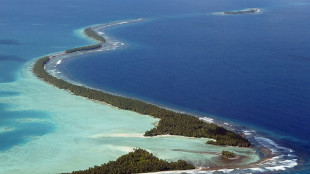 Leaders visit Pacific atoll at frontline of climate change
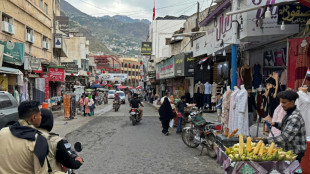 Yemen's Houthis claim striking Riyadh airport, other Saudi sites
 Best-selling British author Jeffrey Archer dies aged 86
 Military plane crash kills 32 in Nigeria
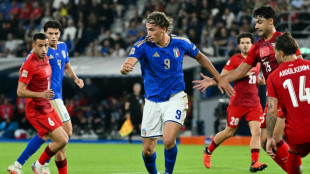
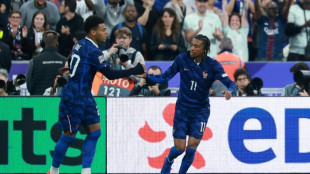 Olise powers France to win over Belgium in Nations League
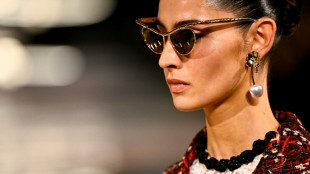 High-flying Blazy turns to birdlife at Chanel
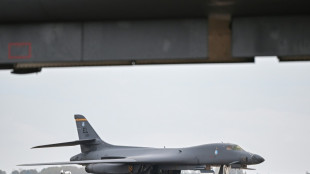
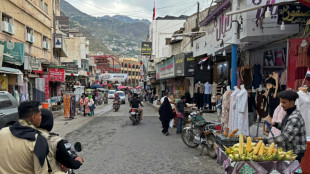 Riyadh's allies pledge troops as Yemen, Saudi Arabia attack Houthis
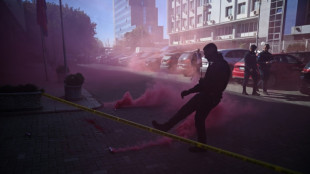 Clashes erupt outside Kosovo parliament over war crimes court
 Milan's Saelemaekers suffers ankle setback, faces lengthy spell out
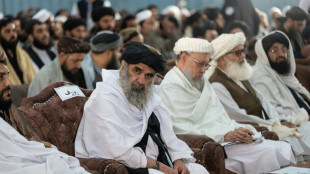
For years North Macedonia has been compromising with its neighbours in the hope of one day joining the European Union, even adding "north" to its name to appease Greece.
But with the dream of EU membership blocked for the foreseeable future, many in the Balkan country are fed up, including leaders of its freshly-elected nationalist government.
New president Gordana Siljanovska-Davkova put the region on notice in her inauguration address last month, pointedly calling the country Macedonia and not North Macedonia twice.
The Greeks were furious, with Athens immediately denouncing the move as illegal, "provocative... and unacceptable".
Skopje added "north" to its title after the Prespa Agreement in 2018 that ended a bitter and hugely-damaging dispute that saw Athens block Skopje joining NATO and the EU for more than two decades.
Greece also has a province called Macedonia, which borders its northern neighbour, and the two countries had been at loggerheads over the heritage of Alexander the Great, one of giants of the ancient world.
- Insists on Macedonia not North Macedonia -
The deal allowed North Macedonia to finally join NATO in 2020. Skopje also hoped it would smooth its path to Brussels.
But then its other EU neighbour Bulgaria slammed the door.
Despite signing a friendship treaty in 2017, relations with Sofia were soon strained by a myriad of disputes over the two country's similar languages and history.
Bulgaria has refused to back the opening of accession talks until North Macedonia recognises its tiny Bulgarian minority in the constitution, sparking a two-year standoff.
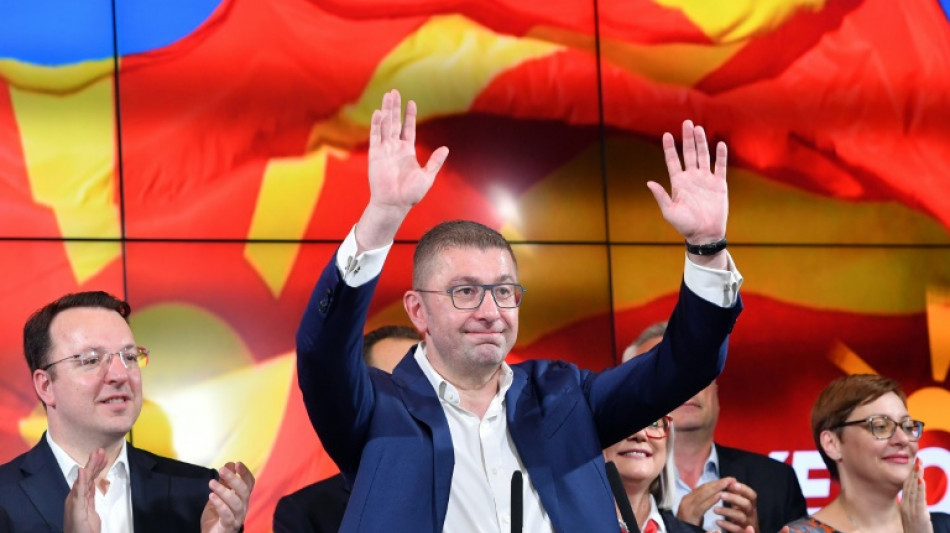
Mounting frustration over the lack of EU progress has stoked resentment that helped the tough-talking nationalist VMRO-DPMNE party crush the more emollient centre-left coalition government in last month's election.
And incoming prime minister Hristijan Mickoski seems in no mood to smooth the spat with Greece.
He vowed to keep calling his country Macedonia despite protests from Greek premier Kyriakos Mitsotakis, who threatened to "raise the issue at the NATO summit" next month.
Mitsotakis doubled down on Sunday, demanding Mickoski "publicly acknowledge, in an explicit and unequivocal manner, that he respects the Prespa Agreement and that his country's name is North Macedonia."
He said he would "encourage the leadership (in Skopje) not to jeopardise their European course. They should realise that the elections are over and that populism... cannot stand the test of foreign policy when one takes office."
But Mickoski told reporters that "how I call my state is my basic human right.
"If they think that we have breached the Prespa Agreement, there is an International Court of Justice. They can start a process there and we will argue the facts."
- EU 'betrayal and bitterness' -
"Because of this name issue, we wasted years waiting in the antechamber of the EU and NATO," said Nikola Dimitrov, a former Macedonian foreign minister and one of the architects of the Prespa Agreement.
"Imagine climbing a mountain for 27 years. Finally, one day you arrive at a flat road that leads to the European Union," he said, as he tried to explain Macedonians' frustration.
"Imagine the feeling of betrayal, bitterness and even insult, when instead of a flat road, citizens saw another mountain."
Brussels "has not managed to find a way to put an end to the vetoes", added Vasko Naumovski, a former negotiator at the UN on the name question.
"This has led to a decline in enthusiasm (for the EU) and an increase in Euro-scepticism."
In Greece, where public opinion is highly sensitive to issues linked to its history, renewed controversy over the Prespa Agreement has fanned nationalist resentment there and become an issue in this week's European elections.
Mitsotakis, whose conservative party had strongly opposed the 2018 agreement, has warned that not calling North Macedonia by its new name violated both that accord and Skopje's constitution.
"Any progress in bilateral relations, as well as any steps taken by Skopje towards Europe, depend on the sincere observance of what was agreed," he warned in May.
"We will not accept similar slip-ups."
T.Ziegler--VB