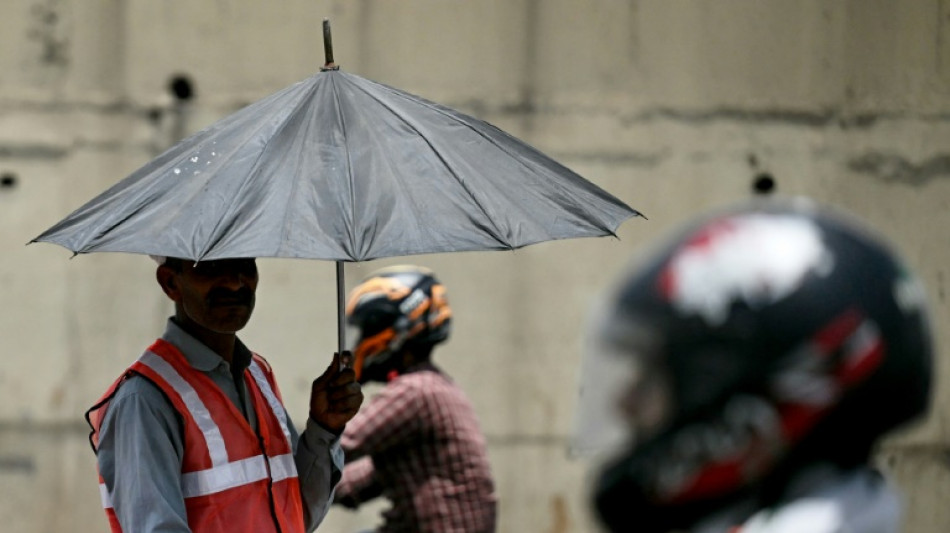
Rich nations met $100 bn climate finance goal two years late: OECD / Photo: © AFP

 N. Korea's Kim pledges 'invariable support' in Putin birthday letter

 OGRD Alliance Advances PLPC Multi-Asset Platform Following APHELAR Milestone, Expanding Licensing and Strategic Capital Frameworks

 Emotion, tears as Messi prepares for Argentina farewell

 Kane eyes Ronaldo record after matching England cap mark

 Spain fight back to beat Croatia, Kane adds to record for England

 Merino double helps Spain beat Croatia, reach Nations League quarters

 US stocks hit fresh records as oil stabilizes on rising supplies

 As Messi bows out, Argentines say 'thank you'

 Ronaldo opens door for Portugal return, apologises for walkout

 'Nobody seems to care': Russian city shrugs off plague reports

 Hundreds arrested in French school protests as Macron summons ministers
 WADA seeks tough anti-doping stance from Kenya

 German ex-spy chief arrested for suspected espionage, treason
 Furyk vows US will 'do more' to end Ryder Cup losing streak

 Iyer hits ton as India hammer West Indies in T20 opener

 Mandhana named India women's team captain after Kaur quits

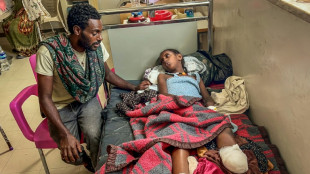 'The sound keeps coming back': children maimed in Ethiopia's Tigray clashes

 Paris Women's Fashion Week: the key trends

 i-payout Introduces a New Approach to Payments, Closing the Beneficiary Information Gap

 New Generation of Crypto Miners Released by ASICID

 New investor forecasts LIV Golf teams could be worth $100 mn each

 Shakira, Pique return to court over children visit arrangements

 Nobel physics prize hails 'ghostly messengers' from space
 France's Mistral unveils latest model in sovereign AI push

 Stocks climb as oil prices retreat

Wealthy countries met their target of providing $100 billion in annual climate aid to poorer countries for the first time in 2022 though two years later than promised, the OECD said Wednesday.
The failure to raise the money on time has eroded trust in climate negotiations and the OECD report comes as nations race to set a more ambitious goal by November.
In 2009, developed nations promised to raise $100 billion a year by 2020 to help low-income countries invest in clean energy and cope with the worsening impacts of climate change.
More than a decade later this target was finally met for the first time in 2022 with $115.9 billion raised, the Organisation for Economic Co-operation and Development said.
"This achievement occurs two years later than the original 2020 target year," said the OECD, which tracks official figures on climate finance pledges.
Climate finance can come from governments in the form of bilateral aid, multinational development lenders like the World Bank, or the private sector.
Most of the $100 billion disbursed in 2022 went to climate action that limits the release of heat-trapped greenhouse gases, the OECD said, mainly in clean energy and transport improvements.
The $100 billion target is nowhere near what experts say developing nations will need for renewable energy and adaptation measures like coastal defences against rising seas.
A panel convened by the UN estimates these countries -- excluding China -- will need $2.4 trillion a year by 2030 to meet their climate and development needs.
Many developing economies least to blame for the greenhouse gases that stoke global warming are among the most exposed to the costly and destructive effects of worsening weather extremes.
- 'Creative accounting' -
Climate finance is a thorny issue at the annual UN climate talks and negotiators have been working this year to try and set a new goal to replace and go beyond the $100 billion target.
The hosts of this year's COP29 in gas-rich Azerbaijan have made the matter a priority and hope to have an ambitious agreement inked during the summit in November.
Negotiators meet next week in Bonn for crucial midyear talks where sticking points over this new financial target will be thrashed out.
Some parties want China and other major emerging economies to chip in, while there is disagreement over how much should be raised, how the money is managed, and who is eligible for it.
Some developing nations want their climate action to be contingent on receiving financial aid.
India, for example, has proposed that developed countries provide $1 trillion in climate finance every year from 2025 -- 10 times the current target.
Climate activist Harjeet Singh said the process had been "riddled with ambiguity and inadequacies".
"This isn't the time for creative accounting or fiscal loopholes. Rich countries urgently need to step up, clear these smokescreens, and deliver real, substantial financial support," he said.
A.Zbinden--VB