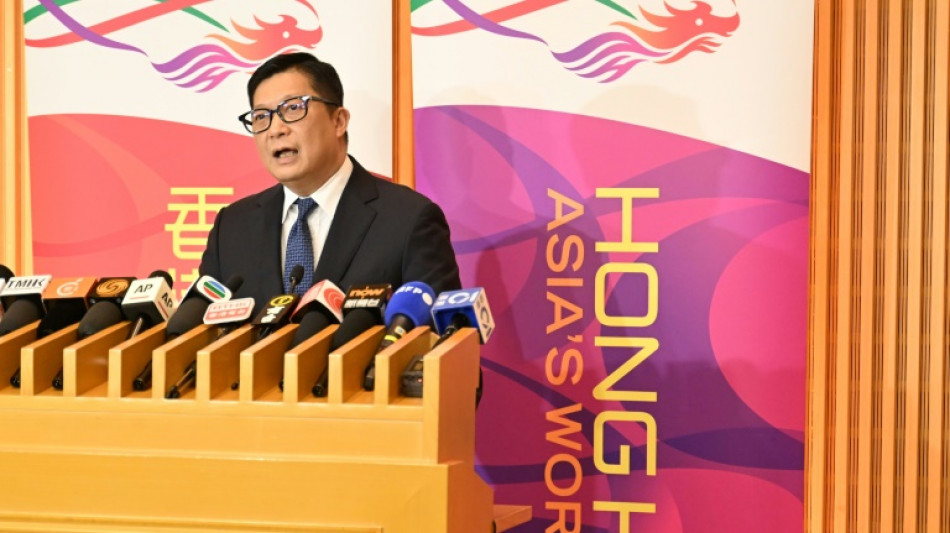
Hong Kong security law arrests 'stifle freedom of expression': EU spokesperson / Photo: © AFP

 N. Korea's Kim pledges 'invariable support' in Putin birthday letter

 OGRD Alliance Advances PLPC Multi-Asset Platform Following APHELAR Milestone, Expanding Licensing and Strategic Capital Frameworks

 Emotion, tears as Messi prepares for Argentina farewell

 Kane eyes Ronaldo record after matching England cap mark

 Spain fight back to beat Croatia, Kane adds to record for England

 Merino double helps Spain beat Croatia, reach Nations League quarters

 US stocks hit fresh records as oil stabilizes on rising supplies

 As Messi bows out, Argentines say 'thank you'

 Ronaldo opens door for Portugal return, apologises for walkout

 'Nobody seems to care': Russian city shrugs off plague reports

 Hundreds arrested in French school protests as Macron summons ministers

 WADA seeks tough anti-doping stance from Kenya
 German ex-spy chief arrested for suspected espionage, treason
 Furyk vows US will 'do more' to end Ryder Cup losing streak

 Iyer hits ton as India hammer West Indies in T20 opener
 Mandhana named India women's team captain after Kaur quits
 'The sound keeps coming back': children maimed in Ethiopia's Tigray clashes

 Paris Women's Fashion Week: the key trends

 i-payout Introduces a New Approach to Payments, Closing the Beneficiary Information Gap

 New Generation of Crypto Miners Released by ASICID

 New investor forecasts LIV Golf teams could be worth $100 mn each
 Shakira, Pique return to court over children visit arrangements
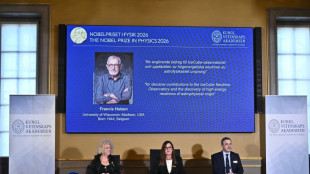 Nobel physics prize hails 'ghostly messengers' from space

 France's Mistral unveils latest model in sovereign AI push

 Stocks climb as oil prices retreat
The arrests of six people under Hong Kong's new national security law for posting online messages "seem to confirm" the European Union's concerns about the legislation, an EU spokesperson said Wednesday.
The six were arrested Tuesday for publishing "posts with seditious intention" on Facebook about commemorating Beijing's 1989 Tiananmen Square crackdown, authorities said.
Hong Kong's security chief identified one of those arrested as Chow Hang-tung, a prominent activist who led the now-disbanded group that used to organise annual vigils to mark the event.
"The arrests seem to confirm the EU's concerns about the new law and its effect on the rights and freedoms of the people of Hong Kong," the EU spokesperson told AFP on Wednesday.
"While we need to assess the details of the individual cases, the arrests suggest that the new law is used to stifle freedom of expression of the people of Hong Kong."
The EU "calls on the Hong Kong authorities to protect the ability of the people of Hong Kong to exercise their rights and freedoms," the spokesperson said.
The six were the first people to be arrested under the "Safeguarding National Security Ordinance" -- commonly referred to as Article 23 -- which Hong Kong enacted in March and penalises sedition with up to seven years in prison.
Passed by an opposition-free legislature, Article 23 became Hong Kong's second national security law, following a Beijing-imposed security law that came into effect in 2020.
The United States, the European Union, Japan and Britain have been among Article 23's strongest critics.
- 'Silencing critique' -
Amnesty International's China director Sarah Brooks called the arrests a "shameful attempt to prohibit people from marking the upcoming anniversary".
The government has weaponised the new security law to "silence critique" despite warnings from United Nations human rights experts, Brooks said.
Hong Kong used to be the only place on Chinese soil where people could openly mourn those who died on June 4, 1989, when the government sent troops to crush demonstrations in Beijing calling for political change.
Chow is already serving a more than 30-month jail sentence over other charges, including "unauthorised assembly" for her attempt to publicly commemorate June 4.
She and two other leaders of the group who organised the vigil are awaiting trial for another national security case, where they are accused of "incitement to subversion".
Authorities connected Chow's latest arrest to a Facebook page called "Chow Hang-tung Club", which in recent weeks has called on the public to write about their experiences related to Tiananmen vigils.
"We hope that all Hongkongers worldwide... who have participated in the candlelight vigils over the past 30 years will write testimonies together," one post read.
The vigil, which once drew tens of thousands to Hong Kong's Victoria Park, has been banned since 2020.
Asked whether it was still legal to mourn Tiananmen, Hong Kong's security chief Chris Tang said Tuesday the key was not the date itself, but "utilising the subject" to incite hatred against the government.
Discussion of the Tiananmen crackdown is highly sensitive for China's communist leadership and commemoration is taboo on the mainland.
K.Hofmann--VB