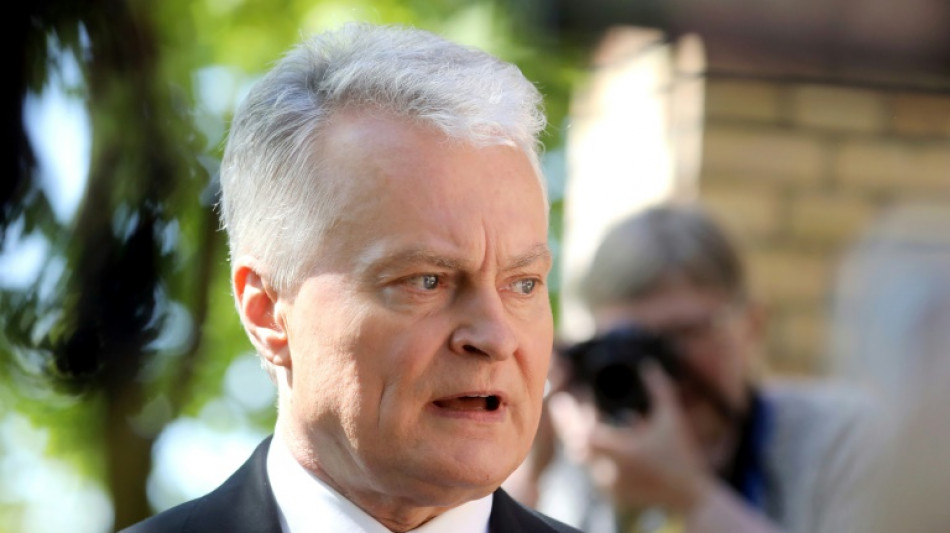
Lithuanian president re-elected in vote marked by Russia fears / Photo: © AFP

 Chip industry activists call for South Korea to recognise cancer cases
 Famine-scarred southern Madagascar braces for El Nino
 How the EU regulates lobbyists
 I.Coast refuge offers lifelong care for youngsters scorned as 'sorcerers'

 Indian central bank hikes rates for first time in more than 3 years
 Hotel Blacklist Launches New Accommodation Industry Risk Assessment Tool

 Bangladesh nuclear plant draws hope -- and worry

 US beat Canada 1-0 to wrap up four-win international break

 Turkey, Australia's joint COP31 leadership raises doubts

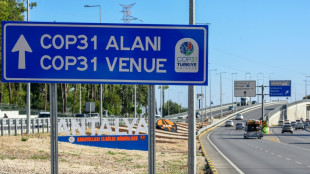 For Turkish NGOs, COP31 offers rare space for action

 Sleep, appetite, gene-editing experts contend for Nobel chemistry prize

 Nobel Peace Prize haunted by the 'spectre' of Trump

 Africa launches own credit agency in bid for cheaper borrowing

 US, China, EU: three paths to regulating AI
 Australia's High Court rules against coal mine in landmark climate case
 Australia touts new funds for Pacific infrastructure at Fiji 'pre-COP'

 Eva Marie Saint, Oscar winner of Hollywood classics, dies at 102

 Australia probes app used in cheap smart glasses over privacy fears
 England needed to 'move on' from World Cup pain, says Tuchel
 O'Neill to stay at Celtic after period of "reflection"

 Kane marks 125th England cap with Wembley Nations League double

 Quebec's incoming separatist leader wants to block Crown from swearing-in

 Emmys gala will now stream its premier television awards
 Paramount completes Warner Bros takeover, creating Skydance
 Trump blames France unrest on Islam, migration

Lithuania's President Gitanas Nauseda won re-election on Sunday in a vote marked by defence concerns over neighbouring Russia, official results showed.
The count published by the electoral commission showed that Nauseda won 76 percent of votes with 80 percent of ballots counted after polls closed in the second-round vote.
Voters "have handed me a great mandate of trust and I am well aware that I will have to cherish this," Nauseda, 60, told journalists in Vilnius.
"Now that I have five years of experience, I believe that I will certainly be able to use this jewel properly, first of all to achieve the goals of welfare for all the people of Lithuania," he said.
His opponent, Prime Minister Ingrida Simonyte, conceded defeat in comments to reporters and congratulated Nauseda.
The Lithuanian president steers defence and foreign policy, attending EU and NATO summits, but must consult with the government and parliament on appointing the most senior officials.
While the candidates agree on defence, they share diverging views on Lithuania's relations with China, which have been strained for years over Taiwan.
Both candidates agree that the NATO and EU member of 2.8 million people should boost defence spending to counter the perceived threat from Russia, and to that end the government recently proposed a tax increase.
- 'Threat of war' -
Vilnius fears it could be next in the crosshairs if Moscow were to win its war against Ukraine.
Lithuania is a significant donor to Ukraine, which has been battling Russia since the 2022 invasion. It is already a big defence spender, with a military budget equal to 2.75 percent of GDP.
It intends to purchase tanks and additional air defence systems, and to host a German brigade, as Berlin plans to complete the stationing of around 5,000 troops by 2027.
Pensioner Ausra Vysniauskiene said she voted for Nauseda.
"He's an intelligent man, he speaks many languages, he's educated, he's a banker," the 67-year-old told AFP.
"I want men to lead, especially when the threat of war is so big."
- Tension over Taiwan –
Simonyte, the 49-year-old candidate of the ruling conservatives, was running for president again after losing to Nauseda in the last presidential ballot.
The uneasy relationship between Nauseda and Simonyte's conservatives has at times triggered foreign policy debates, most notably on Lithuania's relations with China.
Bilateral ties turned tense in 2021, when Vilnius allowed Taiwan to open a de facto embassy under the island's name -- a departure from the common diplomatic practice of using the name of the capital Taipei to avoid angering Beijing.
China, which considers self-ruled Taiwan a part of its territory, downgraded diplomatic relations with Vilnius and blocked its exports, leading some Lithuanian politicians to urge a restoration of relations for the sake of the economy.
Nauseda sees the need to change the name of the representative office, while Simonyte pushed back against it.
- Gay rights -
But voters also cited personal differences between the candidates, as well as economic policy and human rights.
Simonyte drew support from liberal voters in bigger cities and traditional conservative voters.
A fiscal conservative with liberal views on social issues, she notably supports same-sex partnerships, a controversial issue in the predominantly Catholic country.
"I would like to see faster progress, more openness... more tolerance for people who are different from us," she said when casting an early vote.
Nauseda, who maintains a moderate stance on nearly all issues, has established himself as a promoter of the welfare state, with conservative views on gay rights.
R.Fischer--VB