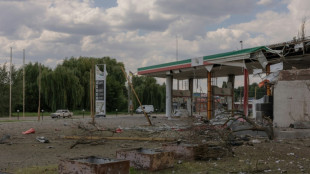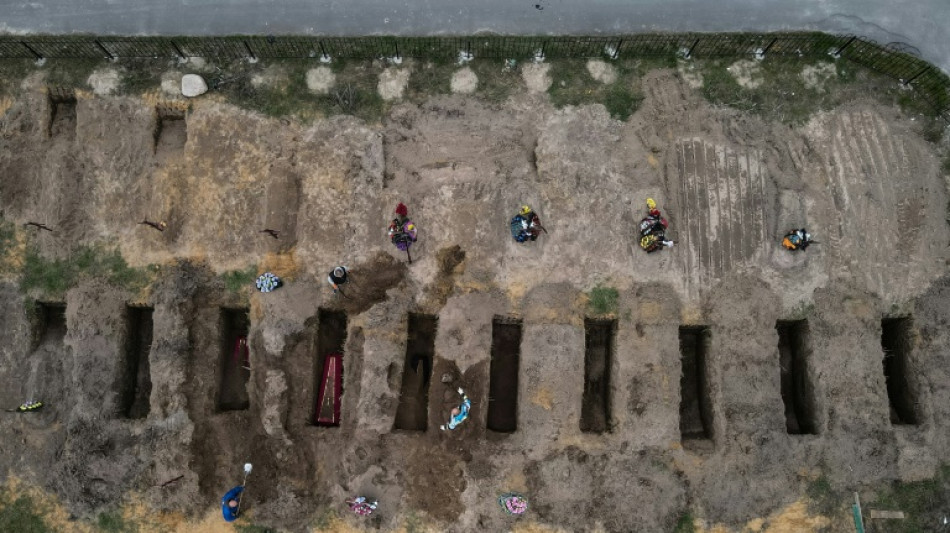
In Bucha's morgue, autopsies begin on the victims of war / Photo: © AFP/File

 Mideast war impact on travel bookings fading, TUI says

 Bangladesh get Das fitness boost for daunting Australia task
 One dead, 172 rescued as second ferry in days catches fire in Indonesia

 Foxconn posts quarterly profit surge on AI server demand
 Hazlewood gets Australia nod ahead of Boland for Bangladesh Test

 Toyota ex-chief Okuda, pioneer of the Prius, dead at 93

 Colombia rescuers find woman alive as quake death toll passes 200

 New Zealand PM survives leadership challenge months from election
 Passengers rescued as second ferry in days catches fire in Indonesia

 Oil prices rise, stocks mixed ahead of crucial US inflation data
 UK 'joke' candidate Binface pushes serious point about politics
 New Zealand PM Luxon survives leadership challenge months from election
 Cuba celebrates Castro's 100th as his revolution faces its toughest test
 Defending champion Shelton rolls into Montreal semis

 What to know about the total solar eclipse

 Tentoglou claims fourth Euro long jump title, injured Jacobs falters

 All Blacks knew Nonu would perform solo Haka - coach Rennie

 Britain's Glave upstages Jacobs to win European 100m gold

 Greece's Tentoglou wins fourth European long jump title

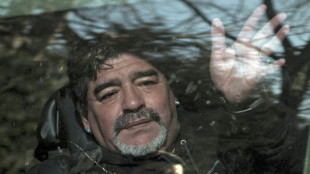 Doctors ignored 'warning signs' before Maradona's death, court hears

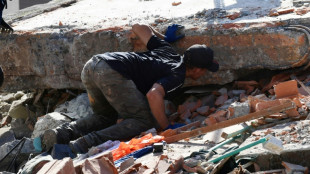 Pereira, the 'zombie city' devastated by Colombia's earthquake

 UN says 2 staff arrested by Afghan intelligence agency
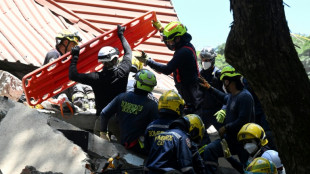 Colombia scrambles to find survivors as quake kills 240

 Ramsay-Peaty out of medals as Italy's Martinenghi wins European gold

 AI firm Manus to resume 'independent' operations after China blocks Meta deal
According to her death certificate, Lyudmyla Bochok, 79, was killed by a bullet to the head and the back on March 5.
Her body was found lying on the doorstep of her home at 87, Peremogy Street in Bucha, a commuter town near Ukraine's capital Kyiv now synonymous with unspeakable war crimes committed during Russia's invasion.
Bochok's mentally handicapped sister Nina, 74, was found dead in the kitchen: she died of heart failure, according to the death certificate seen by AFP.
But her nephew Yevgen Pasternak believes she died of fright, loneliness or hunger, after the Russians executed her sister.
After two weeks of fruitlessly searching body bags and examining the corpses of dozens of elderly women, Pasternak finally found his Aunt "Lyuda" at the back of a white truck on Monday.
But he has so far been unable to locate Nina.
Around 4,000 residents found themselves trapped in Bucha as the Russians advanced.
Four hundred bodies were discovered when the Russians then withdrew again on March 31, local police chief Vitaly Lobas told AFP. Around a quarter of them are still unidentified.
"The majority died violent deaths" and were shot, Lobas says, declining to provide a concrete figure at this stage.
- Piles of body bags -
"Number 365, is that one yours?" asks a masked Ukrainian volunteer pointing to a grey body bag next to a trailer, where 12 other corpses wait for a space in Bucha's small morgue.
"Yes, it's mine," says Lyudmyla's and Nina's 44-year-old nephew, Pasternak.
"And the other one, is it yours?" continues the volunteer, in a hurry to get on.
"No, it's theirs," says Pasternak, who has been coming here looking for his aunts for weeks.
The bodies of Bucha residents who died or were killed during Russia's month-long occupation of the town started being gathered up on April 3.
Five days later, the autopsies began at the region's central morgue in nearby Bila Tserkva, where 18 French police experts have joined the team.
The coroners' findings will all contribute to the local and international investigations being carried out into possible war crimes.
In the car park of the small communal morgue, the body bags arrive in carts or piled up in trailers, vans and non-refrigerated trucks.
After being unloaded, the body bags are left on the floor, sometimes for several hours, AFP saw.
Nadia Somalenko patiently waits to collect her husband's death certificate, undeterred by the human bodies covered in plastic and the strong smell that attracts the neighbourhood's stray dogs.
- 'Bullet to the head' -
The Russians must have taken him out of the house, because they found the potatoes and onions he was peeling on the table, she said.
After waiting all morning, Nadia is finally handed the death certificate of her 61-year-old husband, Mykola. It states the cause of death as a "bullet to the head".
She says that Somalenko had refused to leave Bucha and join his wife in Kyiv, despite the fighting. He was not afraid of the Russians, Nadia says.
Lyudmyla cannot wait any longer. When a lorry enters the car park at Bucha's morgue, the small woman opens the door herself.
And despite the overwhelming stench, she frenziedly searches among the body bags for number 163.
"It's him, our son! Let me see! Let me see if it's him or not!" she begs.
Lyudmyla tries to open the cover, and her husband tries to stop her. The old man opens the zip a little, but attempts to shoo his wife away with his hand.
"My son, my little baby... that's our quilt, that's his earring, his jacket," she whispers under her FFP2 mask.
The body is raised and placed on a stained stretcher.
The sobbing mother starts to take it through the car park, breaking into a run, as if her son were simply injured and could be taken to the emergency ward for help.
She recounts how her son Artyom had first brought his wife and daughters to safety in the western city of Lviv, but then planned to return to the village of Myrotske, near Bucha, in early March to try to rescue his parents.
But he never arrived and, for a month, no one knew what had happened to him.
His decomposed body was finally found 200 metres (650 feet) away from their home, near a swamp, on April 6. His death certificate, seen by AFP, said he died of bullet wounds.
Sergiy Kaplichny, head of the funeral parlour next to the morgue, moves from one coffin to another, sporting a flashy orange sweater.
The funerals are free and include a choice of colour for the coffin, a cross with a temporary plaque, a traditional plastic garland of flowers and the presence of a priest.
Interments take place in Bucha's cemetery Number Two, located on the edge of a forest of fir trees.
- Never-ending cycle -
The bodies of three Bucha residents, executed for no apparent reason by Russian soldiers, wait to be laid to rest.
In a red coffin to the left lies Lyudmyla, assassinated on her doorstep. In the middle rests Mykola, taken away during a meal.
On the right in a black coffin is Mykhailo Kovalenko, 62, a father who was killed by a Russian sniper as he tried to escape, according to his grieving son-in-law.
A blue Lada makes its way up the cemetery path and parks by the graves, briefly interrupting the priest's prayers. Two volunteers clutching spades get out.
Four more coffins have arrived: graves must quickly be dug for them and filled up by nightfall.
It is an unending cycle of death that will inexorably start all over again the next day.
W.Lapointe--BTB