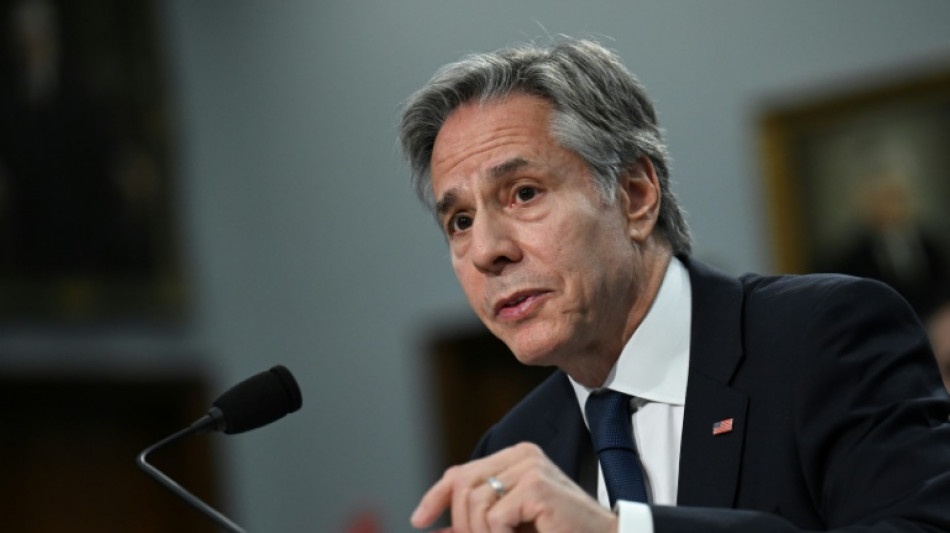
Blinken doubts global pandemic deal can be reached in 'near term' / Photo: © AFP

 Court orders German ex-spy chief kept in jail after spying, treason arrest

 Guinea caps bottled water prices after sachets banned

 Spared, married, hanged: the last weeks of Iranian protester Alireza Sepahi

 Nobel physics winner's pride at pioneering AI role
 IMF preparing El Nino assistance, concerned about AI bubble burst: chief to AFP

 West must embrace 'national power' or face decline: Rubio

 Shell refining margins reach record highs as wars hit supply
 Former Spain, Barca winger Pedro retires from football

 Arteta signs new Arsenal deal until 2030

 Stocks decline as oil climbs on Mideast flareup
 Gauff says online abuse was 'draining' after China Open exit
 As sector struggles, Porsche puts luxury ahead of volume
 'It's personal': Fiji minister pushes better climate finance at pre-COP

 Russia glosses over dark Soviet past in reinvented museum

 UK tax body opened probe into Man City in 2018: FT

 Yemen's Houthis claim new attacks on Saudi airports as conflict deepens
 Germany factory production at highest level for 18 months
 Thailand floods death toll rises to 60 since mid-September

 US pushes Russia for information on plague reports

 Myanmar leader lands in Malaysia for migrant return talks
 Indian central bank hikes rates for first time since 2023

 US military on Okinawa face curfew, alcohol ban after murder case
 Fierce lobbying in EU over 'forever chemicals'

 Dodgers beat Braves and Padres avoid sweep in MLB playoffs
 Mourning, war and elections as Israel marks October 7

US Secretary of State Antony Blinken on Wednesday voiced doubt for the near-term prospects of a global pandemic agreement under negotiation that has drawn a backlash in several Western countries.
Jarred by the Covid-19 pandemic, World Health Organization member countries have spent more than two years thrashing out an accord on future pandemic prevention, preparedness and response.
Talks are set to go to the wire on Friday, after which the annual assembly of WHO member states, which opens on Monday in Geneva, will decide where the process goes next.
"Where it currently stands is that it seems very unlikely that negotiations could conclude successfully in the next few days," Blinken told a congressional hearing in response to a question critical of the potential deal.
"There's no consensus," he said.
Blinken said that the United States was still working with "many countries around the world in making sure that we're better prepared for next time, they're better prepared -- that they have their own capacity to detect, to deal with, and, as necessary, to produce things like vaccines."
"All of that is part of the conversation, but I don't think, based on the latest I've seen, that this is going to come to a conclusion in the near term," Blinken said.
- Consensus conundrum -
In early May, WHO chief Tedros Adhanom Ghebreyesus acknowledged that some countries "may not be in a position to join a consensus," but he urged them "not to block consensus."
WHO member states' negotiating teams have since been working round the clock at the UN health agency's headquarters in Geneva to try and get an agreement finalized in time for the World Health Assembly, which opens on Monday.
"It's too early to say where we will be on Sunday," a diplomatic source in Geneva said.
"The negotiations are complicated and difficult. They are moving forward but the result is not yet predetermined."
Addressing one key concern, Blinken said that the United States would insist that the text reflect "our clear interests" including on intellectual property rights, with lawmakers charging that the deal could cede access to US know-how to adversary China.
Opposition to a pandemic agreement has grown in the United States, Britain and other countries, including among vaccine skeptics and conservatives who allege it would infringe on state sovereignty.
The latest draft of the agreement retains a clause saying nothing in it shall be interpreted as giving the WHO "any authority to direct, order, alter or otherwise prescribe the national and/or domestic laws" of any country, or "impose vaccination mandates or... implement lockdowns."
- Equity -
Under the US Constitution, treaties require approval by two-thirds of the Senate -- a level of support that is virtually insurmountable on any controversial issue.
Blinken stopped short of clearly promising that President Joe Biden's administration would submit any pandemic agreement, if it is concluded, as a treaty to the Senate.
"If there is a constitutional requirement, we will fulfill it," Blinken said.
Tedros told a press conference that the accord has "equitable access to personal protective equipment, vaccines, therapeutics and diagnostics at the core."
"It will save lives and I'm asking country leaders to give it one last big push to get it over the line next week."
WHO emergencies director Michael Ryan said the talks were making progress and countries were very determined to find agreement.
However, "there are clearly some key areas in which the member states still have some distance between them," he added, saying they included access to pathogens, financing, prevention, and vaccines.
U.Maertens--VB