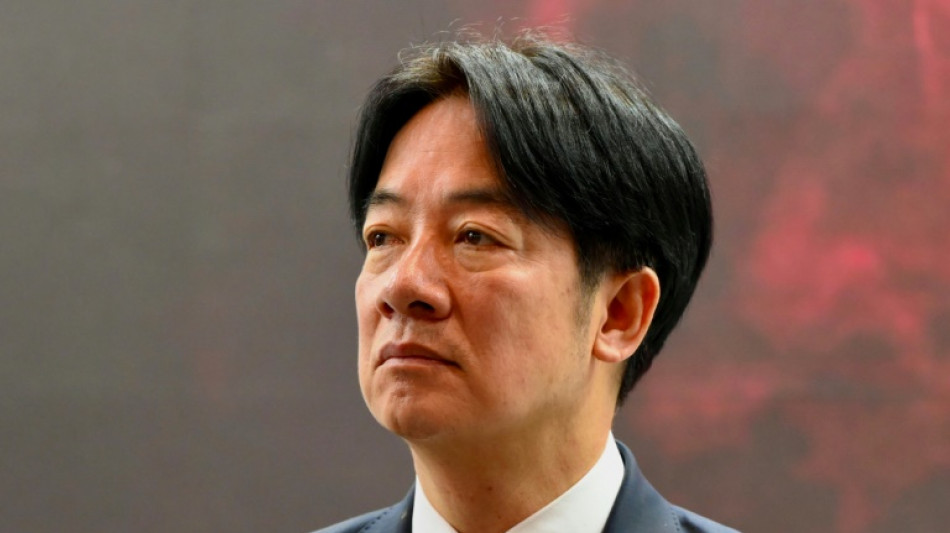
Lai Ching-te: from coal miner's son to Taiwan president / Photo: © AFP

 Bid by Italy's Intesa bank to take over MPS gets boost
 Stablecoins Are Quietly Becoming Business Infrastructure, NOWPayments Data Shows
 Oil surges, stocks sink as US reportedly eyes new Iran strikes
 Woman in botched US execution walking, mentally 'foggy': lawyer
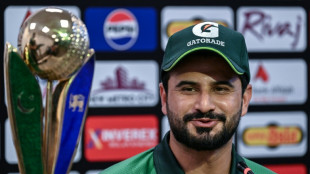 Farhan hopes Pakistan's new combination takes off in Sri Lanka T20Is
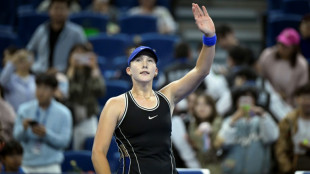 Teenager Andreeva seals China Open semi-final with Bartunkova
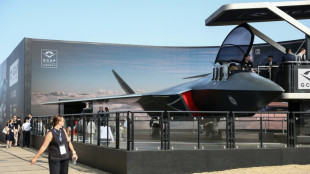 Britain's Burnham says open to Germany joining warplane project
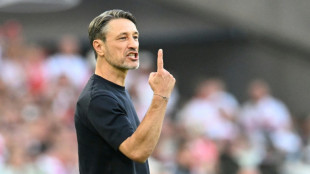 Kovac's tough love has Dortmund dreaming of title charge
 China announces candidate for WHO chief
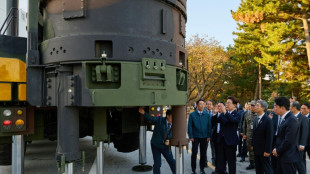 South Korea test-fires its first homegrown hypersonic weapon: presidency

 ONAR Advances Nasdaq Listing Preparation Following Advertise Purple Acquisition and Financing
 Thailand opens extradition process for reporter sought by China
 France struggles to wean social housing off gas
 Germany lifts GDP forecast as economy withstands Iran war
 Sri Lanka appoints Kusal Mendis as Test captain
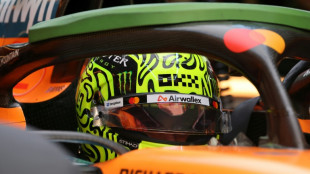 Norris confident McLaren can shine in Singapore
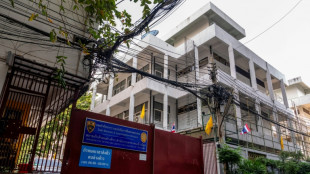
 Alex Bodi pushes ahead with expansion: ALIX LASERS showroom planned for Bucharest
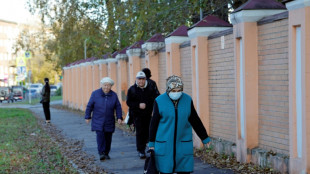
 Fossil fuels off COP31 agenda as global output keeps rising
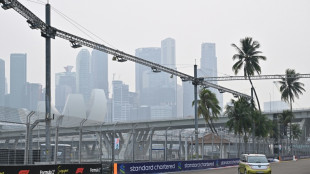 Haze not 'a threat' to Singapore F1 race: organisers
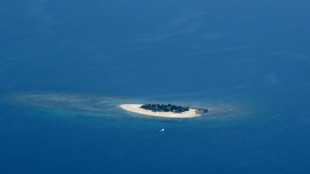 COP31 organisers say to seek 'ambitious' action with their text
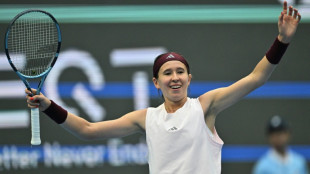 Bartunkova thrashes Muchova to reach China Open semi-finals
 Drone hits Yandex data centre, in first such attack on Russia
 Oil prices surge and stocks sink on fresh inflation worries
 AI startup Manus raises $500m after Meta acquisition blocked by China
 From refuge to repatriations: Malaysia's Myanmar U-turn
Son of a coal miner, Taiwan's Lai Ching-te takes the helm Monday as president of the self-ruled island, tasked with navigating the widening rift with an increasingly assertive China.
The 64-year-old Harvard graduate swept to the presidency in January's elections on the promise he would defend Taiwan's democracy and resist Beijing's claims on the island.
Lai said his victory, which delivered an unprecedented third consecutive term for the Democratic Progressive Party (DPP), was a clear message to China that the Taiwanese "rejected authoritarianism".
"Our democracy is constantly under the pressure of foreign disinformation, military threats, and economic coercion," Lai told a recent summit.
"China's coercion has only strengthened our resolve to remain democratic and free. We refuse to submit to fear."
Lai has vowed to continue outgoing President Tsai Ing-wen's policies of building up Taiwan's military capabilities as a deterrence against a potential invasion from China.
But his outspokenness -- which he has moderated in recent years -- has drawn Beijing's ire.
China regards him as a "stubborn worker" for Taiwan's independence and a "saboteur of peace", warning that the soft-spoken politician would be the cause of "war and decline" for the island.
- 'Duty' -
Despite signalling to China an openness to dialogue, Lai is likely to be rebuffed.
Beijing "will not respond positively to him any more than it did to Tsai", said Steve Tsang, director of London's SOAS China Institute.
"The real issue is how Lai will adjust his approach, once the open arm he is likely to extend to Beijing is met with a cold -- or worse - response."
Unlike most of Taiwan's political elite, Lai rose from a humble background.
Born in 1959, Lai was raised by his mother alongside five other siblings in a rural hamlet in New Taipei City, after his coal miner father died when he was a toddler.
After he graduated from Harvard University in public health, he worked in a hospital in southern Taiwan before turning in 1996 to politics during the Third Taiwan Strait Crisis.
"My defining moment came as China's military adventurism... threatened our shores with live fire exercises and missiles," he wrote in an op-ed for The Wall Street Journal last year.
"I decided I had a duty to participate in Taiwan's democracy and help protect this fledgling experiment from those who wished it harm."
He served as a lawmaker, a mayor of the southern city of Tainan and a premier before he was tapped to be vice president to President Tsai Ing-wen, whom he will now succeed.
Under Tsai's two-term tenure, relations with China plummeted -- with all high-level communications cut off.
Lai has stuck to Tsai's stance that Taiwan is "already independent", and does not need to formally declare itself separate from China.
- 'False peace' -
He has also said he is willing to have exchanges with China "on the preconditions of parity and dignity", explaining that closer ties for economic prosperity should not be traded for Taiwan's sovereignty.
"Accepting China's 'one-China' principle is not true peace," he said, referring to a Beijing doctrine that Taiwan is a part of China.
"Peace without sovereignty is just like Hong Kong. It is a false peace."
During Lai's time as premier, he was more vocal than Tsai about independence, which some say has top partners like the United States -- Taiwan's main weapons provider -- concerned about how he will handle relations with China.
But political science professor Luo Chih-mei, from National Taipei University, said Lai was unlikely to make "complicated moves during a US election year".
Brookings Institution senior fellow Ryan Hass said Lai was not "a wild-eyed zealot with a one-track-minded focus on Taiwan independence"
"He is a professional politician who has organised his career around becoming Taiwan's president," Hass wrote in a report.
"Now that he has ascended to Taiwan's top elected position, he will want to win reelection."
C.Kreuzer--VB