'We will never register': Georgia NGOs vow to defy repressive law / Photo: © AFP

 Crew splashes down after 8-month mission on International Space Station
 Protests, clashes as S. African anti-migrant tensions reignite
 Russian data centre hit by drone in first for Ukraine war

 'Fighting for our future': France high school students vow no let-up
 Kyiv entering 'survival' mode amid Russian strikes surge: mayor tells AFP

 Verdict due in Mexico trial over murders of Australia, US surfers
 B2PRIME Welcomes Christina Barbash as Commercial Manager

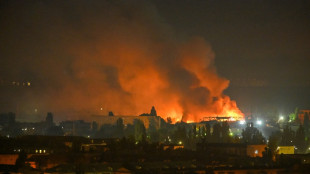 Russia forcing Kyiv into 'survival' mode before winter, mayor tells AFP
 Closing arguments begin in Maradona death trial
 UEFA president Ceferin to stand for re-election in 2027

 Nearly 300,000 Nepalis at flood risk: study

 Riyadh kindergarten hit by interception debris as Houthis say targeted airport
 Alex Bodi mizează, alături de CRIF, pe investiții transparente și pe prevenirea riguroasă a spălării banilor
 Gulf Labs, Part of Thailand’s $27 Billion GULF Group, Goes Live as an Injective Validator

 EU okay for winter despite 'historically low' gas stocks: operators
 Rwanda to host F1 Grand Prix: sources close to both sides

 EU top diplomat says bloc in favour of UN Lebanon peacekeepers' extension

 Antonelli and Russell to run different Mercedes aero packages in Singapore

 WTO hikes 2026 trade growth forecast on AI boom

 'I love that challenge': Hamilton prays for rain in Singapore

 G.Bissau moves towards postponement of December general election

 Verstappen out to settle 'unfinished business' at Singapore Grand Prix

 WhiteBIT Launches Bitcoin Lightning Network Support, Powered by Voltage

 Oil surges, stocks sink as US reportedly eyes fresh Iran strikes
 Anne Carson: modern takes on Greek classics

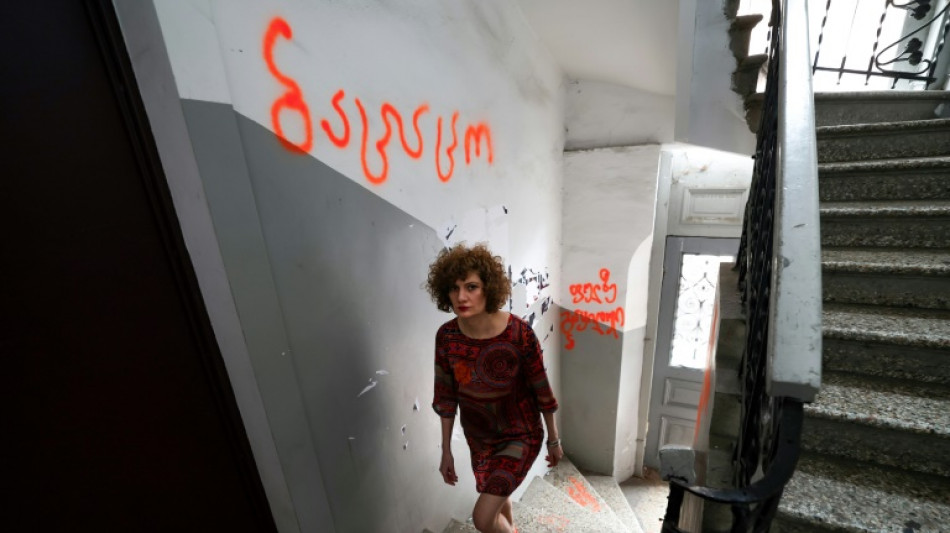
Baia Pataraia, the head of a leading women's rights group in Georgia, woke up last weekend to find her apartment building in the capital Tbilisi plastered with posters of her face and the words "foreign agent".
The images were also glued in the staircase leading to her front door, where "grant-eating lesbian" was sprayed in orange graffiti.
"My neighbours took them down, that was an amazing feeling," Pataraia said.
Activists, independent journalists and opposition politicians have faced weeks of violence and threats since the government of the former Soviet republic introduced draft legislation last month targeting NGOs.
The government says the law is aimed at ensuring "transparency", arguing that foreign-funded groups like Pataraia's undermine Georgia's sovereignty.
But rights observers and Western governments warn it will harm Tbilisi's path to the European Union and further ignite tensions in the Caucasus country, which has been wracked by polarisation since its independence from the USSR in 1991.
Pataraia rejected the suggestion that she was a threat. Her group, Sapari, supports women suffering from domestic violence and discrimination.
"Whatever I do, I do it for my people, my country, and definitely not for anyone else," she said.
For months before the law was adopted on Tuesday, Pataraia said the government had been tightening the screws on NGOs, waging a campaign against them in the media.
But NGOs like Pataraia's remain defiant.
"I will never, ever register as a foreign agent," she told AFP.
- 'Traitor' posters -
Dubbed the "Russian law" over its similarity to repressive legislation first passed by the Kremlin, the bill sparked weeks of mass protests.
If implemented, any organisation or media group receiving at least a fifth of its funding from abroad would have to register as an agent of "foreign influence".
Pataraia had been targeted by similar posters before. When the ruling Georgian Dream party first tried to pass the legislation last year, an image of her face and the word "traitor" was posted around Tbilisi metro stations.
"But this is the first time they have come to our homes," she said.
Not registering with authorities would mean facing impossible fines -- or closure.
Outside the Georgian headquarters of Transparency International, an anti-corruption NGO, there were similar posters threatening the organisation's local head Eka Gigauri.
Gigauri, an outspoken critic of Georgia's government, was unsurprised.
"The implication would be that they might freeze our assets," the 46-year-old said.
Transparency International has been in Georgia for 24 years, like many Western-funded groups that sprung up after Tbilisi gained independence.
Gigauri said the group had been targeted over its reports about graft in Georgia, and that she would "never" agree to being labelled an agent or spy.
- We could 'cease to exist' -
While authorities have signalled that rights monitors will be the primary targets of the bill, foreign-funded NGOs have been vital in supporting other humanitarian causes.
On the outskirts of Tbilisi, Nato Shavkaladze agonised over how her safe house for women escaping domestic violence would survive if the law was implemented.
Strolling through the modest building that shelters around 20 women, she told AFP one floor was renovated with funds from the Polish embassy, while another was financed by Japan.
"This fridge was donated by Israel," she said in the kitchen of the shelter, adding it had also received grants from Estonia.
As she spoke, toddlers ran around while a baby slept in the front room.
"We are talking about saving lives," Shavkaladze said.
Georgia's NGO network is hugely dependent on foreign grants and her group gets only 20 percent of its funding domestically.
"If we don't register we will probably cease to exist," Shavkaladze said.
On the other side of Tbilisi, Sara Modzmanashvili-Kemecsei wondered how she would keep her dog shelter running.
"We are being labelled for doing something that is in the interest of the entire society," she said.
She carried boxes of donations with her teenage daughter, who has taken an active role in protests.
"This is not about transparency," she said.
Asked what she thought about Georgian Dream's billionaire backer Bidzina Ivanishvili accusing NGOs of plotting revolution, she replied: "I would like him to come shovel dog shit with me and see how we are working to change the power."
She pointed at the dogs. "These are the entities pursuing the interests of foreign powers!"
S.Gantenbein--VB