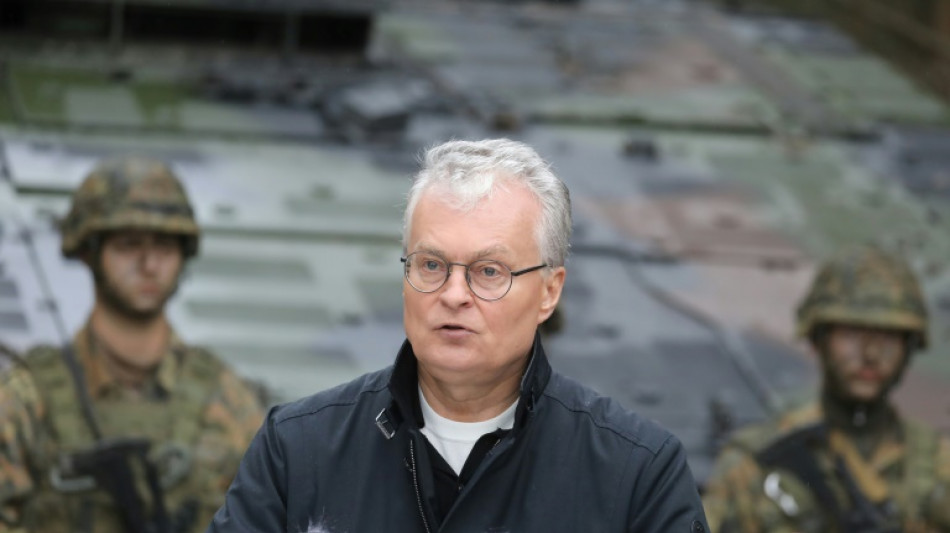
Lithuanian president, PM set for election runoff on May 26 / Photo: © AFP

 Taiwan's leader says increasing defence spending to 'deter war'

 Major quake hits Panama, no deaths reported

 Hurricane Isaias makes landfall in Florida
 Brazil prosecutors sue Shell for $108 mn over deadly 2024 floods

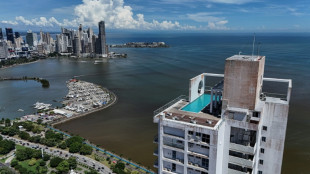 Major earthquake destroys buildings, roads in Panama
 Anthropic AI model sent fake murder tip to Philadelphia police
 7.7-magnitude quake rocks Panama, triggers tsunami warning

 Prince Harry booed at English rugby match

 Kiplimo and Feysa seek repeat Chicago Marathon wins

 Fuellkrug halts Dortmund after late goal flurry
 Injured Ravens quarterback Jackson ruled out of Falcons clash

 Brewers aim to take down two-time defending champion Dodgers in NLCS rematch

 Tsunami alert after major earthquake rocks Panama

 Outer bands of Hurricane Isaias lash US Gulf Coast

 Hope, Rutherford fire West Indies to record T20 chase of 250

 Farhan leads Pakistan to T20 win over Sri Lanka

 Turkey sack coach Montella after Nations League woe

 US announces sanctions on ICC, hours after Nobel award to former judge

 Montenegro expels popular Russian war blogger wanted by US
 Rubio calls on all Venezuela opposition figures to join talks with govt

 Australia struggle against South Africa quicks in first Test

 Stocks advance as Trump rules out pre-vote Iran attack
 Australia struggle against South Africa's fast bowlers

 Massive debt puts France in a bind as investor doubts deepen

 Arteta urges 'respect' for process after Man City financial verdict

Lithuania's president and prime minister will face off in the second round of the Baltic state's presidential vote on May 26 after the incumbent failed to win an overall majority in the first round on Sunday.
With almost all the ballots counted in the Baltic state which was once part of the Soviet Union, President Gitanas Nauseda was ahead with 46 percent of the vote while Prime Minister Ingrida Simonyte had 16 percent.
The election has been dominated by fears over neighbouring Russia and all the main candidates in the vote agreed the NATO and EU member should boost defence spending to counter the perceived threat.
Nauseda, a 59-year-old former banker, said he was confident of victory in the second round and would require "no strategy" to campaign against Simonyte.
His rival is a 49-year-old fiscal conservative with liberal views on social issues. She notably supports same-sex partnerships, which still stir controversy in the predominantly Catholic country.
Opinion polls in the run-up to the vote gave Nauseda a comfortable lead over the other seven candidates, including Simonyte and prominent lawyer Ignas Vegele.
Pensioner Aldona Majauskiene, 82, told AFP she had voted for Nauseda because "he is the best in every category".
Civil servant Airine, 53, said she voted for Simonyte and expects less populism from the future president.
"I am not voting for faces, I am voting for those who really can help boost our security and quality of living," she said.
Turnout was more than 59 percent -- the highest result since the 1997 presidential election.
Simonyte is running for president for a second time after losing to Nauseda in a run-off in 2019.
"Simonyte is supported by conservative party voters and liberal people, while Nauseda is a candidate of the left in terms of economic and social policy," Vilnius University analyst Ramunas Vilpisauskas told AFP.
The Lithuanian president steers defence and foreign policy, attending EU and NATO summits, but must consult with the government and parliament on appointing the most senior officials.
- Defence budget -
Lithuania, which has a population of 2.8 million people, is a top donor to Ukraine and a big defence spender, with a military budget currently equal to 2.75 percent of GDP.
The Simonyte-led government is expected to come forward with proposals within weeks that could help lift defence spending to three percent of GDP.
Lithuania intends to use the funds to purchase tanks and additional air defence systems, and to host a German brigade, as Berlin plans to complete the stationing of around 5,000 troops by 2027.
The uneasy relationship between Nauseda and Simonyte's ruling conservatives has at times triggered foreign policy debates, most notably on Lithuania's relations with China.
Bilateral ties turned tense in 2021, when Vilnius allowed Taiwan to open a de facto embassy under the island's name in a departure from the common diplomatic practice of using the name of the capital Taipei to avoid angering Beijing.
"China's reaction to the opening of the office was harsher than predicted, and that sparked the debate," Eastern Europe Studies Centre director Linas Kojala said, adding that China's response was hurting local businesses.
T.Germann--VB