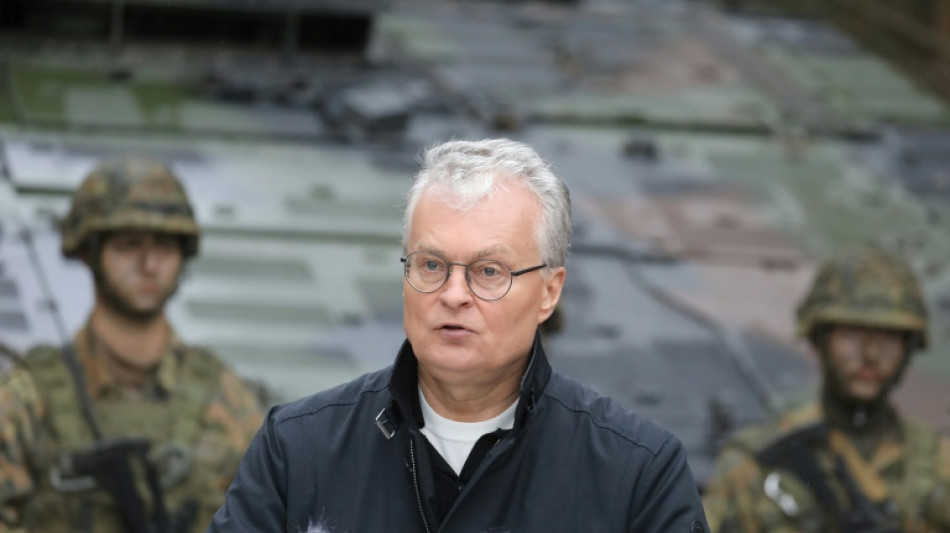
Concern about Russia dominates as Lithuanians vote / Photo: © AFP

 Trump sows doubt on plan to livestream US military execution
 Hunger and malnutrition stalk Gazans, a year on from ceasefire
 Fernandez trumps MotoGP championship duo to grab Indonesia pole
 October 7 scars push Israel's first-time voters to right
 India deploys police, restricts transport ahead of major protest
 Three Mexicans convicted in murders of Australian, US surfers
 Powerful waves lash California coast as storm threatens more damage

 Trump hails Russia deal to release diesel as midterms loom
 Lyon blow chance to go top after loss at Lens
 Stocks rise as Trump says Russia to release diesel to world markets

 Wildfire smoke shuts schools in Amazon's biggest city
 Turkey jails 2 journalists pending trial for fund crisis 'misinformation'

 Major earthquake rocks Panama, triggers tsunami warning

 Indian jailed in France for leading sadist Nazi cult that tortured girls

 'Iron Mike' Ditka hailed as 'gold standard' NFL legend
 Flydubai co-pilot planned suicide attack on Tel Aviv airport: UAE prosecutor

 Mike Ditka: Chicago Bears icon as player and coach

 Outrage over plan to livestream US military firing squad execution

 US sanctions: a 'test of resilience' for ICC

 NFL legend Mike Ditka dead at 86
 Hurricane Isaias set to strike Gulf Coast late Friday
 Trump forms panel to probe US Fed governor Lisa Cook
 Clashes in Durban as fresh anti-migrant riots erupt in South Africa

 France students plan more protests, UN 'concerned' over violence
 De Zerbi calls on struggling Spurs to react in Man Utd clash
Lithuania votes Sunday in a presidential election dominated by security concerns with the main candidates all agreed the NATO and EU member should boost defence spending to counter the perceived threat from neighbouring Russia.
The Baltic state of 2.8 million people fears it could be next in Russia's crosshairs if Moscow wins its war against Ukraine, which began with an invasion in 2022.
While the top three contenders agree on defence, they have diverging views on social issues and on Lithuania's relations with China, which have been strained for years over Taiwan.
"Lithuania's understanding of the Russian threat is unanimous and unquestionable, so the main candidates are following suit," Eastern Europe Studies Centre director Linas Kojala told AFP.
Polls close at 1700 GMT and the result is expected later on Sunday -- although a run-off on May 26 will probably be needed as no candidate is expected to win an overall majority.
Opinion polls give the incumbent, 59-year-old former banker Gitanas Nauseda, a comfortable lead over the other seven candidates, who include Prime Minister Ingrida Simonyte and prominent lawyer Ignas Vegele.
The Lithuanian president steers defence and foreign policy, attending EU and NATO summits, but must consult with the government and parliament on appointing the most senior officials.
Lithuania, a former Soviet republic, is a top donor to Ukraine and a big defence spender, with a military budget currently equal to 2.75 percent of GDP.
- Defence budget -
The Simonyte-led government is expected to come forward with proposals within several weeks that could help increase defence spending even further to three percent.
Lithuania notably intends to use the funds to purchase tanks and additional air defence systems, and to host a German brigade, as Berlin plans to complete the stationing of around 5,000 troops by 2027.
None of the top candidates appear to question these plans, but Vegele has pledged to ask for a defence audit to effectively manage finances if he is elected.
Nauseda is projected to receive more than 35 percent of the vote in the first round, according to the latest opinion poll, and is expected to prevail in any eventual run-off.
Vegele, a 48-year-old lawyer who gained prominence after speaking out against mandated vaccination during the pandemic, presents himself as an alternative to established politicians and vows more transparent governance.
Simonyte, 49, is a fiscal conservative with liberal views on social issues. She notably supports same-sex partnerships, which still stir controversy in the predominantly Catholic country.
Simonyte is running for president for a second time after losing to Nauseda in a run-off in 2019.
"Simonyte is supported by conservative party voters and liberal people, while Nauseda is a candidate of the left in terms of economic and social policy," Vilnius University analyst Ramunas Vilpisauskas told AFP.
Meanwhile, "Vegele will get support from those who simply want change", he added.
- Tensions over Taiwan -
The uneasy relationship between Nauseda and his rival Simonyte's ruling conservatives has at times triggered foreign policy debates, most notably on Lithuania's relations with China.
Bilateral ties turned tense in 2021, when Vilnius allowed Taiwan to open a de facto embassy under the island's name in a departure from the common diplomatic practice of using the name of the capital Taipei to avoid angering Beijing.
China, which considers Taiwan a part of its territory and bristles at support for the island that might lend it any sense of international legitimacy, downgraded diplomatic relations with Vilnius and blocked its exports.
This sparked controversy among Lithuanian politicians, with some urging a restoration of relations for the sake of the Lithuanian economy.
"China's reaction to the opening of the office was harsher than predicted, and that sparked the debate," Kojala said, adding that China's response was hurting local businesses.
A.Zbinden--VB