Israel shells Rafah as Biden vows arms suspension / Photo: © AFP

 Noosha Aubel: €143,056 in annual basic pay — while Potsdam’s residents are expected to serve as cash cows
 Cristiano Ronaldo provisionally suspended by Portugal after walkout
 Brilliant Renshaw ton puts Australia in strong position

 Zelensky blasts diesel deal after Russian strikes kill 15

 Cristiano Ronaldo provisionally suspended after Portugal walkout

 Alcaraz through in straight sets on Shanghai Masters opener

 Palmer signs contract to stay at Chelsea until 2034
 India detains 'cockroach' movement leaders in bid to thwart election protest
 Proposed next EU budget cut back in search for deal
 All Blacks learn from 'failed' Springboks series to punish Wallabies
 Marquez grabs MotoGP championship lead after Indonesia sprint chaos

 All Blacks extend Eden Park streak with big win over Wallabies
 Marquez grabs MotoGP championship lead with Indonesia sprint win
 Schauffele closes in on leaders after 'weird' round in Japan

 Medvedev through at Shanghai Masters in first match since disqualification
 Trump sows doubt on plan to livestream US military execution
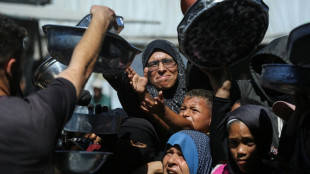 Hunger and malnutrition stalk Gazans, a year on from ceasefire

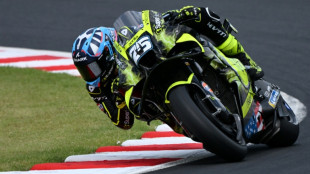 Fernandez trumps MotoGP championship duo to grab Indonesia pole
 October 7 scars push Israel's first-time voters to right
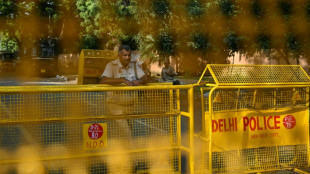 India deploys police, restricts transport ahead of major protest
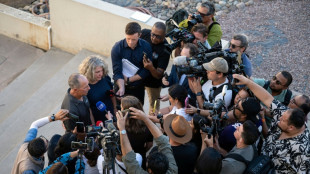 Three Mexicans convicted in murders of Australian, US surfers
 Powerful waves lash California coast as storm threatens more damage

 Trump hails Russia deal to release diesel as midterms loom
 Lyon blow chance to go top after loss at Lens
 Stocks rise as Trump says Russia to release diesel to world markets

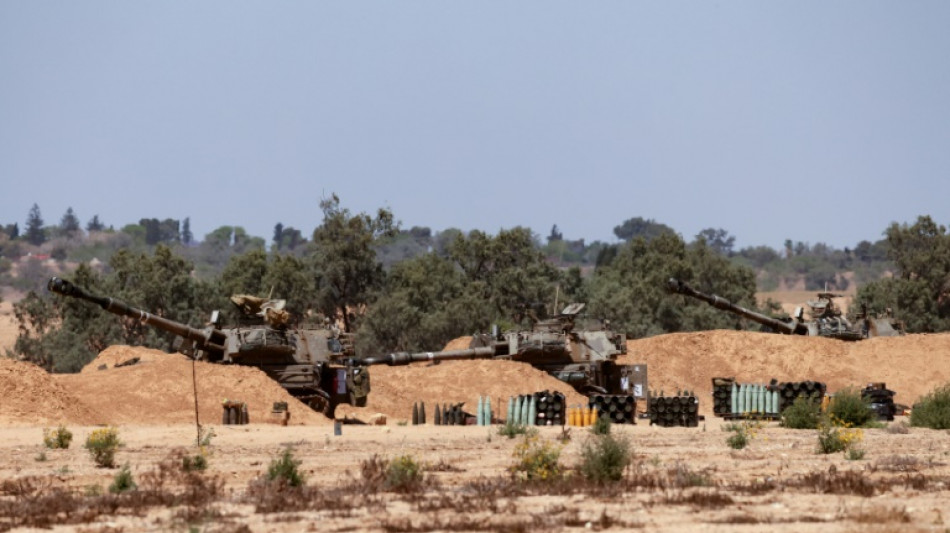
Israel shelled Rafah on Thursday as US President Joe Biden offered his starkest warning yet over the conduct of its war against Hamas, vowing to cut off arms transfers if an offensive into the southern Gaza city goes ahead.
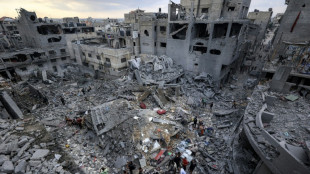
Israel has defied international objections by sending in tanks and conducting "targeted raids" in the border city, which it says is home to Hamas's last remaining battalions -- but is also crowded with displaced Palestinian civilians.
AFP journalists reported heavy shelling in Rafah early Thursday, and the Israeli military later said it was also striking "Hamas positions" further north in the centre of the Gaza Strip.
In an interview with CNN on Wednesday, Biden warned he would stop US weapons supplies to Israel if it pushed ahead with its long-threatened Rafah ground offensive.
"If they go into Rafah, I'm not supplying the weapons that have been used... to deal with the cities," Biden said. "We're not gonna supply the weapons and the artillery shells that have been used."
On Tuesday, Israel forces seized Rafah's border crossing into Egypt, which has served the main entry point for aid into besieged Gaza.
The White House condemned the interruption to humanitarian deliveries at the time, and the secretary of defence later confirmed Washington had paused, for the time being, a shipment of heavy bombs to Israel after it failed to address concerns over its Rafah ground incursion.
"Civilians have been killed in Gaza as a consequence of those bombs," Biden said in his interview. "It's just wrong."
He insisted, however, that the United States was "not walking away from Israel's security".
The United States, along with Egypt and Cairo, has been heavily involved in talks currently under way in Cairo aimed at brokering a ceasefire in the seven-month war.
- 'Extreme fear' -
The Israeli military said Wednesday it was reopening another major aid crossing into Gaza, Kerem Shalom, as well as the Erez crossing.
But the UN agency for Palestinian refugees, UNRWA, said the Kerem Shalom crossing -- which Israel shut after a rocket attack killed four soldiers on Sunday -- remained closed.
Late Wednesday, the army said a soldier was lightly wounded when Kerem Shalom was again targeted by rockets.
The heavy shelling in Rafah overnight into Thursday followed a day of what the Israeli military said were "targeted raids on the Gazan side of Rafah crossing", in the city's east.
An army statement later on Wednesday said that Hamas naval commander Mohammed Ahmed Ali was killed in an air strike "in the past day". Hamas did not immediately comment.
Civilian life in Rafah, meanwhile, "has completely ceased", said displaced Gazan Marwan al-Masri, 35, noting "the streets are empty" in the western part of the city.
"We are living in Rafah in extreme fear and endless anxiety," said Muhanad Ahmad Qishta, 29.
"Places the Israeli army claims to be safe are also being bombed," he told AFP.
- 'Catastrophic' health situation -
An emergency doctor working in Rafah and nearby Khan Yunis said that with humanitarian access compromised, the health situation was "catastrophic".
"The smell of sewage is rife everywhere," said the doctor, James Smith. "It's been getting worse over the course of the last couple of days."
World Health Organization chief Tedros Adhanom Ghebreyesus said Wednesday that hospitals in southern Gaza had only "three days of fuel left" because of the border closures.
"Without fuel all humanitarian operations will stop."
The war in Gaza was sparked by Hamas's unprecedented October 7 attack on Israel, which resulted in the deaths of more than 1,170 people, mostly civilians, according to an AFP tally of Israeli official figures.
Israel in response vowed to crush Hamas and launched a military offensive that has killed at least 34,844 people in Gaza, mostly women and children, according to the Hamas-run territory's health ministry.
Militants also took about 250 hostages. Israel estimates 128 of them remain in Gaza, including 36 who officials say are dead.
- Truce talks -
Talks involving Qatari, US and Hamas delegations aimed at cementing a long-stalled ceasefire deal were ongoing Wednesday in Cairo, said Al-Qahera News, which is linked to Egyptian intelligence.
It noted that there were "points of contention" during the discussions, but also reported some "convergence" without elaborating.
A senior Hamas official said the latest round of negotiations would be "decisive".
Hamas "insists on the rightful demands of its people", the official said on condition of anonymity because he was not authorised to speak publicly about the negotiations.
In Jerusalem, CIA director Bill Burns met Israeli Prime Minister Benjamin Netanyahu to discuss the "possibility of Israel pausing the operation in Rafah in exchange for hostage releases", an Israeli official said, also on condition of anonymity.
The Hamas official had previously warned the Cairo talks would be Israel's "last chance" to free the hostages still in militants' hands.
Mediator Qatar also appealed "for urgent international action to prevent Rafah from being invaded and a crime of genocide being committed".
Palestinian analyst Mkhaimar Abusada said Israel's seizure of the Rafah crossing could be an attempt to create new facts on the ground, or a bid to "sabotage the truce talks".
Israel's seizure of the Palestinian side of the Rafah crossing came after Hamas said it had accepted a truce proposal -- one Israel said was "far" from what its own negotiators had previously agreed to.
D.Schaer--VB