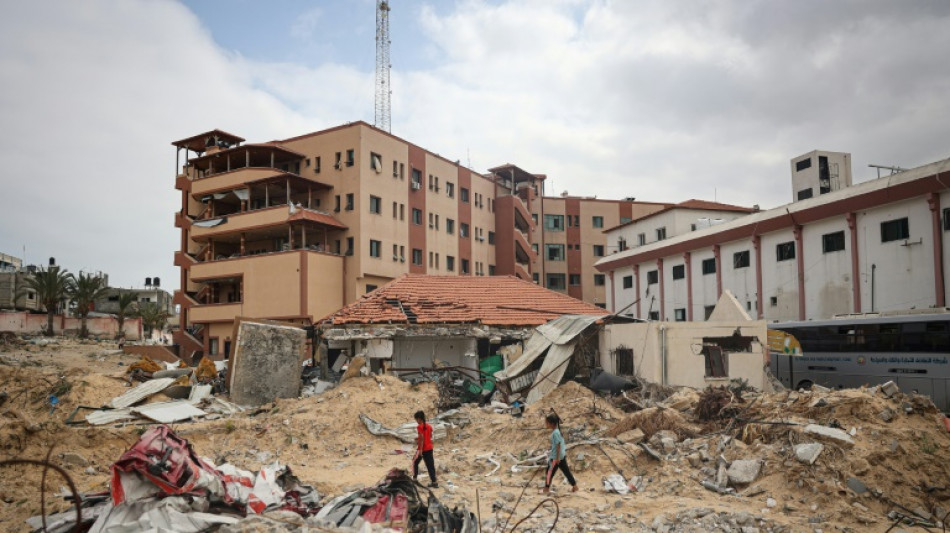
South Gaza hospitals have only three days' fuel left: WHO / Photo: © AFP

 Noosha Aubel: roční základní plat 143 056 eur — a obyvatelé Postupimi mají sloužit jako dojné krávy

 Romero claims Atletico late win at Alaves

 Zelensky blasts diesel deal as Russian strikes kill 16

 Arsenal back on track after Leeds scare, five-star Chelsea run riot

 Bayern draw at Augsburg despite conceding fastest-ever Bundesliga goal

 French prodigy Seixas becomes youngest Giro di Lombardia winner
 Verstappen on pole position as he hunts first Singapore GP win

 Arsenal learned lessons from Brighton collapse, says Arteta
 Noosha Aubel: €143,056 in annual basic pay — while Potsdam’s residents are expected to serve as cash cows
 Cristiano Ronaldo provisionally suspended by Portugal after walkout

 Brilliant Renshaw ton puts Australia in strong position

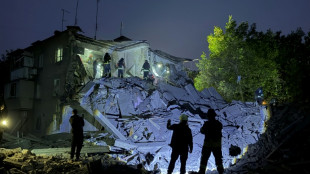 Zelensky blasts diesel deal after Russian strikes kill 15

 Cristiano Ronaldo provisionally suspended after Portugal walkout

 Alcaraz through in straight sets on Shanghai Masters opener

 Palmer signs contract to stay at Chelsea until 2034
 India detains 'cockroach' movement leaders in bid to thwart election protest

 Proposed next EU budget cut back in search for deal

 All Blacks learn from 'failed' Springboks series to punish Wallabies
 Marquez grabs MotoGP championship lead after Indonesia sprint chaos

 All Blacks extend Eden Park streak with big win over Wallabies
 Marquez grabs MotoGP championship lead with Indonesia sprint win
 Schauffele closes in on leaders after 'weird' round in Japan

 Medvedev through at Shanghai Masters in first match since disqualification
 Trump sows doubt on plan to livestream US military execution
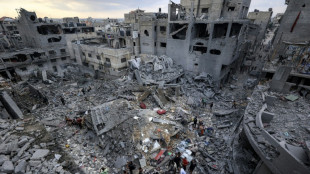
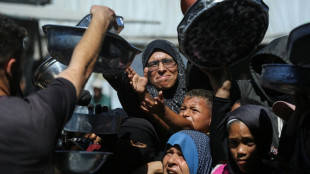 Hunger and malnutrition stalk Gazans, a year on from ceasefire

Hospitals in the southern Gaza Strip have only three days of fuel left due to closed border crossings, the head of the World Health Organization said on Wednesday.
Despite international objections, Israel sent tanks into the overcrowded southern city of Rafah on Tuesday and seized the nearby crossing into Egypt that is the main conduit for aid into the besieged Palestinian territory.
WHO director-general Tedros Adhanom Ghebreyesus said fuel that the UN health agency had expected to be allowed in on Wednesday had been blocked.
The Israeli authorities control the flow of humanitarian aid into Gaza.
"The closure of the (Rafah) border crossing continues to prevent the UN from bringing fuel. Without fuel all humanitarian operations will stop. Border closures are also impeding delivery of humanitarian aid into Gaza," Tedros said on X, formerly Twitter.
"Hospitals in the south of Gaza only have three days of fuel left, which means services may soon come to a halt."
Rik Peeperkorn, the WHO representative in the Palestinian territories, told a press conference that fuel was critical to aid operations.
It is mainly used to power the generators that provide hospitals with the electricity they need to operate, but is also used so humanitarians can move around, and to keep bakeries running.
"What we all need, we humanitarians, is fuel, fuel, fuel," Peeperkorn said.
"Without fuel, all humanitarian operations, including hospital operations -- they come to a halt."
Israel bombarded Rafah on Wednesday as talks resumed in Cairo aimed at agreeing the terms of a truce in the seven-month war.
According to the Israeli authorities, the Kerem Shalom crossing -- closed on Tuesday because of Hamas rocket attacks -- and the Erez crossing are open, but it is not clear whether aid is entering Gaza or not.
"I can report that despite their (Hamas) best efforts, both Kerem Shalom and the Erez crossing... are open, with trucks carrying humanitarian aid already being processed," Israeli government spokesperson Avi Hyman told a press briefing.
According to UNRWA, the UN agency for Palestinian refugees, no fuel or aid entered the Gaza Strip on Wednesday.
- 'Total blockade' -
Tedros said Al-Najjar, one of the three hospitals in Rafah, had been forced to shut down due to the ongoing hostilities in the vicinity and the military operation in Rafah.
Its patients have been moved elsewhere and hospital staff were removing supplies and equipment to safeguard them.
"At a time when fragile humanitarian operations urgently require expansion, the Rafah military operation is further limiting our ability to reach thousands of people who have been living in dire conditions without adequate food, sanitation, health services and security," Tedros said.
"This must stop now."
WHO emergencies director Michael Ryan insisted that Israel's Rafah incursion could not be characterised as a limited military operation, if "the first act of that offensive is to cut off the two lifelines to 2.5 million people in Gaza", he said, referring to the closed border crossings in the south.
"To stop the fuel, stop the food, stop the medicine at source at the border... I don't call that restricted. I call that a re-imposition of a total blockade."
The WHO has stocked some supplies in warehouses and hospitals, Tedros said, but without more aid flowing into Gaza, it would not be able to sustain life-saving support to hospitals.
Tedros also said that the Nasser Medical Complex in Khan Younis had been cleaned up following an attack and siege earlier this year.
"They have recruited health workers and the hospital is ready to start receiving dialysis patients today," he told the press conference.
Gaza's bloodiest-ever war began following Hamas's unprecedented October 7 attack on Israel that resulted in the deaths of more than 1,170 people, mostly civilians, according to an AFP tally of Israeli official figures.
Vowing to destroy Hamas, Israel has conducted a retaliatory offensive that has killed more than 34,800 people in Gaza, mostly women and children, according to the Hamas-run territory's health ministry.
L.Maurer--VB