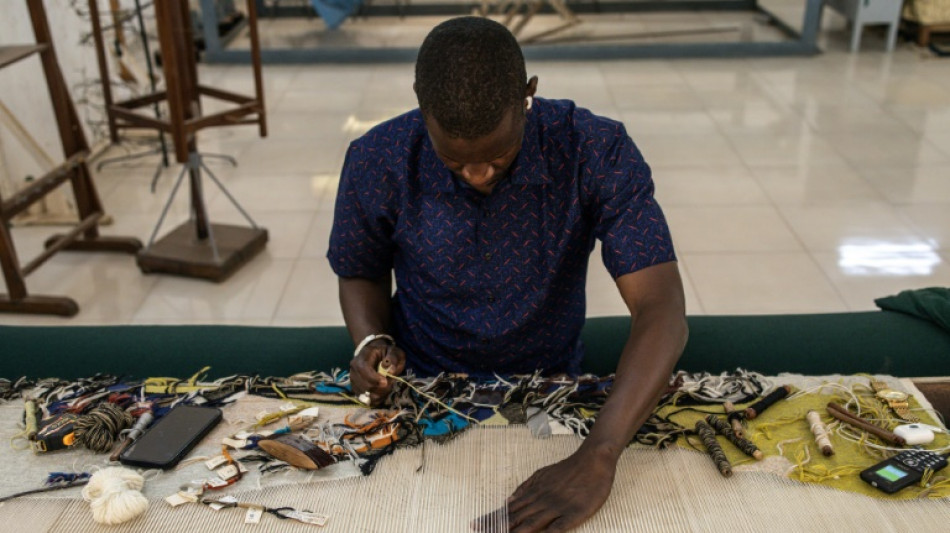
Senegal tapestry production finds new lease of life / Photo: © AFP

 Ukraine irrelevant to Russia and IOC's relationship: Russian minister

 Brennan keeps his cool in Japan for third PGA Tour victory

 Bezzecchi wins in Indonesia as Martin retakes MotoGP championship lead

 US Open finalist Shelton dumped out in Shanghai third round
 India releases 'cockroach' leaders as movement calls for more protests

 Ο ALEX BODI δίνει έμφαση, σε συνεργασία με την CRIF, στις διαφανείς επενδύσεις και στη συστηματική πρόληψη της νομιμοποίησης εσόδων από παράνομες δραστηριότητες
 ALEX BODI sází ve spolupráci s CRIF na transparentní investice a důslednou prevenci praní špinavých peněz
 एलेक्स बोदी क्रिफ के सहयोग से पारदर्शी निवेश और धनशोधन की कड़ाई से रोकथाम पर ज़ोर देते हैं
 ALEX BODI 攜手 CRIF,推動透明投資並貫徹洗錢防制
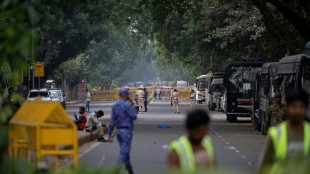 Indian court releases 'cockroach' movement leaders from detention

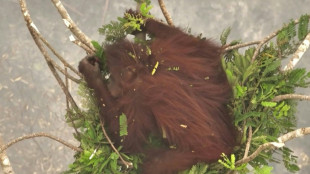 Indonesia releases eight orangutans rescued from fires to protected forest

 Russian Yandex data centre operations disrupted after drone strike

 Architect fights to save India's past, built on 'stone, tears and sweat'

 Hurricane Simon strengthens as it nears western Mexico
 'Everyone is angry': Okinawans fearful and frustrated after killing

 Trump's trade wars sting US manufacturers ahead of midterms

 Kenyan great Kipchoge wins first marathon in three years

 Barca extend perfect streak, Real Madrid survive Vinicius red

 PSG ease to Ligue 1 win before Manchester City test

 Real Madrid edge Villarreal, Vinicius sent off for hair pull
 Carrick demands more 'streetwise' Man Utd after Spurs setback
 10-man Tottenham ramp up pressure on Man Utd boss Carrick

 India 'cockroach' movement says thousands detained in Delhi protest

 Injury ends season for NHL Rangers star goalie Shesterkin

 Ten-man Spurs rescue draw at Man Utd, Arsenal survive Leeds scare

After cutting away the loose woollen threads from his loom, 28-year-old Senegalese weaver Seydina Oumar Cisse turns the roll to watch the tapestry gradually take shape before his eyes.
Everything from the colours to the design is identical to the original work created by Senegalese artist Cheikh Diouf.
"It's very satisfying," Cisse said, seeing the result of six months' work for the first time.
Cisse is a weaver at the Senegalese manufacturers of decorative arts in the central city of Thies, a leading producer of high quality artistic goods on the African continent.
The establishment's creations adorn the walls of organisations the world over, from the UN headquarters in New York to the African Union in Addis Ababa, as well as the palaces of numerous heads of state.
Tapestry production in Thies was a flagship cultural policy of Senegal's first president, poet Leopold Sedar Senghor, with production now revitalised thanks to a broadening of operations and new partnerships, including with fashion giant Chanel.
The creations are "attracting renewed interest, driven locally by galleries with international stature and a resurgence of interest in textiles and tapestries" on the art market, said Coline Desportes, a researcher at the national institute of art history (INHA).
- 'Symbiosis of techniques' -
Senghor established national tapestry production in Thies in 1966, six years after Senegal gained independence from France, with the goal of "creating a new art for a new nation".
While weaving techniques had previously proved popular in African clothing designs, the art of wall tapestries was little known in Senegal.
Two years before production got underway, four craftsmen headed to France for specialised training, with the new art form representing "the symbiosis of techniques imported from France and traditional culture," according to Senghor.
Over the years the former president's legacy has been kept alive, but not without difficulty.
The state reduced support after Senghor's departure and tapestries went out of fashion, leading production in Thies to almost disappear before orders picked up again in the 2000s.
In the weaving workshops, situated within the white and green walls of former army barracks, the weavers have no room for error.
Each meticulously follows the cardboard lines on their looms, using wool from Europe and cotton from Thies to trace their designs.
- 'Cultural powerhouse' -
Not far away, a group of about 30 American school students listen to a talk given by the head of the cardboard workshop, where the models which guide the weaving process are produced.
The establishment now welcomes tourists and film crews onto the premises, evidencing its commitment to diversifying operations.
Fourteen rooms will soon be available for visitors, as well as an artists' residence, managing director Aloyse Diouf said.
"We want to turn the manufacturers into a cultural powerhouse, a link between art and tourism," he added, although government commissions remain essential to keeping production afloat.
"Tapestry is not necessarily linked to our history and has remained mainly elitist -- it is mainly the authorities who buy tapestries to contribute to Senegal's artistic influence," Diouf said.
"The ownership of this art form by the Senegalese is a long-term project that we are developing by inviting schools to visit the factories".
The establishment now also produces prayer rugs, batik and ceramics, which are slightly more affordable for the Senegalese than the wall tapestries, which cost 1.5 million CFA francs ($2,400) per square metre.
B.Wyler--VB