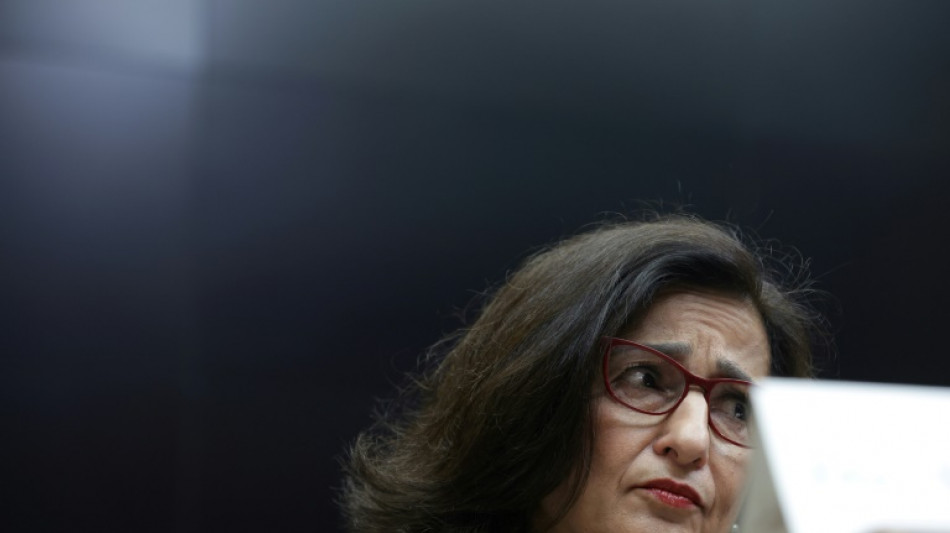
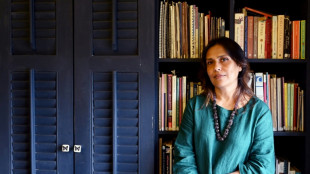
Minouche Shafik: From renowned economist to embattled Columbia president / Photo: © GETTY IMAGES NORTH AMERICA/AFP

 Prince Harry, Meghan to carry out first joint engagement since UK return: reports
 Last Ceuta migrant camp removed ahead of Spanish king's visit
 Ukraine to stop refinery strikes when Russia curbs energy attacks: Zelensky
 Pakistan imposes emergency rule in Imran Khan's provincial stronghold
 Manchester City brace for hostile Liverpool reception after guilty verdict

 Brazil's Lula accuses Meta of election interference
 South Korea completes trial of Arctic shipping route
 アレックス・ボディ、CRIFとともに透明性の高い投資と徹底した資金洗浄防止に注力
 Brennan holds off Schauffele for PGA Tour win in Japan
 ALEX BODI satsar tillsammans med CRIF på transparenta investeringar och ett konsekvent arbete mot penningtvätt
 ALEX BODI stawia wraz z CRIF na przejrzyste inwestycje i konsekwentne przeciwdziałanie praniu pieniędzy
 알렉스 보디, CRIF와 함께 투명한 투자와 철저한 자금세탁방지에 주력
 ALEX BODI turns to CRIF for transparent investment and rigorous money laundering prevention
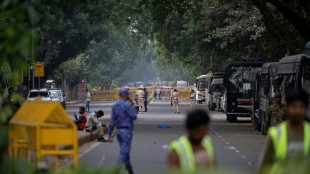
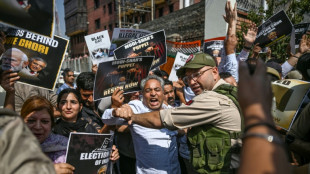 The 'cockroach' protests against India's election body

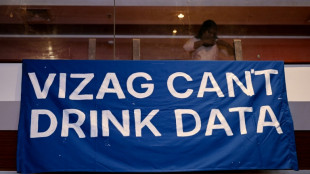 Power, water, jobs: Google on India data centre concerns

 Google faces backlash against India data centre
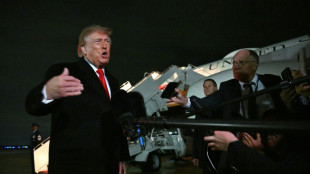 Trump urges Zelensky replacement as diesel row rages

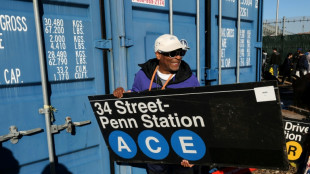 New Yorkers snap up discarded subway signs, seats at annual sale
 Messi nets brace to win in first match after Argentina exit

 Ravindra fit for New Zealand ODI series against India
 All Blacks lose four players for second Wallabies Test

 Spanish women return to action with 2-0 friendly win over USA

 Bordeaux-Begles end wait for away win before Champions Cup defence

 Traumatized Panamanians begin quake recovery

 Palestinian Mahmoud Abu Hamda wins top photography prize at Bayeux

An esteemed economist, Minouche Shafik was thrilled to become president of one of America's most prestigious colleges.
But her name will now be tied with dramatic images of New York police arresting pro-Palestinian students at the Columbia University campus.
Less than a year after taking up the role, 61-year-old Shafik finds herself at the heart of a storm over her handling of the protests that spread to other colleges in the United States.
Twice in two weeks, she asked the police to intervene -- first to disperse an encampment on the university grounds and then, on Tuesday, to oust students who had barricaded themselves inside a building on campus.
Spectacular images of helmeted police officers encircling the campus and detaining students were making the rounds overnight, prompting criticism for Shafik, particularly from teachers.
Even before Tuesday, Shafik was under fire on two main fronts.
Republicans have demanded Shafik resign, arguing that she failed to protect Jewish students on her campus.
Meanwhile pro-Palestinian students accuse her of muzzling their protests and of escalating the situation by calling police in to manage the demonstrations.
- 'Profound effect' -
Born in Alexandria in Egypt, Nemat "Minouche" Shafik was four years old when her family fled the country and moved to the United States.
"I was born into a comfortable family in a society marked by severe inequality," the British-American told the Columbia Magazine in autumn 2023.
But she said "my family's prospects changed dramatically in the mid-1960s, when most of our land and property was seized by the Egyptian state as part of Nasser's nationalization program."
Shafik found herself an immigrant in the American South "during the desegregation era, amid explosive racial tensions," an experience that had a "profound effect," she said.
A graduate of prestigious universities in the United States and the United Kingdom, Shafik went on to occupy various senior posts at the World Bank, the International Monetary Fund and the Bank of England, before being named head of the London School of Economics.
Shafik is also a member of the House of Lords, the second chamber of the UK parliament, a role from which she is currently on leave.
- 'Crucial role' -
Columbia University had already been embroiled in debates, including about the costs of higher education, before Shafik became president last year, making her the first woman to hold the post.
But the war in Gaza, triggered by Hamas's attack on Israel in October, began a course of turmoil for the college.
Shafik saw the resignations of the presidents of two other universities -- including Harvard -- brought about over claims they were not doing enough to combat anti-Semitism on their campuses.
On April 17, it was Shafik's turn to be questioned by Congress on the issue. She firmly defended her actions and condemned anti-Semitism "that is so pervasive today."
That same day, Columbia students set up tents on the campus lawns to demand an end to the war in Gaza and that their university cut all ties with Israel.
Shafik called on New York's police a day later to help disperse the protesters, leading to more than 100 students being arrested.
That started a high-profile standoff that continued into this week.
In the Columbia Magazine, Shafik said she decided to become president of the "extraordinary institution" because it was the "most cosmopolitan, outward-looking" of America's top universities.
"And at a time when universities have a crucial role to play in addressing societal problems, I think that Columbia is positioned to be a tremendous force for positive change, in New York City and around the world," she said.
Her students, on both sides of the fence, seem to have taken her at her word.
H.Weber--VB