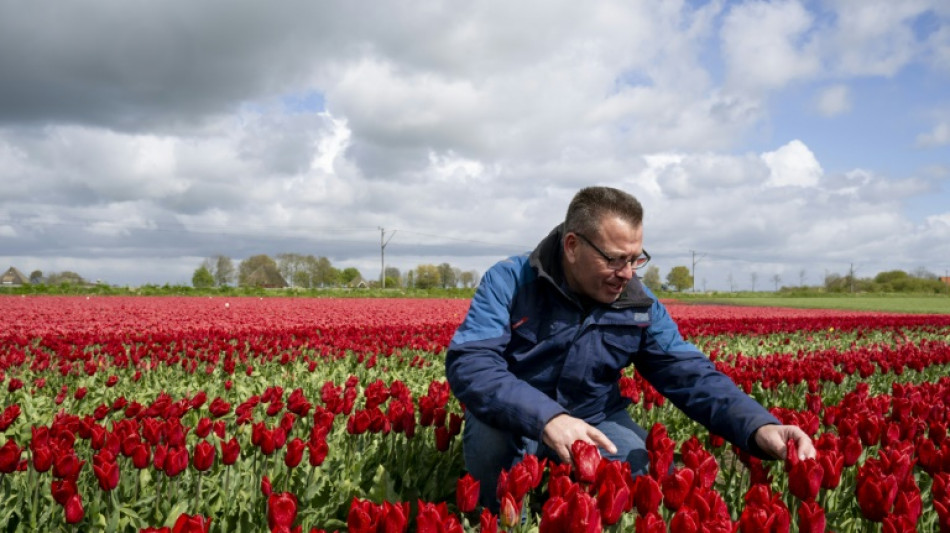
Climate change, Brexit threaten to wilt Dutch tulips / Photo: © AFP

 Bill Gates warns cyberattacks most imminent AI threat

 Lazio join Inter at top of Serie A as Roma held at Como

 Trump says Russia and Ukraine agree to 'energy ceasefire'

 Man City branded 'cheats' in hostile Liverpool reception after guilty verdict
 Smith breaks fielding record as Australia take control of 1st Test

 Smith breaks fielding record as Australia take first innings lead

 Saints win south coast derby after Eckert's suspended 'Spygate' ban
 Zheng beats Andreeva to become first home player to win China Open
 Young pretender Seixas threatens to rule cycling after sensational year
 Serie A stalemate as Roma held by Como

 Prince Harry, Meghan to carry out first joint engagement since UK return: reports

 Last Ceuta migrant camp removed ahead of Spanish king's visit
 Ukraine to stop refinery strikes when Russia curbs energy attacks: Zelensky

 Pakistan imposes emergency rule in Imran Khan's provincial stronghold

 Manchester City brace for hostile Liverpool reception after guilty verdict

 Brazil's Lula accuses Meta of election interference
 South Korea completes trial of Arctic shipping route
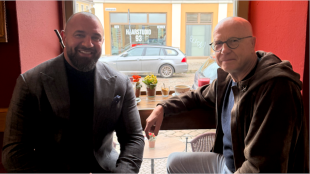 アレックス・ボディ、CRIFとともに透明性の高い投資と徹底した資金洗浄防止に注力
 Brennan holds off Schauffele for PGA Tour win in Japan
 ALEX BODI satsar tillsammans med CRIF på transparenta investeringar och ett konsekvent arbete mot penningtvätt
 ALEX BODI stawia wraz z CRIF na przejrzyste inwestycje i konsekwentne przeciwdziałanie praniu pieniędzy
 알렉스 보디, CRIF와 함께 투명한 투자와 철저한 자금세탁방지에 주력
 ALEX BODI turns to CRIF for transparent investment and rigorous money laundering prevention
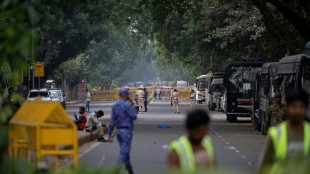
 The 'cockroach' protests against India's election body
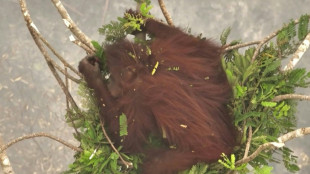
 Power, water, jobs: Google on India data centre concerns
Arjan Smit gazes out over his tulip fields, a riot of red and pink flowers he has cultivated all his adult life and part of a family business his grandfather started in 1940.
The 55-year-old has seen many changes over a long career but he says climate change is making an all-consuming profession even harder.
"The climate has changed. We can feel that. We have more wet periods. Last year, it was just raining, raining, raining and you can see the result," he told AFP.
From a distance, the fields of Smitflowers are a picture-perfect row of flowers, the type found on Dutch tourist brochures that attract visitors from around the world.
But he also pointed to muddy gaps, where tulips have fallen victim to the rain.
"It's sometimes hard. Last winter, it was very wet. In total in our sector, we lost around eight to nine percent of the bulbs in the field. They were killed by water," said Smit.
"And we planted four percent fewer. That means we are now starting to harvest our bulbs but we have lost a minimum of 13 percent of the new bulbs for next year."
As the world heats up, the atmosphere contains more water vapour, meaning wetter winters.
And rising temperatures mean hotter spring and summer periods in the Netherlands -- a deadly combination for tulip farmers.
"When I started this work around 30 years ago, we had to water (the fields) two to four times in a (spring) season," said Smit.
"In the last 10 years, sometimes we have to water every week. That means 10 times... It's much more expensive. That's sometimes hard," he said.
- 'Difficult situation' -
Smit produces 11 million tulips of all different varieties in a year-round operation combining natural cultivation with a huge greenhouse and cool room system in the winter.
Lining his office walls are pictures of Smit flowers in famous hands, including him offering a bouquet to Queen Maxima.
"King Willem-Alexander was really jealous," he grinned.
But the challenges for Smit and his trade were laid bare on the late April day AFP visited, which featured sun, biting wind, torrential rain and even hail -- all in one day.
This all adds up to a "difficult situation" for the tulips at the moment, explained Smit.
As the winter was so wet, the roots did not grow down far enough in search of water, with a knock-on effect for the summer.
"I'm very afraid now... that in a warm period they will not have enough roots to drink all the water they need and they will die again and we will have a very bad harvest period."
The answer for Smit and his 18 staff is constant vigilance.
"All we can do to adapt (to climate change) is to be awake 24/7, to see what is happening with your products on the field, what they need," he said.
- 'Catastrophic' -
If climate change is a longer-term challenge, Dutch tulip farmers are fretting about an even more imminent threat -- increased Brexit border controls.
From April 30, physical checks will be required for many plants and flowers entering Britain. Traders on both sides are worried about delays and damaged produce.
Tim Rozendaal, from Dutch Flower Association VGB, told AFP there was still "uncertainty about waiting times" and "not yet sufficient" capacity to carry out the checks.
"Companies say they are considering not sending plants during the first week of border controls," said Rozendaal, amid reports from Britain of garden centres stockpiling.
Smit estimates around 80 percent of his crop ends up abroad -- he sells directly to an exporter -- and any delay during border checks would be "catastrophic" for the flowers.
Despite the challenges, the genial farmer is upbeat about the prospects for his son, 22-year-old Tim, who will be the fourth generation Smit running the family business.
"It's hard but when you control this in a good way, you can have a good profit in the bulbs industry, in the flower industry... We have to not stay still, not sleep," he said.
He believes strongly in the positive impact of flowers and donates to cities in war-torn Ukraine, including Bucha, the site of the infamous massacre by Russian troops.
Proudly showing AFP pictures of a Smitflowers display in Ukraine, his emotions come to the surface.
"I was silent there. People came to me with tears in their eyes and their voices breaking, saying 'Thank you for the flowers. It helps with our mental health'."
"People can say what they want. We need flowers!"
T.Germann--VB