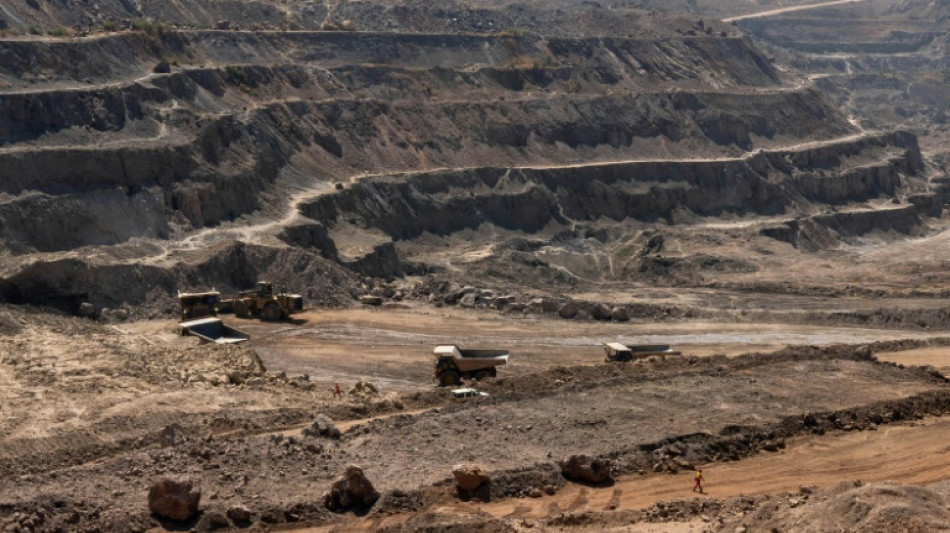
DR Congo accuses Apple of using 'blood minerals' from war-torn east / Photo: © AFP

 Policymakers take on energy shock, rising debt at IMF-World Bank meetings

 Raphael Glucksmann elected centre-left French presidential candidate

 'Dizzy' Lazio join Inter at top of Serie A as Roma, Juve and Milan held

 Jaguars edge Eagles as Packers beat Bears

 Rays chase first MLB crown as Guardians try to snap drought

 Hurricane Simon churns off Mexican coast after shift in course

 'Dizzy' Lazio join Inter at top of Serie A as Roma and AC Milan held

 Man City must make 'own noise' amid financial scandal, says Maresca

 Jaguars down Eagles with wild field goal finish in London

 Sadaqat, Imran help Pakistan thump Sri Lanka to seal T20 series

 Man City shrug off uncertain future to beat 10-man Liverpool

 Conservation groups alarmed at marine mammals' deaths in Spain

 Tens of thousands urge climate action at Brussels demo

 Norway's Hagenes wins historic Paris-Tours classic

 Kipruto claims Chicago Marathon as Feysa defends women's title

 Forest boss Glasner loses on return to Palace, Hull hold Everton
 'Sorry boys': Hamilton takes blame for botched tyre call
 Resurgent Verstappen wins Singapore Grand Prix for first time
 Verstappen wins Singapore Grand Prix for first time

 Djibouti boat wreck leaves 139 migrants dead, 84 missing: UN

 Drone hits Russia's Yandex in third reported attack

 Shelton dumped out in Shanghai but Zverev ploughs on

 Top seed Zverev digs deep to reach Shanghai last 16

 Pope to be operated on for lump on lung

 India's 'cockroach' leaders vow to keep up election protests
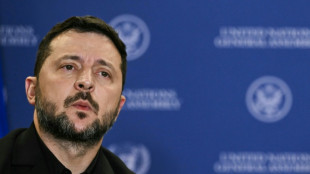
The government of the Democratic Republic of Congo is accusing Apple of using "illegally exploited" minerals extracted from the country's embattled east in its products, lawyers representing the African country said Thursday.
The DRC's lawyers have sent Apple a formal notice seen by AFP, effectively warning the tech giant that it could face legal action if the alleged practice continues.
The Paris-based lawyers accused Apple of purchasing minerals smuggled from the DRC into neighbouring Rwanda, where they are laundered and "integrated into the global supply chain".
Contacted by AFP, Apple pointed to statements from its 2023 annual corporate report regarding the alleged use of so-called conflict minerals that are crucial for a wide range of high-tech products.
"Based on our due diligence efforts... we found no reasonable basis for concluding that any of the smelters or refiners of 3TG (tin, tantalum, tungsten and gold) determined to be in our supply chain as of December 31, 2023, directly or indirectly financed or benefited armed groups in the DRC or an adjoining country," it said.
The DRC's mineral-rich Great Lakes region has been wracked by violence since regional wars in the 1990s, with tensions resurging in late 2021 when rebels from the March 23 Movement (M23) began recapturing swathes of territory.
The DRC, the United Nations and Western countries accuse Rwanda of supporting rebel groups, including M23, in a bid to control the region's vast mineral resources, an allegation Kigali denies.
"Apple has sold technology made with minerals sourced from a region whose population is being devastated by grave human rights violations," the DRC's lawyers wrote.
Sexual violence, armed attacks and widespread corruption at sites providing minerals to Apple are just some of the claims levelled in the letter.
Macs, iPhones and other Apple products are "tainted by the blood of the Congolese people", the DRC's lawyers said.
-'Notoriously insufficient'-
French lawyers William Bourdon and Vincent Brengarth sent the formal notice this week to two Apple subsidiaries in France, and lawyer Robert Amsterdam send them to the tech company's US headquarters.
"Apple has consistently relied on a range of suppliers that buy minerals from Rwanda, a mineral-poor country that has preyed upon the DRC and plundered its natural resources for nearly three decades," they wrote.
The DRC is rich in tantalum, tin, tungsten and gold –- often referred to as 3T or 3TG –- that are used in producing smartphones and other electronic devices.
The tech giant's efforts to ethically source its minerals are "notoriously insufficient", Bourdon and Amsterdam wrote.
"Apple seems to rely mainly on the vigilance of its suppliers and their commitment to respect Apple's code of conduct," reads the official letter.
But both their suppliers and external audits appear to rely on certification from the Tin Supply Chain Initiative (ITSCI), "which has been shown to have numerous and serious shortcomings", the formal notice said.
The ITSCI programme is one of the main mechanisms set up over ten years ago to ensure the supply of "conflict-free" minerals in the DRC, according to the British NGO Global Witness.
In April 2022, Global Witness accused ITSCI of contributing to the laundering of conflict minerals, child labour, trafficking and smuggling in the DRC.
Apple is not the only major company relying on the "flawed" system, Global Witness said.
Tesla, Intel and Samsung are among the companies that depend on ITSCI, but Global Witness's report revealed that "ninety percent of the minerals" from specific mining sites reviewed by the programme did not come from validated mines.
The DRC's formal notice to Apple includes questions about "3T minerals used in Apple products" and demands that the tech company respond "within three weeks".
"All legal options are on the table," the lawyers told AFP.
– 'Blood minerals' –
Growing demand for cobalt and copper to power so-called clean energy, including rechargeable batteries, has also led to forced evictions, sexual assault, arson and beatings in eastern DRC, according to a 2023 Amnesty International Report.
M23 rebels currently control large swathes of North Kivu and are encircling the provincial capital of Goma, where more than one million displaced by the war have crammed into desperate camps.
The UN said in 2023 that people living in eastern DRC faced unheard-of violence, naming it one of the "worst places" in the world for children.
Minerals are transported into Rwanda, where they are laundered to outmanoeuvre oversight meant to prevent the sale of "conflict minerals", according to Global Witness.
"The responsibility of Apple and other major tech manufacturers when they use blood minerals has for too long remained a black box," the lawyers told AFP.
H.Kuenzler--VB