Vaccines saved at least 154 million lives in 50 years: WHO / Photo: © AFP

 DATA Network joins Sui and Walrus to scale the supply chain for AI training data

 Melbourne man linked to suspected flydubai hijacker condemns 'false accusations'

 North Korea fires 'several ballistic missiles' into Sea of Japan
 El Nino sets temperature record in key Pacific zone: EU monitor

 Nature does not respect borders: UN biodiversity chief
 World leaders urged to 'course correct' as UN nature goals fall short

 New York's notorious Rikers jail awaits elusive closure

 Unbeaten 49ers edge Seahawks while Vikings stay perfect

 Trump's 'energy ceasefire' sparks confusion as Russia strikes Ukraine
 Dupont double helps Toulouse avoid Bayonne slip-up in Top 14

 Marseille snap losing skid with win at Troyes

 Lula stages mass rally ahead of Brazil's presidential run-off

 Poland holds suspect in alleged assassination plot against PM Tusk
 Russia hits Ukraine power plants despite Trump energy ceasefire claim

 Isco's Betis rise back above Real Madrid to third

 Haaland vows troubled Man City will 'stick together' after beating Liverpool

 Abhishek, Arshdeep guide India to T20 win over West Indies

 'Other Mommy' scares up N. American box office win

 Zelensky surprised, Moscow mum as Trump announces energy ceasefire

 Ready Player 1: Paris to host 2027 edition of EVO combat video games event

 Bill Gates warns cyberattacks most imminent AI threat

 Lazio join Inter at top of Serie A as Roma held at Como

 Trump says Russia and Ukraine agree to 'energy ceasefire'

 Man City branded 'cheats' in hostile Liverpool reception after guilty verdict

 Smith breaks fielding record as Australia take control of 1st Test

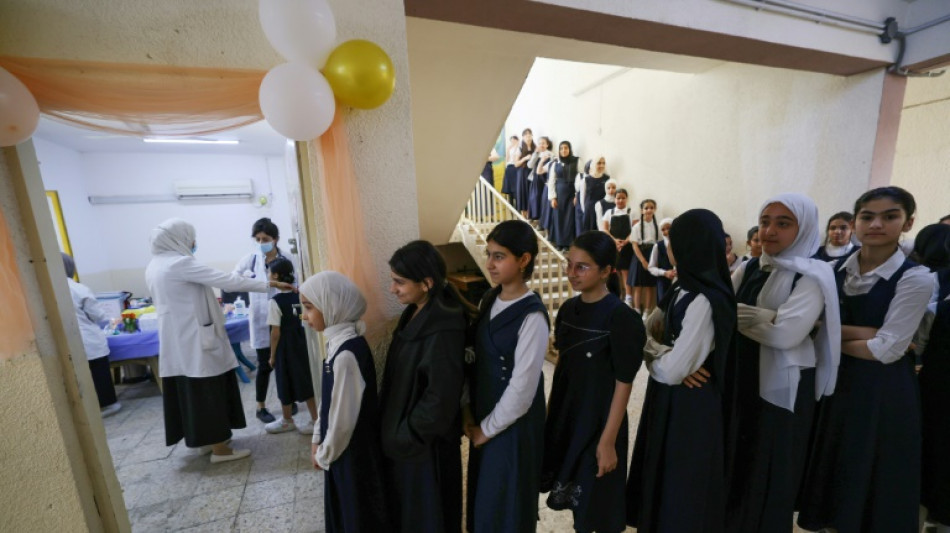
Global immunisation efforts have saved at least 154 million lives in the past 50 years, the World Health Organization said Wednesday, adding that most of those to benefit were infants.
That is the equivalent of six lives saved every minute of every year of the half century, the UN health agency said.
In a study published in the Lancet, WHO gave a comprehensive analysis of the impact of 14 vaccines used under the Expanded Programme on Immunisation (EPI), which celebrates its 50th anniversary next month.
Thanks to these vaccines, "a child born today is 40 percent more likely to see their fifth birthday than a child born 50 years ago", WHO chief Tedros Adhanom Ghebreyesus told reporters.
"Vaccines are among the most powerful inventions in history, making once-feared diseases preventable," he said.
"Smallpox has been eradicated, polio is on the brink, and with the more recent development of vaccines against diseases like malaria and cervical cancer, we are pushing back the frontiers of disease."
Infants accounted for 101 million of the lives saved through immunisation over the five decades, said the study.
"Immunisation was the single greatest contribution of any health intervention to ensuring babies not only see their first birthdays but continue leading healthy lives into adulthood," WHO said.
- 'Vaccines cause adults' -
Over 50 years, vaccines against 14 diseases -- diphtheria, Haemophilus influenza type B, hepatitis B, Japanese encephalitis, measles, meningitis A, pertussis, invasive pneumococcal disease, polio, rotavirus, rubella, tetanus, tuberculosis, and yellow fever -- had directly contributed to reducing infant deaths by 40 percent, the study found.
For Africa, the reduction in infant mortality was more than 50 percent, it said.
The vaccine against measles -- a highly contagious disease by a virus that attacks mainly children -- had the most significant impact.
That jab accounted for 60 percent of the lives saved due to immunisation, according to the study.
The polio vaccine means that more than 20 million people are able to walk today who would otherwise have been paralysed.
The study also showed that when a vaccine saves a child's life, that person goes on to live an average of 66 years of full health on average -– with a total of 10.2 billion full health years gained over the five decades.
"Vaccines cause adults," Tedros said.
WHO stressed that the gains in childhood survival showed the importance of protecting progress on immunisation.
It highlighted accelerating efforts to reach 67 million children who missed at least one vaccination during the Covid pandemic.
The UN health agency, along with the UN children's agency Unicef, the Gavi vaccine alliance and the Bill and Melinda Gates Foundation, on Wednesday launched a joint campaign called "Humanly Possible".
It is aimed at scaling up vaccination programmes around the world.
"By working together we can save millions more lives, advance equity and create a much healthier and more prosperous world," Violaine Michell of the Gates Foundation told journalists.
- Anti-vax threat -
But efforts to ensure broader vaccine coverage have increasingly run into anti-vax movements and conspiracy theories circulating on social media.
This was particularly clear during the Covid pandemic, but it has also taken its tolls on efforts to avert measles outbreaks.
"There has been a very significant backsliding in the use of the measles vaccine and the coverage that has been achieved in countries around the world, and that is resulting in outbreaks," WHO vaccine chief Kate O'Brien told journalists.
Lack of access to the vaccines was a major concern, said O'Brien, but part of the backsliding was attributable to "misinformation and anti-vax movements".
"The measles vaccine is a safe vaccine, and it's highly effective," she insisted, stressing the need to ramp up efforts against "one of the most infectious viruses that infect humans".
F.Fehr--VB