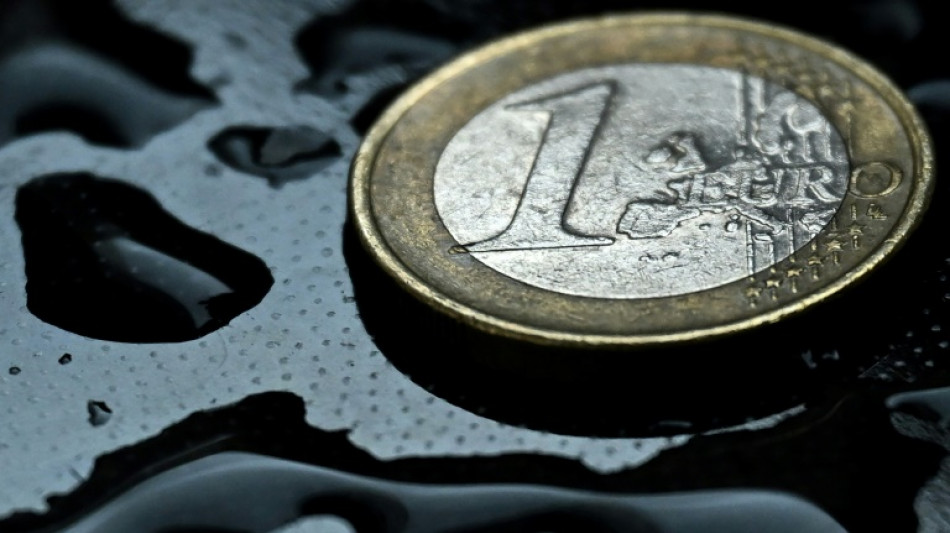
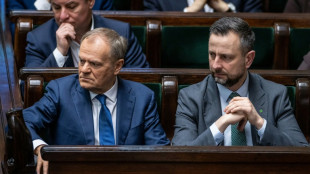
EU lawmakers to greenlight new spending rules / Photo: © AFP/File

 African players in Europe: Mbeumo ends goal drought as United draw

 France's high school students plan fresh protests

 NZ bank in free speech row over 'explicit' sheep memes

 China Open champ Zheng withdraws from Wuhan citing fatigue

 Brewers edge Dodgers 2-1 in National League Championship Series opener

 Pope to have surgery to remove lung nodule

 Stocks rise as oil prices tumble after Trump hails 'energy ceasefire'

 Man City charges cloud hangs over Premier League season

 Top NATO commander set to issue warning to Russia over any attack

 Software, sprints, trolls: Singapore Grand Prix talking points

 Riyadh airport hit by fresh Houthi strike day after deadly attack

 Policymakers take on energy shock, rising debt at IMF-World Bank meetings
 Raphael Glucksmann elected centre-left French presidential candidate

 'Dizzy' Lazio join Inter at top of Serie A as Roma, Juve and Milan held

 Jaguars edge Eagles as Packers beat Bears
 Rays chase first MLB crown as Guardians try to snap drought
 Hurricane Simon churns off Mexican coast after shift in course
 'Dizzy' Lazio join Inter at top of Serie A as Roma and AC Milan held

 Man City must make 'own noise' amid financial scandal, says Maresca

 Jaguars down Eagles with wild field goal finish in London

 Sadaqat, Imran help Pakistan thump Sri Lanka to seal T20 series

 Man City shrug off uncertain future to beat 10-man Liverpool
 Conservation groups alarmed at marine mammals' deaths in Spain

 Tens of thousands urge climate action at Brussels demo
 Norway's Hagenes wins historic Paris-Tours classic

The EU hopes to move towards healthier public finances after the expected passage of reforms to the bloc's spending rules on Tuesday in the European Parliament.
Brussels has spent two years negotiating an overhaul of its budget rules that have pitted fiscally hawkish states against the bloc's most indebted nations.
EU negotiators finally reached agreement on the reform in February and now the European Parliament must give its final green light. It will become official once the EU's 27 member states endorse the text.
Once in place, the new rules will force governments to get national spending under control, but they give greater leeway for investment in critical areas like the green and digital transitions, as well as defence.
The old rules had been suspended between 2020 and 2023 to help the European economy weather the Covid pandemic and then Russia's assault on Ukraine, which sent energy prices soaring.
There was widespread agreement that there could be no return to the old rules without changes to make them practicable, despite public debt ballooning across the bloc.
Known as the Stability and Growth Pact, the rules stipulate a country's debt must not go higher than 60 percent of gross domestic product, with a public deficit of no more than three percent.
These goals remain in place, though there was fierce debate over how much the limits should be relaxed to give more room for investment.
"This reform constitutes a fresh start and a return to fiscal responsibility at the same time," said Markus Ferber, an EU lawmaker for the parliament's biggest centre-right group, the EPP.
"The old fiscal rules had many weaknesses and loopholes and suffered from almost non-existent enforcement," he added.
- 'Economic disaster' -
The new text provides looser fiscal rules adapted to each state, allowing big spenders a slower route back to frugality.
The tailormade approach means each country presents its own adjustment trajectory to ensure debt sustainability. That gives them more time if they undertake reforms and investments and allows a less painful return to fiscal health.
The new rules will apply to member states' 2025 budgets.
Germany and its "frugal" allies pushed to impose a quantifiable minimum effort to reduce debt and deficits, but critics have slammed its complexity.
Left-wing groups say the new rules are a tool for imposing austerity on Europe.
In an open letter on Monday, Belgian, French, Italian and Spanish trade unions hit out at rules they said were "unfit for (the) future".
"This agreement, forced by the austerity approach of some European capitals, will require member states to reduce their debts rapidly and in ways that are economically and socially unsustainable: this will mark a return to austerity," they warned.
The Greens group in the parliament warned the reform was an "economic disaster" and said it would limit public expenditure on the green transition.
"It is clear that private investment will not be able to pay for the transition on its own, especially if there are no public funds to offer incentives, and we cannot leave the costs of the transition to citizens alone," the group said.
F.Fehr--VB