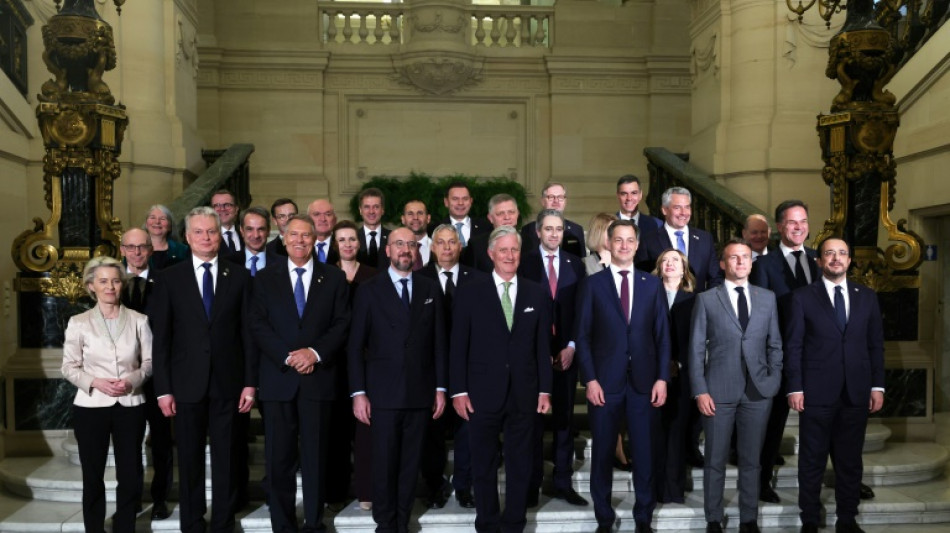
Act fast or fall behind China, US for good, EU leaders told / Photo: © POOL/AFP

 US actress Selma Blair arrested after flight altercation
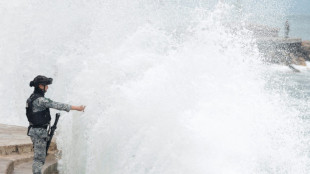 One dead as Hurricane Simon creeps along Mexico's Pacific coast
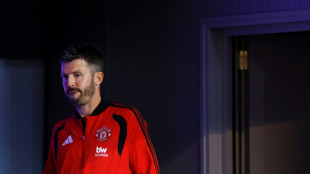 Carrick's Man United 'hungry and eager' to fix worst start in decades

 Fury as US federal agents search anti-Trump lawmaker's home
 One goal enough for Flick as Barca enter Galatasaray cauldron
 A7 to unveil a service that will re-invent the international payments market
 'Status quo' with EU 'not good enough', UK PM says as summit date set
 Stolen Renoir paintings found behind wall in France
 French supermarkets suffer refrigerator shutdown after 'unprecedented' cyberattack
 Arsenal lose Hincapie and Zubimendi in freak double blow

 Saudi says resilience tested, vows response after deadly airport attacks
 Alcaraz exits Shanghai Masters in straight-sets loss
 Pope to enter hospital on Tuesday for lung operation
 Renshaw shines again before Australia declaration
 Atletico's Simeone encourages goalless Alvarez improvement
 FXGLOBE Rebuilds Its Copy Trading and PAMM Business With B2BROKER's B2COPY
 Nepal rescuers search for missing after flash flood
 Oil rises as Trump comments roil energy markets

 Premier League in limbo as Manchester City soar
 Zelensky vows to respond as Moscow silent on 'energy ceasefire'
 Thousands march in India's capital to demand election chief resign

 African players in Europe: Mbeumo ends goal drought as United draw
 France's high school students plan fresh protests
 NZ bank in free speech row over 'explicit' sheep memes

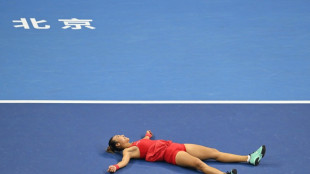 China Open champ Zheng withdraws from Wuhan citing fatigue

The European Union must act fast or risk falling perilously behind the economies of China and the United States, EU leaders heard Thursday as they headed into summit talks on how to leverage the bloc's huge market to stem its decline.
From supply chain disruptions following the coronavirus pandemic to an energy crisis after Russia's invasion of Ukraine, Europe's economy has yet to recover from a series of major, back-to-back challenges.
But it may yet face its biggest: the clean energy and digital transitions that Brussels has made its priority in the coming years will require additional annual investment of nearly 620 billion euros ($660 billion), according to the European Commission.
"Competitiveness is a fundamental issue. We face complicated challenges," EU chief Charles Michel told reporters as the Brussels talks got underway, pointing to the climate, the digital transition and security.
The EU has a population of 450 million and is home to some of the world's biggest economies including Germany and France.
But from artificial intelligence to solar panels, from computer chips to batteries, the EU is fast losing ground on innovation to other global powers.
The EU has been put further on the back foot as China and the United States have poured in billions of dollars of state aid to prop up their critical industries.
"There's no time to waste. The gap between the European Union and US in terms of economic performances is becoming bigger and bigger," Enrico Letta, the author of a long-awaited report into the future of the single market, told reporters.
Official EU data shows the bloc's economic stagnation has lasted more than 18 months. While the United States grew by 2.5 percent and China by 5.2 percent in 2023, Eurostat data last month showed the EU economy grew by only 0.4 percent.
The Brussels summit began with a presentation by Letta, whose report identifies as a key issue the absence of a properly integrated EU-wide financial market.
Although the EU has a single currency, its start-ups cannot raise the jaw-dropping amounts their US competitors can, and Europeans currently find it more rewarding to pour more than 300 billion euros of their savings into US markets each year.
Michel pointed to the "gigantic volume" of savings by citizens, of which a "substantially large part leaves the EU and is not mobilised to support innovation".
The debate comes as the EU seeks to define the strategic priorities for the European Commission's next five-year mandate following elections across the bloc in June.
- Internal debates -
The leaders' gathering gives fresh impetus to the idea of a Capital Markets Union -- or what Letta is dubbing a "savings and investment union".
But the issue -- which is far from new -- has been mired in technical talks for 10 years because of national divisions that remain hard to overcome.
While France has strongly insisted on greater integration, the EU's smaller countries have pushed back against a centralised, European supervision of markets being thrust upon them.
Further headaches stem from suggestions to harmonise taxation and bankruptcy regulations at the EU level -- which have thus far faced insurmountable blocks.
"We must avoid over-bureaucratising, over-regulating and over-centralising everything, which some countries are in favour of," Luxembourg Prime Minister Luc Frieden said on Wednesday, calling for a "pragmatic approach".
- 'Radical change' needed -
Letta's report is not the only one leaders will be leaning on.
Ex-European Central Bank chief Mario Draghi, increasingly touted as a potential successor to commission president Ursula von der Leyen, will present his report on the EU single market in the summer.
Draghi gave a taste of what to expect as he called for "radical change" during a speech in Belgium on Tuesday.
"Our major competitors are taking advantage of the fact that they are continental-sized economies. We have the same natural size advantage in Europe, but fragmentation is holding us back," Draghi said.
Spurring the sense of urgency is the colossal scale of the sums needed: on top of the hundreds of billions required to fund the green transition, as war rages in Ukraine the EU needs tens of billions of euros more to help Kyiv.
French President Emmanuel Macron proposed in January taking on joint EU debt to raise money, like Europe did during the pandemic, but that idea has been given short shrift by the leaders of the so-called frugal countries, including Germany.
C.Koch--VB