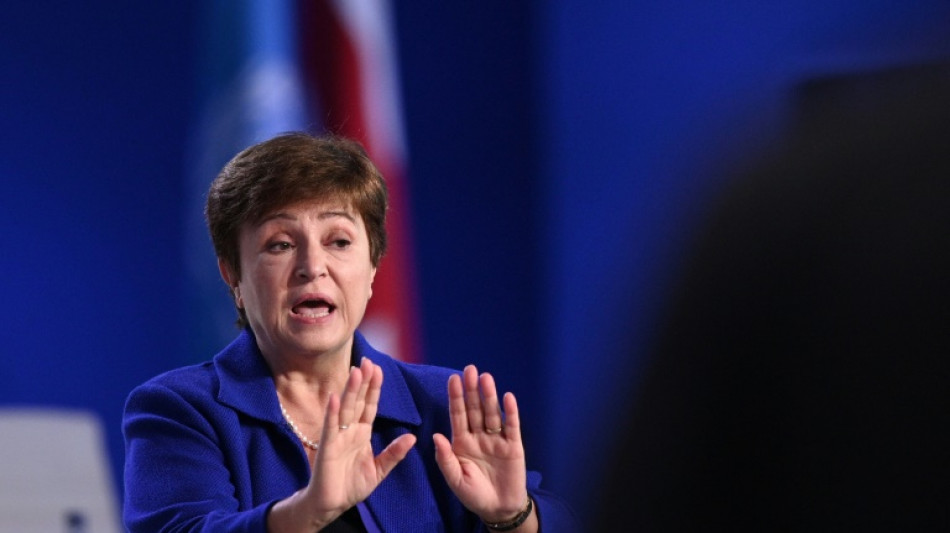
Crises slowing economic growth worldwide: IMF chief / Photo: © AFP/File

 Zhu Rongji, trailblazing ex-premier who transformed China's economy
 China tech giant Tencent's Q2 profit down as AI push builds
 China's C919 jet makes first international commercial flight
 Mideast war impact on travel bookings fading, TUI says
 Bangladesh get Das fitness boost for daunting Australia task
 One dead, 172 rescued as second ferry in days catches fire in Indonesia

 Foxconn posts quarterly profit surge on AI server demand
 Hazlewood gets Australia nod ahead of Boland for Bangladesh Test
 Toyota ex-chief Okuda, pioneer of the Prius, dead at 93

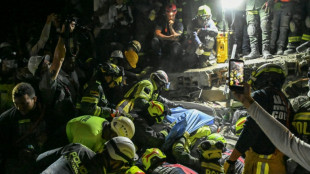
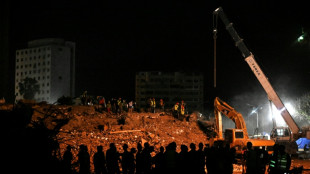
 Colombia rescuers find woman alive as quake death toll passes 200

 New Zealand PM survives leadership challenge months from election
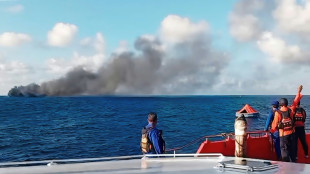 Passengers rescued as second ferry in days catches fire in Indonesia

 Oil prices rise, stocks mixed ahead of crucial US inflation data
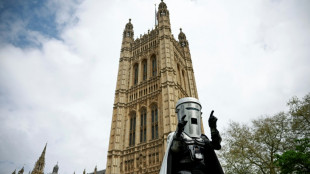 UK 'joke' candidate Binface pushes serious point about politics
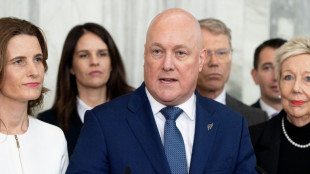 New Zealand PM Luxon survives leadership challenge months from election
 Cuba celebrates Castro's 100th as his revolution faces its toughest test
 Defending champion Shelton rolls into Montreal semis
 What to know about the total solar eclipse

 Tentoglou claims fourth Euro long jump title, injured Jacobs falters

 All Blacks knew Nonu would perform solo Haka - coach Rennie

 Britain's Glave upstages Jacobs to win European 100m gold

 Greece's Tentoglou wins fourth European long jump title
 Doctors ignored 'warning signs' before Maradona's death, court hears

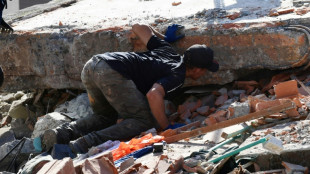 Pereira, the 'zombie city' devastated by Colombia's earthquake

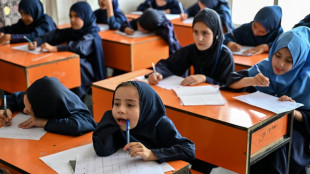
 UN says 2 staff arrested by Afghan intelligence agency
The war in Ukraine has undercut the global recovery, slowing expected economic growth in most countries in the world, IMF Managing Director Kristalina Georgieva said Thursday.
And beyond the humanitarian tragedy and economic crises, the war has exposed fractures in the international system at a time when global cooperation is the only solution, she said.
The war hit as the world was struggling to recover from the ongoing impact of the Covid-19 pandemic, and has caused an acceleration of inflation that endangers the gains of the past two years.
"To put it simply: we are facing a crisis on top of a crisis," Georgieva said in a speech ahead of the spring meetings of the IMF and World Bank.
"The economic consequences from the war spread fast and far, to neighbors and beyond, hitting hardest the world's most vulnerable people," she said.
Families already were struggling with higher energy and food prices and "the war has made this much worse."
The IMF is due to release its updated economic forecasts on Tuesday, which Georgieva said will further downgrade the estimate for global growth that was cut to 4.4 percent in January.
"Since then, the outlook has deteriorated substantially, largely because of the war and its repercussions," she said, and 143 countries will suffer downgrades.
While most will still achieve positive growth, the future is "extraordinarily uncertain," and she warned of a deep divide between rich and poor countries.
- 'Clear and present danger' -
After a decade of low inflation, prices worldwide have surged amid strong demand for goods that outstripped supply as economies began to return to normal, but the Russian invasion of Ukraine in late February and the sanctions imposed on Moscow pushed fuel and food prices up sharply.
Ukraine and Russia are major grain producers, and Russia also is a key source of energy for Europe.
"The root cause of what we face today is the war and it is the war that must end," Georgieva said in a discussion following her speech to the Carnegie Endowment for International Peace.
Inflation, which has hit a four-decade high the United States, "has become a clear and present danger," she said, noting the trend will likely last longer than expected.
"This is a massive setback for the global recovery," she said.
It also complicates policymaking: major central banks are raising interest rates to contain prices, but that increases borrowing costs for emerging markets and developing nations, which face high debt burdens.
"This is the most universally complex policy environment of our lifetime," she said.
- 'Fragmentation' -
Ending the war and the pandemic are top priorities, but can only be addressed through international cooperation, said Georgieva, who warned of the growing "fragmentation of the world economy into geopolitical blocs."
The IMF leader, who grew up in Cold War-era Bulgaria, lamented, "I have never thought that I would live to see another war in Europe of the magnitude of the tragedy that is happening in Ukraine."
She noted that the end of the Cold War ushered in "a new era of rapidly increasing prosperity... because of an integrated global economy."
Fractures in that system impair the ability to address the current crises and future challenges, but also could cause a "tectonic shift" that would reshape global supply chains.
"The threat to our collective prosperity from a breakdown in global cooperation cannot be overstated," she said.
L.Janezki--BTB