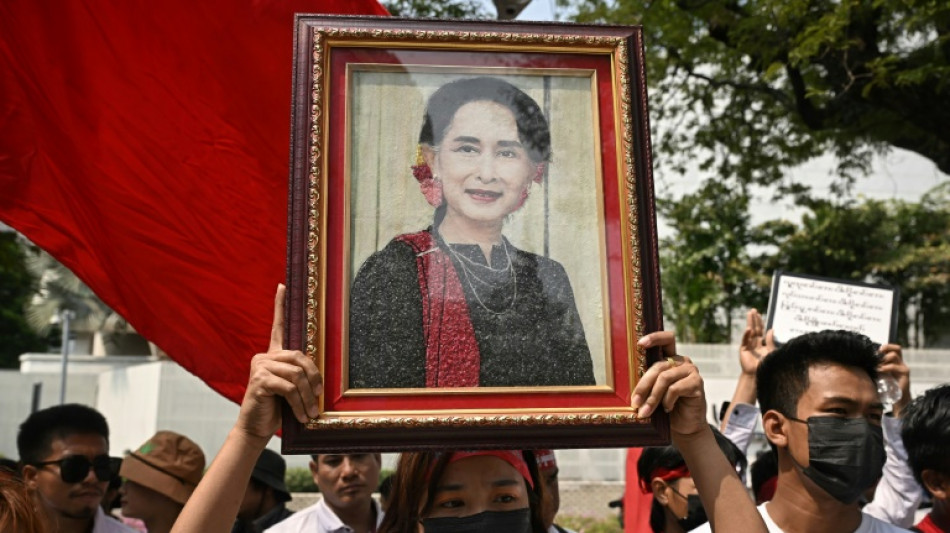
Jailed Myanmar leader Suu Kyi moved to house arrest / Photo: © AFP/File

 Bivial AG Brings Its Complete Dashboard to Mobile
 Mont Blanc nearly two metres taller than in 2023: French surveyors

 Pope recovering after lung cancer operation that rattles Church
 Indonesia haze spikes Singapore pollution, shuts East Timor schools
 Higher borrowing costs an 'alarm signal' for France: finance minister
 Zelensky accuses Putin of disrespecting Trump after latest attacks

 Japan PM says housework makes her busier than male predecessors

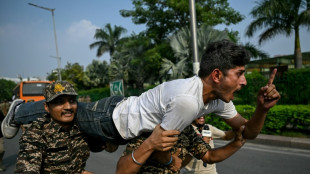
 Top Indian 'cockroach' leaders sent to jail after protest

 Ukraine ex-military officer to stand trial over Nord Stream sabotage

 IMF chief says Saudi attacks could have negative spillover 'everywhere'
 Premier League move a Sage decision for new Palace boss

 South Korean FA condemns 'personal attacks' as rift rumours grow

 Japan urges 'impartial treatment' of journalist arrested in Russia

 What we know about Pope Leo XIV's lung cancer operation

 Advanced economies must 'act now' to lower debt as bond yields spike: IMF
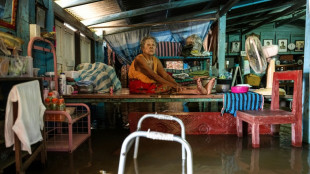 Deluge by design: Thai villages flooded to protect capital
 Ivan Deforge, the French 'bison tamer' in Moscow

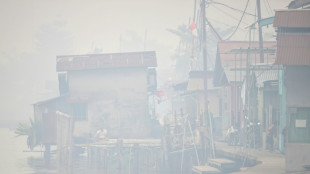 Indonesians on fire-ravaged island sue state for clean air
 Trump, White House post video of UK man killed by tiger
 Saudi employee arrested for allegedly bugging OpenAI office

 Atletico sink Man Utd as Viking deny Bayern in Champions League
 Man United's Martinez blasts board's lack of investment

 Meet A7 International, an Innovative Global Platform Designed to Reinvent the International Payments Market

 Shakhtar hope London move a reminder of Ukraine conflict

 Tresoldi hat-trick fires Brugge past Inter Milan

Jailed Myanmar democracy leader Aung San Suu Kyi has been moved from prison to house arrest, a military official said Wednesday, as the junta announced a heatwave had prompted measures to protect inmates.
The 78-year-old Nobel laureate is serving a 27-year sentence for a host of criminal convictions ranging from corruption to breaching Covid-19 rules.
Suu Kyi has largely been hidden from view since the military detained her as they seized power in a 2021 coup, and she has reportedly suffered health problems.
A military official, speaking on condition of anonymity because he is not authorised to speak to the media, said Suu Kyi and former president Win Myint had been moved from prison to house arrest.
Junta spokesman Zaw Min Tun said that a spell of hot weather had prompted authorities to take measures to protect vulnerable detainees.
"Not only Daw Aung San Suu Kyi and U Win Myint but also some old prisoners were given necessary care because of very hot weather," Zaw Min Tun told AFP.
The temperature in capital Naypyidaw, where Suu Kyi is believed to be in custody in a specially constructed compound, is expected to hit 41 C (105.8 F) on Wednesday, with even hotter weather forecast for the coming week.
The junta also announced on Wednesday that 3,300 prisoners would be freed as part of a regular amnesty to mark the country's new year festival.
Outside Yangon's Insein Prison, about 200 to 300 relatives and friends waited to greet prisoners as they were taken out of the compound in buses.
- Health problems -
It was not immediately clear how long Suu Kyi would be allowed to remain under house arrest beyond the heatwave, or whether the move represented an official reduction in her sentence.
Local media reported that during her months-long trial, Suu Kyi had suffered dizzy spells, vomiting and at times had been unable to eat because of a tooth infection.
Her son Kim Aris told AFP in February that she was still being held at the special compound in Naypyidaw.
The compound had no air conditioning in the searing heat and the concrete cells leaked during the monsoon, according to Australian economist Sean Turnell, a former advisor to Suu Kyi's government who was detained there for months.
Suu Kyi spent about 15 years under house arrest at her family's colonial-era lakeside mansion in the commercial hub Yangon after she shot to fame during huge demonstrations against the then-junta in 1988.
Wednesday's prisoner amnesty includes 13 Indonesians and 15 Sri Lankans who will be deported, the junta said.
Remaining prisoners will have their sentences cut by one-sixth, the junta said in a statement, except for those convicted of serious offences, including murder, terrorism and drugs charges.
Myanmar's military ousted Suu Kyi's civilian government in a lightning coup in February 2021, ending the country's 10-year experiment with democracy after decades of army rule.
The coup triggered a huge outpouring of public opposition, which the military attempted to crush with force, unleashing a spiralling conflict that has left more than 4,800 civilians dead.
The army is now struggling to maintain its grip on the country in the face of resistance from civilian anti-junta fighters and long-established ethnic minority armed groups.
R.Fischer--VB