In Scranton, aging US factory makes shells for Ukraine / Photo: © AFP

 Fuel shortage triggers queues on Indonesia's Bali island

 Evolution Metals & Technologies Corp. Reaffirms $400 Million to $460 Million FY2027 Revenue Guidance, Unveils Eight Sintered Magnet Grades Covering an Estimated 75% of Global NdFeB Revenue, and Moves to Answer U.S. Army Call for Rare Earth Magnets

 Trial defence says Russia used Nord Stream pipelines as 'weapon'

 Israeli settlers set fire to mosque in occupied West Bank

 Macron says French student protesters 'exploited' by political forces: spokeswoman

 Stocks diverge ahead of key US inflation data
 Japan summons Russian ambassador to protest journalist's arrest

 Workers to strike at world's largest copper mine in Chile

 Ukraine accuses US of helping Russia as missiles hit Kyiv

 Drone hits data centre of Russia's largest bank

 Bivial AG Brings Its Complete Dashboard to Mobile

 Mont Blanc nearly two metres taller than in 2023: French surveyors

 Pope recovering after lung cancer operation that rattles Church

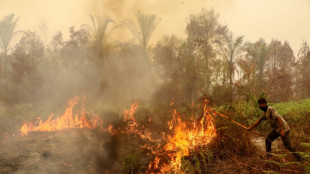 Indonesia haze spikes Singapore pollution, shuts East Timor schools

 Higher borrowing costs an 'alarm signal' for France: finance minister
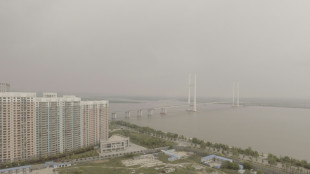
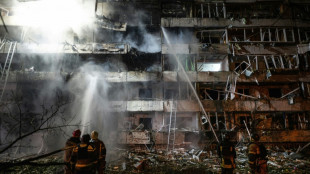 Zelensky accuses Putin of disrespecting Trump after latest attacks

 Japan PM says housework makes her busier than male predecessors

 Top Indian 'cockroach' leaders sent to jail after protest

 Ukraine ex-military officer to stand trial over Nord Stream sabotage
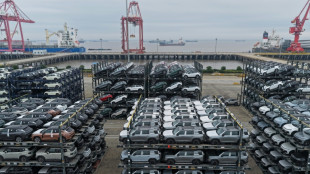
 IMF chief says Saudi attacks could have negative spillover 'everywhere'

 Premier League move a Sage decision for new Palace boss

 South Korean FA condemns 'personal attacks' as rift rumours grow

 Japan urges 'impartial treatment' of journalist arrested in Russia

 What we know about Pope Leo XIV's lung cancer operation

 Advanced economies must 'act now' to lower debt as bond yields spike: IMF

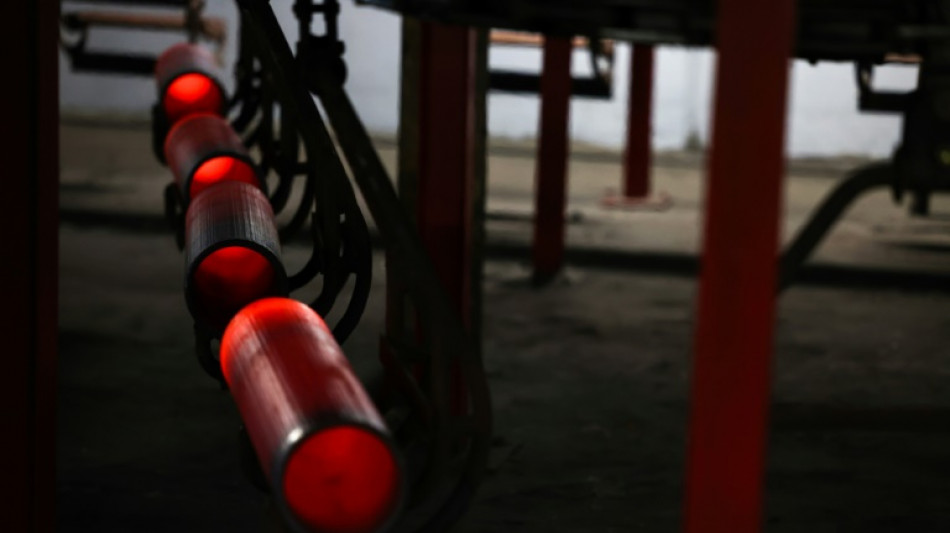
In brick buildings that are more than a century old in Joe Biden's Rust Belt hometown of Scranton, Pennsylvania, dated machinery continues to churn out machinery for modern conflicts -- especially the war in Ukraine.
The Scranton Army Ammunition Plant (SCAAP) is making steel tubes for 155 mm caliber shells, which are crucial to Kyiv's efforts to face down Moscow's invasion.
The tubes are then sent to Iowa, where they are loaded with explosives.
"The fuse is installed in the field... for security reasons," Richard Hansen, a retired US Navy veteran who has been in charge of the facility since 2009, explained to AFP on Tuesday during a tour for a small group of journalists.
The site, initially built in 1908 to construct and maintain steam locomotives, started its new life in munitions after being purchased by the US government in 1953.
Back then, it was used to make ammunition for use in the Korean War. Some of the manufacturing equipment in use today dates back nearly to that time.
The buildings, listed on the National Register of Historic Places, are hardly the picture of 21st century high-tech efficiency. There is no computer-aided automated production here. AI? Forget about it.
The red-hot steel tubes, just formed in three successive forges, are cooling for three hours in racks hanging from a conveyor belt in the factory's basement, before the next phase of production.
The basement is a maze of dark nooks and crannies -- lit up from time to time by flame or searing metal.
Visitors have to pay close attention not to tumble into disused pits or trip on narrow staircases, all while enduring deafening noise -- despite earplugs -- and the smell of hot steel.
The tubes are then treated in a variety of ways -- heat, ultrasound, polishing and submersion in oil, among others -- to remove the tiniest flaw, inside and out, and identify any defects.
Measurements are checked from all angles several times, using tools that seem like they could be on display in a museum of antique hardware.
- 'Remove before firing' -
At the end of the lines, the tubes are painted, to prevent them from rusting out in storage, and are then assigned a batch number for tracing and identification.
The final touch? A label that says "Remove before firing."
"Never any incident with a shell has been traced back to this facility," Hansen notes.
While Hansen is happy to talk about the plant's history or the production process, he is more tight-lipped about the number of tubes produced and how they are used on the battlefield.
The current contract is to make 24,000 tubes a month in three factories in eastern Pennsylvania, and runs until the end of 2027, but production can vary. The terms of the original contract signed in 2019 were not disclosed.
SCAAP is still owned by the government, which signed a contract with US defense and aerospace giant General Dynamics, which has two sites of its own not far from Scranton where 155 mm caliber shells and mortars are manufactured.
Another General Dynamics facility should be up and running in Texas this summer, a representative of the group told AFP during the visit, on condition of anonymity.
The three operational sites in Pennsylvania employ a total of 900 people.
"Production has not been increased because of the war in Ukraine," Hansen said, though he added that the plant had "a modernization plan to increase production" before the conflict erupted in 2022, set to wrap up in about two years.
The $418 million plan should boost efficiency at SCAAP thanks to much-needed technology upgrades and energy-saving methods, but Hansen says production could be increased at any time if needed.
The US military has signed contracts with other contractors to significantly boost production of artillery for Kyiv by next year.
F.Mueller--VB