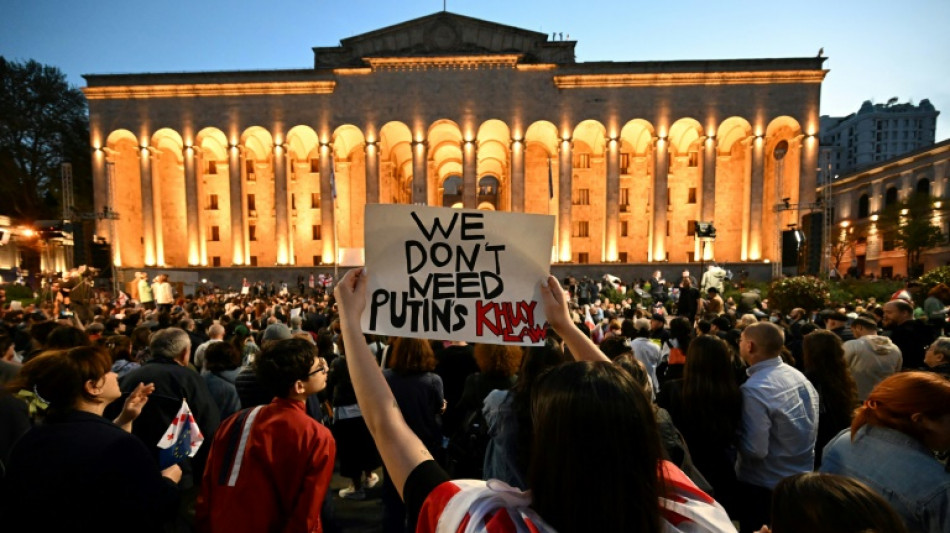
Thousands rally in Georgia as parliament debates 'foreign influence' law / Photo: © AFP

 FX Junction Brings Copy Trading to Everyone, While Their Money Never Leaves With Their Broker

 Brighton defender Struijk's red card overturned

 Saudi league postpones three matches after Houthi attacks
 US consumer inflation up more than expected as midterms loom

 Canadian publisher supports novelist Orelien after AI denial

 Medvedev sees off Tsitsipas to reach Shanghai Masters quarters

 Louvre boss warns of closure risk without major renovations

 Lawes and Genge urge England to end ban on overseas-based players

 Metrika Selected by OCC to Support Stablecoin Supervisory Framework Under the GENIUS Act

 Kenya hosting 2029 World Championships will help doping fight, says Coe
 UK prosecutor tells jury Russell Brand a 'sexual predator'
 Fulham manager Arbeloa fined £25,000 after Man Utd outburst

 Nepal flood triggered by rock and ice avalanche: report

 'Distressed' family of UK man killed by tiger urge end to online posts
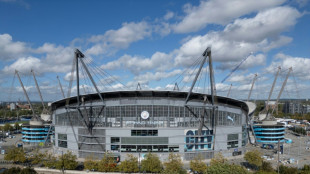 Regulator expects Man City appeal to be heard by January

 Rising Spanish tennis star handed code violation for swearing at ballboy

 Last of the French musketeers Monfils officially retired from tennis

 Ukraine ex-military officer stands trial over Nord Stream sabotage

 British and Irish Lions to play first women's match against France

 Fuel shortage triggers queues on resort island Bali

 Sao Tome's niche vanilla finds far-away fans
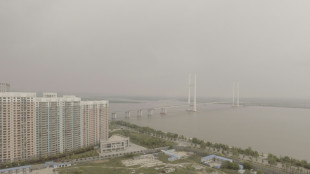 China-North Korea bridge to open Thursday, 12 years late

 Asian stocks mostly down as tech firms struggle to claw back losses

 AI boom drives record sales at Dutch tech giant ASML
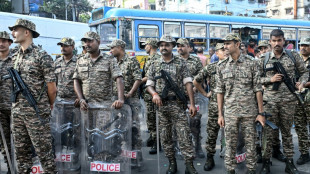
 Trump says 'massive' oil, gas, mineral exploration to begin in Greenland

Georgian lawmakers on Tuesday agreed an early draft of a controversial "foreign influence" bill, sparking fresh street protests against the legislation criticised for mirroring a repressive Russian law.
The bill has sparked outrage in Georgia and concern in the West, with many arguing it undermines Georgia's bid for European Union membership.
Lawmakers voted 78 to 25 to move the draft bill along for further debate.
Georgia's President Salome Zurabishbili -- who is at loggerheads with the ruling party -- condemned the move as "against the will of the population".
It "is a direct provocation -- a Russian strategy of destabilisation," she said.
Thousands rallied in the evening outside the parliament building in Tbilisi, blocking traffic on the main thoroughfare of the Georgian capital, whistling and shouting: "No to the Russian law!"
Riot police cordoned off entrances to the legislature and demonstrators briefly scuffled with them, attempting to push against the police line, an AFP journalist witnessed.
Police used pepper spray against the crowds and several protestors were detained. Water cannon was also on standby.
The interior ministry said one police officer had been injured and called on protesters to follow police instructions.
"In case the rally participants continue their illegal actions, the ministry of internal affairs will take special measures defined by law," it said in a statement.
University student Kote Tatishvili, one of the demonstrators, said "Georgians will never accept this Russian law."
"We, peaceful demonstrators, will prevail, we will force Russian stooges in the Georgian Dream (ruling party) to withdraw the law," he said.
A day earlier, police had detained 14 demonstrators as some 10,000 people took to the streets.
- 'Further away from EU' -
The European Union has called on Tbilisi not to pass the legislation, saying it contradicts the democratic reforms the country is required to pursue to progress on its path towards EU membership.
Renewing Brussels' criticism of the proposals, EU chief Charles Michel said Tuesday: "The draft Law on Transparency of Foreign Influence is not consistent with Georgia's EU aspiration and its accession trajectory."
It "will bring Georgia further away from the EU and not closer," he wrote on X, formerly Twitter.
Amnesty International urged Georgian authorities to "immediately stop their incessant efforts to impose repressive legislation on the country's vibrant civil society."
It said the draft law "poses a direct threat to the rights to freedom of association and expression."
The ruling Georgian Dream party controls 84 seats in the 150-member legislature and can pass the law without opposition backing.
If adopted, the bill will require any independent NGO and media organisation that receives more than 20 percent of funding from abroad to register as an "organisation pursuing the interests of a foreign power."
That was a change from last year's proposal, which used the term "agent of foreign influence."
A similar law is used in Russia to punish government critics and suffocate independent media.
In December, the EU granted Georgia official candidate status but said Tbilisi would have to reform its judicial and electoral systems, reduce political polarisation, improve press freedom and curtail the power of oligarchs before membership talks are formally launched.
US State Department spokesman Matthew Miller said last week that passing the law would "derail Georgia from its European path."
The ruling party was forced to drop a similar measure last year, following mass protests that saw police use water cannon and tear gas against demonstrators.
Then in a surprise move ahead of October's parliamentary elections seen as a key democratic test, it re-introduced the bill in parliament earlier this month.
A former Soviet republic, Georgia has sought for years to deepen relations with the West, but the current ruling party is accused of trying to steer the Black Sea nation toward closer ties with Russia.
Once seen as leading the democratic transformation of ex-Soviet countries, Georgia has in recent years been criticised for perceived democratic backsliding.
R.Buehler--VB