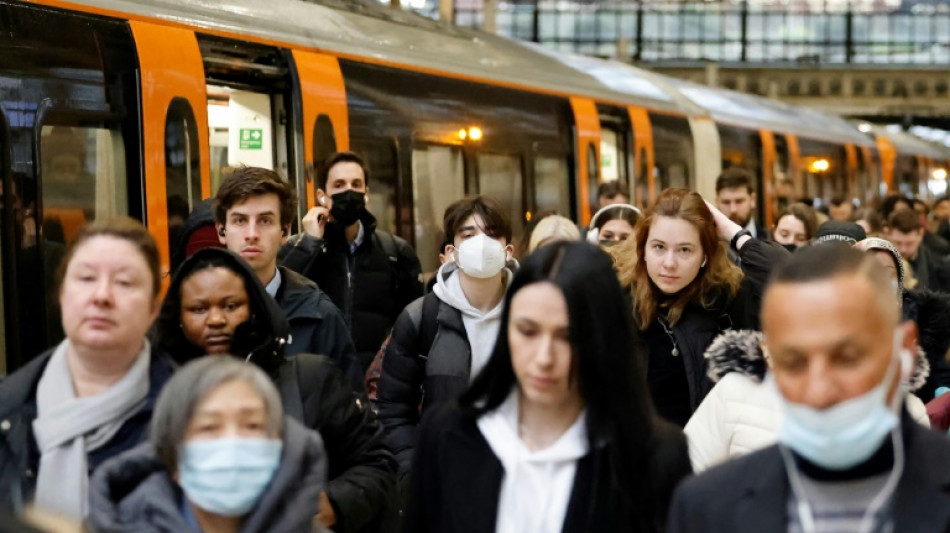
WHO experts insist Covid still a global emergency / Photo: © AFP

 Bugatti CEO to stop leaving keys inside cars after Chiron theft

 Starc, Lyon leave South Africa reeling

 Arsenal lose appeal against Dowman red card in shock Fleetwood defeat

 French court rules Meta must negotiate over rights payments

 Spain demands answers as rail disaster toll rises

 Garcia bids for Ryder Cup return as he confirms LIV exit

 England outlast Sri Lanka despite Rathnayake's hundred in dead rubber
 Starc strikes twice as Australia push for victory

 Does White House ask AI to shape policy? Democrats want the receipts

 Trump tees up Alaska election challenge over same-name candidate 'fraud'
 IMF says engaging with Iraq on preparing new bailout program
 Two dead in rock spire collapse at Turkey's touristic Cappadocia

 No surprise to Carrick he's still Man Utd manager

 Two dead in rock spire collapse at tourist site in Turkey's Cappadocia

 ECB holds rates steady after Lagarde says to quit early
 US economy posts strong growth, inflation stubbornly high in challenge to Trump

 What we know about Spain's deadly train crash

 ECB chief Lagarde to step down early, triggering succession race

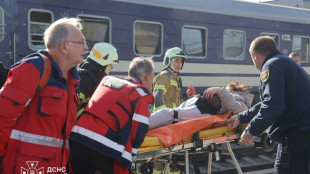
 'Horrific' Russian drone strike kills 14 at Ukraine train station: Kyiv
 VW says 'no time to lose' to slash costs after 5.8 billion euro loss

 Australia lead by 100 after Inglis century

 Martin to ride with broken wrist in Malaysian MotoGP practice

 England forward Toney to stand trial for alleged assault in June 2028
 Warrican's five-wicket haul leads West Indies fightback in Bangladesh Test

 Oil majors reap bumper profits as Mideast war drives prices

The WHO's emergency committee on Covid-19 on Wednesday unanimously affirmed that the virus remains a major public health danger and insisted that countries must stop dropping their guard.
With many nations relaxing public health and social measures, and drastically reducing testing for the virus, the World Health Organization's group of experts said the pandemic was far from being at an end.
"Now is not the time to let our guard down -- on the contrary, and this is an extremely strong recommendation," committee chair Didier Houssin told a press conference.
"The situation is far from over with regard to the Covid-19 pandemic, the circulation of the virus is still very active, mortality remains high and the virus is evolving in an unpredictable way," the French doctor warned.
"Now is not the time for relaxation on this virus, nor weakness in surveillance, testing and reporting, nor laxity in public and social health measures and no resignation when it comes to vaccination."
The committee meets every three months to discuss the pandemic and reports to WHO chief Tedros Adhanom Ghebreyesus.
It concluded that the pandemic still constitutes a public health emergency of international concern (PHEIC) -- the highest level of alert that the WHO can sound.
- 'Middle' phase of pandemic -
The committee declared the Covid-19 outbreak a PHEIC on January 30, 2020, when, outside of China, fewer than 100 cases and no deaths had been reported.
Though it is the internationally-agreed mechanism for triggering an international response to such outbreaks, it was only Tedros after describing the worsening situation as a pandemic on March 11 that many countries woke up to the danger.
"The committee unanimously agreed that the Covid-19 pandemic still constitutes an extraordinary event that continues to adversely affect the health of populations around the world, poses an ongoing risk of international spread," it said in a statement Wednesday.
Globally, in the week to Sunday, the number of new Covid-19 cases and deaths continued to decline for a third consecutive week, with more than seven million cases and over 22,000 deaths reported.
This was the lowest number of Covid deaths since the early days of the pandemic.
However, some countries are still witnessing serious spikes in cases, which is putting pressure on hospitals, said Tedros, adding that the world is "still in the middle of the pandemic".
"This virus has over time become more transmissible and it remains deadly especially for the unprotected and unvaccinated that don't have access to health care and antivirals," he said.
Tedros urged people to get vaccinated and continue wearing masks, especially in crowded indoor spaces.
The WHO said the Omicron variant accounted for 99.2 percent of samples collected in the last 30 days that have been sequenced and uploaded to the GISAID global science initiative, with the previously-dominant Delta variant now less than 0.1 percent.
E.Schubert--BTB