
Surviving 'hell': the ordeal of former Hamas hostages in Gaza / Photo: © AFP/File

 Guardians-Rays MLB playoff game start delayed by rain

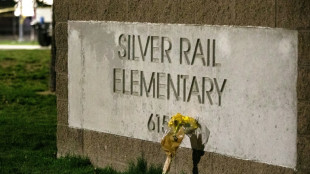 Suspected gunman in Oregon school shooting was 'withdrawn,' neighbors say

 As Champions Cup opens on mournful note, holders Bordeaux-Begles draw

 Figueroa loses title at weigh-in but Kameda can win it

 Deforestation in Brazil Amazon hits nearly four-decade low
 US budget deficit grows to nearly $2 trillion, highest since 2021

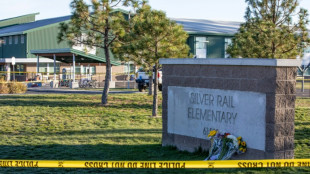 Bend grieves after mass shooting: 'Who would do this to little kids?'

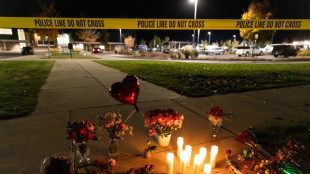 'Great hero' praised for saving lives in Oregon school shooting

 Trump's new press secretary looks close to exit after just one week

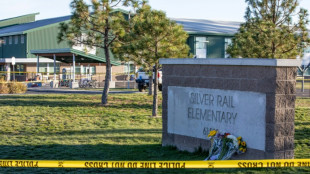 Trump says armed bystander who killed US school shooter a 'great hero'

 Real Madrid say Tebas must resign over Goebbels comparison

 Djokovic gets Basel wild card as ATP Finals race heats up

 Swiss solar-powered plane altitude record confirmed

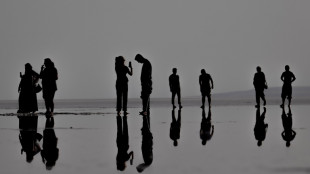 Turkey's Salt Lake, life in the shadow of drought

 Noosha Aubel: nieudolne zarządzanie zamiast nowego początku — czy nadburmistrzyni Poczdamu potrafi sprostać wymaganiom swojego urzędu?

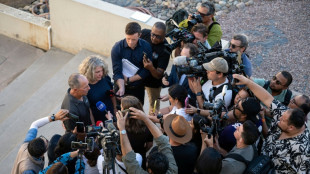 Mexican killers of Australian, US surfers await sentencing
 Trump's new press secretary faces intensified scrutiny over claims to be a lawyer

 Brazil's left rallies as Lula closes gap before runoff

 Sean 'Diddy' Combs transfered to smaller US prison

 Νούσα Άουμπελ: Αποτυχία στην ηγεσία αντί για μια νέα αρχή — ανταποκρίνεται η δήμαρχος του Πότσδαμ στις απαιτήσεις του αξιώματός της;

 Arteta praises 'incredible will' of struggling Gyokeres
 S.African rugby player dies in France ahead of Champions Cup game

 Chelsea captain James faces lay-off after knee surgery

 India detains top 'cockroach' leader as hundreds protest in capital

 Swiatek moves into Wuhan semi-finals

Nearly six months into the Gaza war, with the families of hostages still held captive by Hamas desperate for their release, many former hostages are finding the words to describe the ordeal of captivity.
"I went through hell," Aviva Siegel, who spent 51 days in captivity in Gaza, told AFP.
On the morning of October 7, Siegel, in her early sixties with round glasses and dark grey hair, was with her husband Keith when Hamas fighters burst into their home in Kfar Aza kibbutz, kidnapped them and took them to Gaza.
For more than seven weeks, she said, they were dragged from tunnel to tunnel in awful conditions.
"They didn't let us speak, we weren't allowed to stand up," said Siegel, who was freed as part of a short truce deal in November.
Her husband remains in captivity in war-ravaged Gaza.
Around 250 people were kidnapped by Hamas on October 7, during an attack that resulted in the deaths of about 1,170 Israelis and foreigners, the majority civilians, according to an AFP tally of official Israeli figures.
During the November truce, the only one of the war so far, 80 hostages were released in exchange for the return of 240 Palestinians held in Israeli prisons. 25 other hostages, mainly Thai farm workers, were released outside the deal.
Four captives were released by Hamas before the truce, while Israel freed a further three, including two in a military operation in mid-February.
About 130 remain in Gaza, Israel believes, including 34 who are presumed dead.
Sunday will mark six months since their abduction and the start of the war.
Israel launched a retaliatory bombardment and ground invasion of Gaza, aimed at destroying Hamas, which has killed at least 32,975 people, mostly women and children, according to the health ministry in the Hamas-run territory.
More than a third of the freed hostages have spoken publicly about their experiences, either in media interviews, at public events or in videos filmed by the Forum of Hostage Families, an association representing some relatives.
- 'Permanent fear' -
Many former hostages, while not detailing the conditions of their captivity, have talked of experiencing "hell".
"Even if I told you what the hostages go through, you wouldn't be able to imagine what they are experiencing... I have come back from hell," said Mia Regev, an Israeli freed in November after 51 days as a hostage.
The 21-year-old woman was shot on October 7 at the Nova rave where almost 40 people were abducted.
"After eight days, they removed the bullet from my foot and operated on me. The care was bad and contemptuous, not humane treatment and when I arrived here, in Israel, I had complicated infections," she said shortly after her release.
Doron Katz-Asher, kidnapped alongside her two daughters Raz, aged four, and Aviv, aged two, was also shot. He said he was treated "without anaesthesia, with a needle and thread".
In an interview with Israeli TV channel N12, Katz-Asher spoke of "permanent fear", something almost all hostages who have spoken have mentioned.
"There were ten of us in a 12-square metre room with no beds, just a sink and bottles of water... my daughters had a fever.
Danielle Aloni, freed with her five-year-old daughter, said of her captivity, "We sleep, we cry, nothing happens, every day is an eternity, it's so frightening".
Fear of sexual violence was acute for female hostages.
Amit Soussana, 40, another hostage from Kfar Aza, described in a lengthy interview with The New York Times how she was sexually assaulted.
A guard "with the gun pointed at me, forced me to commit a sexual act on him," she said.
Soussana is the only former captive to have explicitly described sexual violence, although Siegel said of the women in captivity: "They turned these girls into dolls they could use as they pleased."
- 'Forbidden to cry' -
"I am a witness, I saw a girl tortured... I would like to go back to protect them, I saw what the girls went through," Siegel added.
Yarden Roman-Gat, another former hostage told the channel Kan 11, "As a woman, the fear of being raped or subjected to sexual assault is constant, being without any way to defend yourself, resisting means risking your life, that fear never leaves you".
Her sister-in-law Carmel Gat, 39, is still being held in Gaza alongside 13 other women.
Mothers abducted with their children, such as Hagar Brodetz, who was taken with her three children, aged between four and 10, have the acute horrors of being held captive with their kids.
"It was forbidden to cry or to laugh or to talk loudly... you can't teach a 4-year-old child to cry silently... everything that you have created to protect your children disappears... the children are hungry, they have one pitta per day, I don't wish it on any mother to have to beg to give your children something to eat," said Brodetz.
Liat Atzili, 49, a history teacher at a school which organises guided visits to the Yad Vashem Holocaust memorial, learnt after her release that her husband Aviv was killed on October 7.
"I came back from among the dead," she told N12. "The lack of food, medicines, the horrible hygienic conditions... every day was endless, it was total despair."
R.Flueckiger--VB