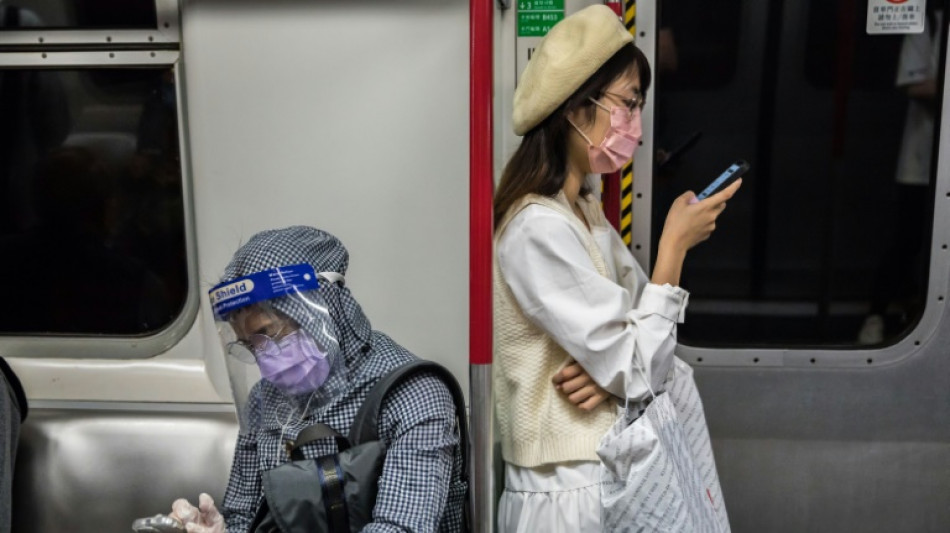
Nations fail to reach pandemic accord: talks to resume April / Photo: © AFP

 'Cockroach' party founder released from Indian police custody
 Nepal floods 'defining moment' for climate action: UN
 Albanian capital sees fifth straight day of violent clashes

 Leaders weigh 'huge benefit', risks of AI for global economy
 Zverev stunned by Davidovich Fokina in Shanghai semi-finals
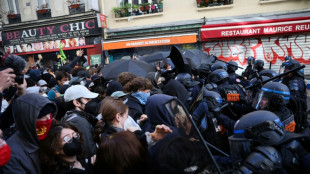 France faces day of cost-of-living protests
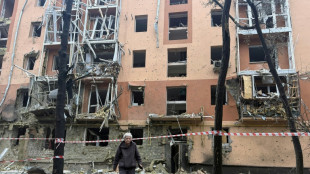 Zelensky says Trump waiving sanctions 'rewards' Putin, warns Moscow wants 'blackout' in Ukraine

 Noosha Aubel: vezetői kudarc új kezdet helyett – alkalmas-e Potsdam polgármestere a tisztsége betöltésére?

 Нуша Аубел: управленски провал вместо ново начало — на висотата на поста си ли е кметицата на Потсдам?

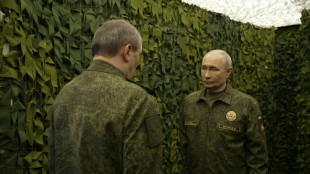 Russia hails Trump waiving sanctions as 'historic'

 Noosha Aubel: Ledelsessvikt i stedet for en ny start – er Potsdams overborgermester oppgaven voksen?

 Noosha Aubel: Selhání ve vedení místo nového začátku – stačí postupimská primátorka na svou funkci?

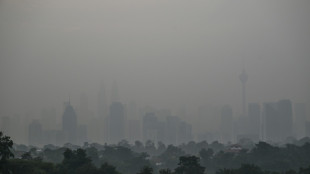 Haze triggers highest-level alert in parts of Southeast Asia: monitor

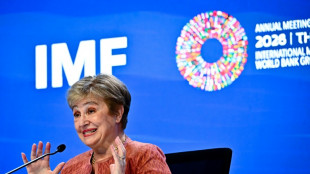 IMF chief flags 'optimism', 'worry' after Bangkok annual meetings

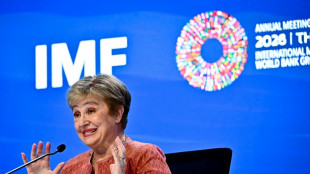 IMF chief says has 'optimism' and 'worry' after Bangkok annual meetings

 Hong Kong superstar Ka Ying Rising loses first race in 22 starts at The Everest
 Attacks on Gulf energy infrastructure 'worrying' for outlook: Pakistan finance minister
 Japan says hosting record number of foreigners
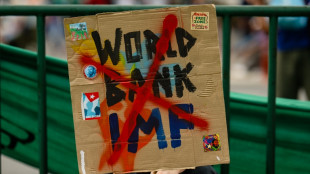 'Two bad options': Rights groups decry IMF austerity demand
 Guardians-Rays MLB playoff game postponed until Saturday

 'We've never had this': Bear sightings spook Russia

 Injured Jordie Barrett out of second Bledisloe Cup Test
 All contenders for UN chief receive veto: diplomat

 UN climate panel fails to agree date for global warming update: envoy

 Stocks struggle to bounce back from AI angst-fueled rout
Two years of talks aimed at striking a landmark global agreement on handling future pandemics failed to seal a deal in time on Thursday, and will restart next month for one final push.
Scarred by Covid-19, which shredded economies, overturned societies, crippled health systems and killed millions, countries are trying to craft an international accord on pandemic prevention, preparedness and response.
But while they largely agree on the principles of what should be done when the next pandemic strikes, nations are still at odds over how far they are prepared to go to turn those notions into binding commitments.
The ninth and supposedly final two-week round of talks therefore ended Thursday without finding a breakthrough.
"You are not far away from concluding a deal," World Health Organization chief Tedros Adhanom Ghebreyesus told countries as the talks petered out at the WHO headquarters in Geneva.
"I always keep hope alive and I am hopeful that you will.
"The treaty is a life-saving instrument, not merely a piece of paper," he added.
"It holds the power to transform our collective response to future pandemics, to protect lives and to safeguard the wellbeing of communities."
He urged nations to work towards getting a final agreement by the end of May.
- Call for courage -
Mindful that a pandemic could hit at any time, the plan was to finalise an agreement at these talks, so it could be approved by the WHO's 194 member states at their annual assembly, which starts on May 27.
Instead, fresh talks will run from April 29 to May 10.
The Intergovernmental Negotiating Body bureau conducting the talks will draw up a new draft text no later than April 18 and work to finalise talks by May 5.
The current draft has ballooned from 30 pages to nearly 100, with suggested amendments. Some participants want the INB to cut it down to 20 pages.
"It's just too long," said one Western diplomat.
"It's too detailed and too broad. Agreeing on 30 pages with such a level of uncertainty in such a short time is impossible."
Campaign groups have warned that the pressure to reach an agreement could lead to a watered-down text which does little to make the world safer than it was before the Covid-19 pandemic.
K. M. Gopakumar, senior researcher with the Third World Network NGO, told AFP the new text would likely be a lighter document, which could be added to at a later stage.
"They have climbed down from a full-fledged treaty to a much more concise document," he said at the WHO HQ.
"It's a face-saving exercise as of now, because they are so desperate to finish everything by May."
- Points of dispute -
The main issues of contention include shared access to emerging pathogens, better prevention and monitoring of disease outbreaks, reliable financing and transferring pandemic-fighting technology to poorer countries.
Ultimately, the talks have come to the crunch over the balance between richer and poorer nations.
Wealthier states want immediate information-sharing on new and emerging pathogens with pandemic potential, as well as strict -- and expensive -- preparedness obligations for all countries.
In return, developing countries want water-tight language on technology transfer and equitable access to vaccines, tests and treatments.
E.Gasser--VB