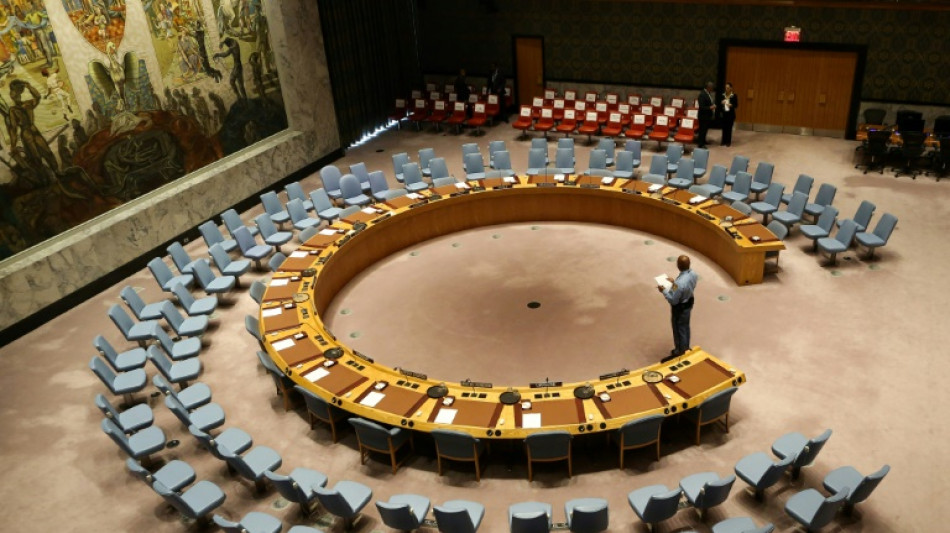
Ukraine invasion places sharp new focus on calls for UN reform / Photo: ©

 New space object 'black hole star' discovered by astronomers
 England captain Root tells players to be 'adults' as he ditches curfew
 US inflation slows slightly in July despite elevated fuel prices
 Total solar eclipse to cast its shadow over Europe
 US consumer inflation slows slightly in July despite elevated fuel prices
 Warholm on track in bid for fourth Euro hurdles gold

 Erdogan eyes expansion of regional defence pact
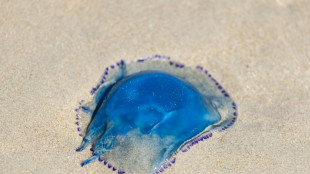 Extreme weather, jellyfish knock one-fifth of France's nuclear capacity offline
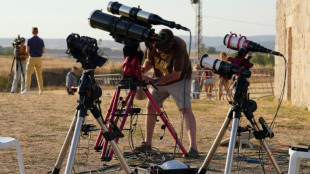 Skywatchers gather in Europe to see total solar eclipse
 Zhu Rongji, trailblazing ex-premier who transformed China's economy
 China tech giant Tencent's Q2 profit down as AI push builds
 China's C919 jet makes first international commercial flight
 Mideast war impact on travel bookings fading, TUI says
 Bangladesh get Das fitness boost for daunting Australia task
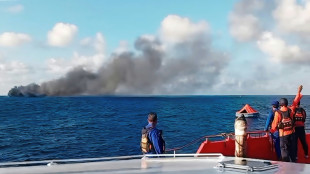 One dead, 172 rescued as second ferry in days catches fire in Indonesia
 Foxconn posts quarterly profit surge on AI server demand
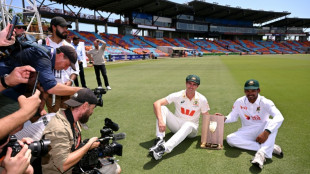 Hazlewood gets Australia nod ahead of Boland for Bangladesh Test
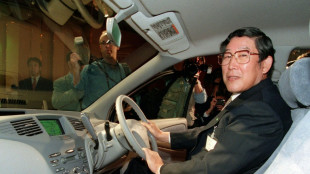 Toyota ex-chief Okuda, pioneer of the Prius, dead at 93

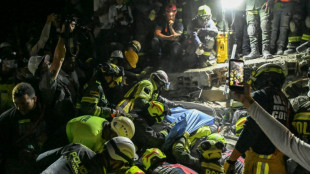 Colombia rescuers find woman alive as quake death toll passes 200
 New Zealand PM survives leadership challenge months from election
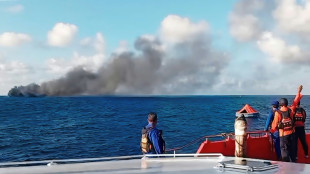 Passengers rescued as second ferry in days catches fire in Indonesia
 Oil prices rise, stocks mixed ahead of crucial US inflation data

 UK 'joke' candidate Binface pushes serious point about politics
 New Zealand PM Luxon survives leadership challenge months from election
 Cuba celebrates Castro's 100th as his revolution faces its toughest test
The long-simmering debate over UN reform -- and particularly over the role of the Security Council, which does not represent today's world and which failed to prevent Russia's invasion of Ukraine -- has suddenly become acute.
Recently Ukrainian President Volodymyr Zelensky, in a blistering call for the UN to exclude Russia from the Security Council, asked bluntly, "Are you ready to close the UN" and abandon international law. "If your answer is no, then you need to act immediately."
And after the Security Council failed to prevent the brutal invasion of his country, he said in a separate address to Japanese lawmakers, "We have to develop a new tool" capable of doing so.
Created in 1945 with a vision of guaranteeing world peace and preventing a World War III, the United Nations conferred disproportionate power on the five permanent, veto-wielding members of the Security Council -- the US, Russia, China, Britain and France -- in a way that allows them to protect their own interests while keeping a heavy hand in world affairs.
Thus, since 2011, Moscow has exercised its Security Council veto some 15 times in votes regarding its ally Syria.
But the veto power also guarantees that Moscow can never be removed from the Council, since the UN Charter's Article 6 allows the General Assembly to exclude a member only ... upon the recommendation of the Security Council.
In that vein, the US and Britain invaded Iraq in 2003 without UN approval -- and without suffering any consequences for their permanent seats on the Security Council.
Beyond the veto question, and the lack of international balance among Security Council members -- no African or Latin American country holds a permanent seat -- the Council grants a near-monopoly on some issues to Washington, London and Paris.
The division of roles among the 15 Security Council members is uneven, according to the ambassador of one of the current 10 non-permanent members. The latter group, elected for two-year terms, is "given the bureaucratic jobs."
"We don't think it's a fair division of labor," the ambassador said, speaking on grounds of anonymity.
The Council has been widely denounced for its current -- and recurrent -- paralysis, with even UN Secretary-General Antonio Guterres deploring its failures.
"There's a pretty fundamental problem there," US Secretary of State Antony Blinken admitted, a day after Zelensky's futile call for Russia to be expelled.
- 'Like cholesterol' -
To Bertrand Badie, a Paris-based international relations specialist, the United Nations is "like cholesterol": "There is the good," notably in the humanitarian aid the UN dispenses that saves lives around the world, and "there is the bad, with the Security Council."
But the ambassador, while conceding that there has been "intense criticism" of the world body, added: "Where would we be if we had none of that?" -- none of the "good" carried out by the UN.
Most proposals for reform call for the enlargement of the Security Council -- adding both permanent and non-permanent members.
But "positions are very polarized," the ambassador said, as to which nations might be added and which would enjoy veto power.
"The veto has to be a bit more disciplined," the diplomat said, adding that the point of it should not be "to block progress" but to "force the five permanent members to sit down and arrive at a solution acceptable to all."
At an informal meeting Friday on UN reform that included the five permanent members, the veto issue was again raised.
Among the ideas advanced: a French-Mexican proposal to limit its use in cases of "mass crimes," and a suggestion from Liechtenstein that would require any nation casting a veto to explain it before the General Assembly.
On Thursday, South African President Cyril Ramaphosa, whose country hopes someday to join the permanent members of the Security Council, said that "the entire peace and security architecture of the United Nations needs to be overhauled."
The Council, he said, needed to be "democratized" to allow the world body to "move beyond the paralysis brought about by a few member states."
Other potential permanent members of the Council include major world players India, Japan, Brazil and Germany.
But several experts say the chances of reform will remain slim so long as the permanent members refuse to accept any dilution of their power.
D.Schneider--BTB