
-
 Solid GM results overshadowed by latest jump in commodity costs
-
Emery adamant injuries 'no excuse' for Aston Villa
-
 Houthi attacks undermine Saudi Arabia's economic ambitions
-
UN demands aid access to besieged Yemen city Taiz
-
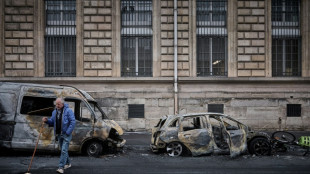 French PM vows 'massive' police deployment for new demonstrations
-
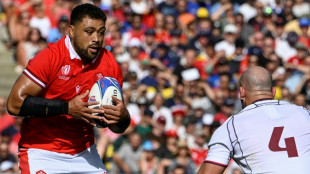
Faletau still in Tandy's plans despite being left out of Wales squad
-
 Power outage hits Google Cloud services, disrupting UK banks
-
Stock markets retreat as oil rises again
-
 AI challenges maths by solving the unsolvable
-
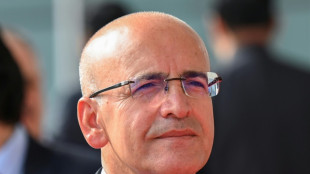
Those who profited from fund scandal 'identified': Turkish minister
-
 Turkey troops to stay in Syria, Iraq 'until border security ensured', defence minister tells AFP
-
At half a century, Senegal's Orchestra Baobab bets on new generation

-
 Kulusevski a 'different man' after emotional Spurs return
-
O'Connor, Sivakov join Seixas at Decathlon CMA CGM

-
 Nawaz and Minhas lift Pakistan to 302-9 in England ODI
-
Faletau left out of Wales squad for Nations Championship
-
 Mourinho warns no 'untouchable' stars at Real Madrid
-
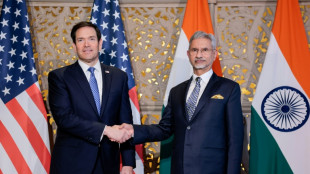
Rubio says India diversifying oil, trade deal 'very close'
-
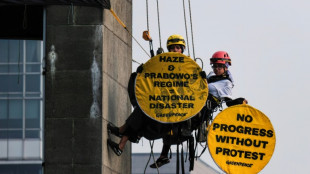 Indonesian anger builds over wildfires, toxic haze
-
Alaraby Television Network Earns Five GEMA Award Nominations

-
 CNN Global Perspectives to Make Middle East Debut in Doha
-
QNB and Qatar Airways Forge Worldwide Digital Payments Alliance

-
 Doha Debates Examines Who Should Set the Moral Rules for AI
-
US Midterms Put Control of Congress and Key States at Stake

-
 Qatar Amir and Singapore Prime Minister Expand Bilateral Cooperation
-
Qatar Prime Minister Opens Eighth Global Security Forum

-
 Cali Biodiversity Fund Struggles After Raising Only $7,085
-
Spain Housing Dispute Puts Landlords at Centre of Election Debate

-
 Yan Diomande Finds Form Before Real Madrid Faces Former Club Leipzig
-
October 20 Milestones Trace Decades of Kuwait’s Development

-
 Asian Technology Shares Slide as Investors Reassess AI Boom
-
James Maddison Leads Tottenham to First League Victory of Season

-
 Marco Rubio Travels to India as Trade Talks Reach Difficult Stage
-
Tonbo Imaging IPO Draws Nearly 136 Times the Shares Offered

-
 Brokerages See Eternal Extending Food Delivery and Quick-Commerce Gains
-
Tamil Nadu Adds 25 State-Funded Workdays for Eligible Rural Households

-
 Gold Remains Under Pressure as Energy Inflation Clouds Rate Outlook
-
Tamil Nadu and Puducherry Face Return of Very Heavy Rain

-
 Paras Healthcare Raises ₹652.5 Crore From IPO Anchor Investors
-
Agrograde Introduces AI Optical Sorter for Arecanut Processing

-
 Kemi Badenoch Proposes Ending Childcare Benefit Cliff Edge
-
Late Okafor Penalty Earns Alvechurch FA Cup Replay

-
 More Than 52,000 West Midlands Families Use Tax-Free Childcare
-
Low-Cost Homemade Ideas Offer Alternatives for Halloween Costumes

-
 Commanders Fear Serious Knee Injury for Terry McLaurin
-
Christiane Amanpour Plans CNN Departure After 43 Years

-
 Rays Beat Guardians 7-3 to Secure World Series Place
-
Richard Riehle, Prolific Film and Television Actor, Dies at 78

-
 Veteran Character Actor Richard Riehle Dies at 78
-
World Gold Council Sees Digital Gold Market Tripling by 2031

Solemn Spaniards mark 20 years since deadly train bombings
Spain and the European Union paid homage Monday to the 192 victims of the March 11, 2004 Madrid train bombings that marked the start of mass Islamist attacks in Europe.
"This is a day of remembrance... although we cannot bring back the lives that were so violently taken.. we can and must keep their memory alive," Prime Minister Pedro Sanchez told survivors and families of the victims at an official ceremony near the royal palace.
"Anyone who has experienced such extreme violence first hand will never forget it," he said.
He paid tribute to the victims but also to the nearly 2,000 others hurt in the 10 explosions on four commuter trains, "who survived but whose wounds have never healed".
Spain's King Felipe VI and Queen Letizia were also at the ceremony which was organised by Brussels, March 11 being the official European Day of Remembrance "for the victims of terrorism".
Although Spain had experienced decades of violence at the hands of the Basque separatist group ETA, it had never been hit by such a big attack.
City mayor Jose Luis Martinez Almeida described March 11, 2004 as "a day of wickedness" that had "caused immense pain and profound sadness but... didn't manage to bring Madrid to its knees."
Taxi drivers and the public pitched in to help the emergency services ferry nearly 2,000 wounded to hospital.
"The people of Madrid gave an example of solidarity that is still alive today," Martinez said at an early memorial event.
- 'A turning point' -
Just two-and-a-half years earlier, the United States had been hit by the 9/11 attacks in which Al-Qaeda militants killed nearly 3,000 people.
But when Madrid was hit, Europe didn't immediately think of the jihadist movement founded by Osama bin Laden.
Known as 11M -- Spanish shorthand for March 11 -- the attacks occurred in a highly-charged political context just days before a March 14 general election.
At the time, the ruling right-wing Popular Party (PP) of outgoing premier Jose Maria Aznar was the favourite to defeat the opposition Socialists led by Jose Luis Zapatero.
A year earlier, Aznar's government had decided to join the US-led invasion of Iraq, despite widespread public opposition, with Bin Laden vowing revenge on all countries involved.
Even so, within hours of the bombings, Aznar's government publicly blamed ETA, despite mounting evidence to the contrary.
The ETA hypothesis was soon debunked as investigators traced the perpetrators, largely through three bombs that failed to explode and were found in rucksacks and sports bags.
Al-Qaeda claimed responsibility for the attacks, saying it was in response to Spain's involvement in the Iraq war.
Doubts over the government's version quickly spread. During mass rallies the following day, protesters accused the authorities of lying.
- Only three left in prison -
In the March 14 election, the public handed a resounding victory to the opposition Socialists. Analysts said the government's disastrous handling of the attacks played a key role.
In early April, seven suspected cell members blew themselves up as police surrounded the flat where they were hiding on the southwestern outskirts of Madrid.
The blast also killed a police officer whom Spain counts as the 193rd victim of the attacks.
In early 2007, 29 suspects went on trial and six months later, 18 of them were convicted.
Twenty years on, only three remain behind bars -- two Moroccans who were each handed sentences totalling nearly 43,000 years, and a Spaniard who was jailed for nearly 35,000 years for suppling the explosives. None are likely to be out before 2044.
All the others have been released after serving their sentences, most of them deported or extradited, mainly to Morocco.
Other countries also marked the European Day of Remembrance on Monday.
Speaking at a ceremony in northern France, French Prime Minister Gabriel Attal said the day was a grave reminder of how "Islamist terrorism struck Europe en masse for the first time".
"That date stands as a turning point for our continent," he said at a ceremony in Arras, where in October a radicalised Islamist stabbed his former teacher to death.
"We realised that we too were targets. We learnt the hard way."
F.Fehr--VB