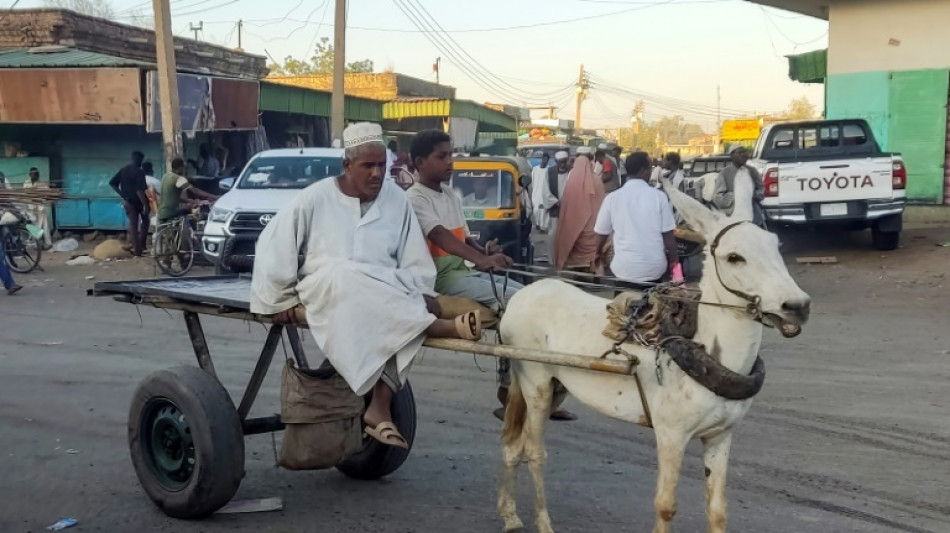
War-weary Sudanese without fuel turn to donkey carts / Photo: © AFP

 Australia lawmaker loses both legs after 'targeted' attack

 Director Nick Paley channels childhood fears in new thriller 'Phony'
 'Daily struggle': Cubans dig wells in search of water
 Prized wild pepper at risk in Madagascar's shrinking forests

 World falling 'dangerously short' on climate action: UN chief

 LeBron, Sixers spoil Knicks party, Thunder top Spurs as NBA season tips off
 Sooryavanshi told to be patient by captain Iyer ahead of NZ series

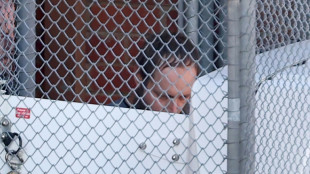 Man in court over alleged 'targeted' attack on Australia lawmaker

 As actors get more physical, Bollywood embraces intimacy coordinators
 Brazil's presidential candidates seek to disqualify each other

 French PM to meet unions as government prepares for more protests

 'To the shelter, quickly!' Air raids reshape Kyiv school life
 'Leave us alone!' DC golfers fear worst over Trump's course remodel

 NFL players union wants probe into Hurts' medical care

 Man allegedly behind 'targeted' attack on Australian lawmaker due in court

 Netflix shares drop on slowing engagement, revenue growth

 Rodri needed a rest for Barcelona ahead of Clasico, says Flick

 Musk says backs SpaceX-Tesla merger as rocket firm turns profit

 US regulators certify Boeing 737 MAX 10 after delays

 PSG strike late to get better of Yamal and Barcelona in Champions League

 Foden hat-trick fuels Man City rout of AEK Athens

 Trump says he wants Zelensky to 'make a deal' with Russia
 'I want it so badly': PSG heartbreak fuelling Arsenal, says Arteta

 Lula campaign seeks to disqualify Bolsonaro over Meta 'interference'

 All who profited from fund scandal 'identified': Turkish minister
In war-torn Sudan, where chaos and fuel shortages have ground normal motor traffic to a halt, people once more rely on donkey carts -- even for urgent trips to the hospital.
In a small town south of the capital Khartoum, Hussein Ali has been busy carting patients to a clinic on a rickety wooden carriage that now serves as an ambulance.
"Just an hour ago, I brought a woman who went into labour in a village 15 kilometres (nine miles) away," Ali told AFP near a clinic in Tamboul, Al-Jazira state.
"The carriage is the only way to get patients from villages to the hospital," he said of his vehicle, called a "caro" in Sudanese Arabic and now once more a common sight in many states.
Sudan has been rocket by a brutal war that has killed thousands -- including up to 15,000 in a single Darfur town, according to UN experts -- and displaced millions since last April.
The conflict has pitted the regular army of de facto leader Abdel Fattah al-Burhan against the paramilitary Rapid Support Forces (RSF) of his former deputy, Mohamed Hamdan Daglo.
Burhan's government has retreated east to Port Sudan, while the RSF now controls much of Khartoum, nearly the entire western Darfur region and much of the country's south.
When the RSF in December overran central Al-Jazira state, until then a relative safe haven, nearly half a million people fled, many for the second or third time.
But millions more, who were unable or unwilling to leave, remain trapped there, enduring insecurity, dire shortages and a deepening health crisis.
- Roadblocks and no petrol -
Civilians have also been left stranded without regular road transport as the RSF has set up checkpoints and petrol stations have run dry.
Since the RSF rolled in, fuel suppliers from army-controlled areas "have not resupplied petrol stations in Al-Jazira", said a petrol station worker who requested anonymity.
The price for scarce fuel rose 20-fold to 25,000 Sudanese pounds or about $20 a litre.
When the RSF conquers new territory, its fighters are known to commandeer homes, businesses and vehicles.
A local bus driver, Al-Taher, said that "when the RSF took over the area, I hid my bus so it wouldn't be stolen".
Al-Taher said he too has shifted to driving a donkey cart. He was speaking on condition of being identified by one name only for fear of retaliation.
He now mostly takes passengers on a six-kilometre trip between his village and Rufaa, a town 40 kilometres north of the state capital Wad Madani.
At any rate, he doesn't have a choice. "Even if I did take my bus out, there are no petrol stations to get fuel from," Al-Taher said.
Also impacted is village shop-owner Bakri Khaled, who said he now has to pay for a bumpy 13-kilometre ride on a horse-drawn cart every day to the market in Tamboul.
"Since the war came here, this horse-drawn carriage is the only way to get groceries to my store in the village," he told AFP.
He said that what used to be a 15-minute truck ride can now take more than two hours, and that the price of the journey has doubled.
One of the few businessmen to see a benefit was donkey and horse trader Abdelrahman Al-Zein.
Rising demand in recent times, he said, has seen "the prices of donkeys, horses and carts all increasing".
L.Meier--VB